
Environment
After 15 Years of Passing of Forest Rights Act, Implementation in Himachal Still in Doldrums, Jeopardizing Ecological Conservation

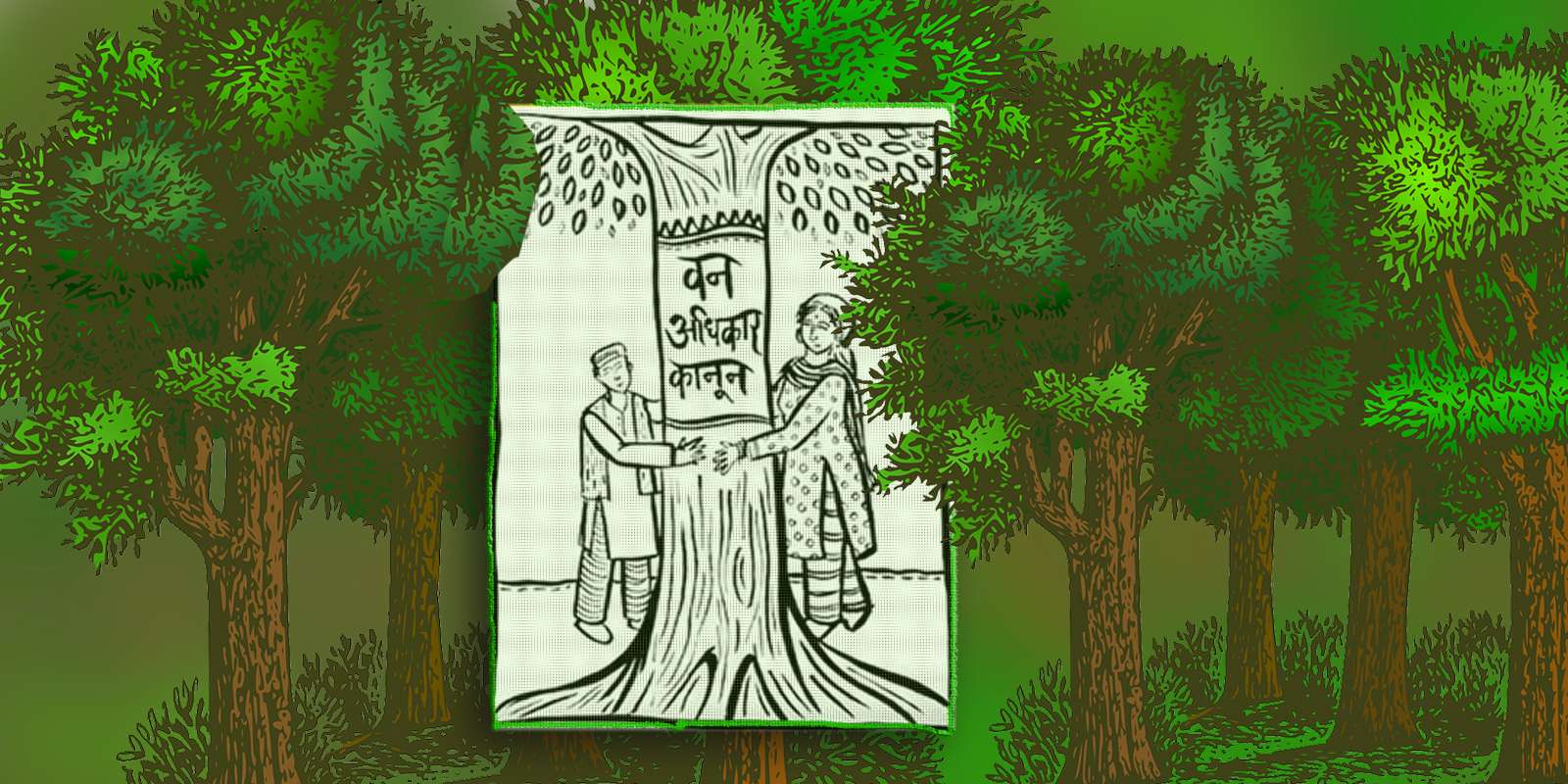
Shimla-‘Planting a tree to celebrate World Environment Day has been reduced to a symbolic tradition. But is this enough for the conservation of our ecology? The efficacy and use of plantation drives are being questioned all across the world today. These drives, especially when conducted by the government tend to be a wastage of resources due to poor survival rates, said environmental and community groups in Himachal Pradesh in a joint statement released recently on World Environment Day.
Further, trees are just one part of our ecosystem which comprises soil, grasslands, scrubs, wetlands, wildlife and even human beings, the statement said.
In India, especially in the Himalayas communities have co-existed with nature since times immemorial – dependent on it for day-to-day life and livelihoods, the groups said. Because of this connection between forests and local livelihoods and culture-communities across the landscape fought to protect the ecosystems they inhabit from destruction – be it the Chipko movement in Uttarakhand 50 years ago or the recent struggles in the tribal district of Kinnaur to highlight the ill-effects of dams and hydropower projects – indigenous and forest-dependent people have protected forest resources, they said.
“It is unfortunate then that these historical custodians of forests were labelled ‘encroachers’ and ‘thieves’ as their livelihoods were displaced from forests sometimes to build dams, highways and cities and at other times in the name of conservation were restricted from using the forests citing forest laws,” the statement said.
The groups said this has happened in Himachal too, where communities like pastoralists and farmers are slowly getting alienated from the forests. This jeopardizes their capacity to protect the forests too – whether from natural calamities like fires or indiscriminate felling.
Forest revival and afforestation programs, it is understood the world over, are only successful when local communities are made in charge and are given full access to use the forest and make decisions about its management.
“We have examples of community forest management like Gramya Jungles of Orissa and Van Panchayats of Uttarakhand. This became part of the Forest Policy in 1988 which is why programs like Joint Forest Management were planned for participatory governance of forests. However, in these too the forest department retained their control and communities were used as labour to plant trees,” the groups highlighted.
Based on these experiences and the repeated evictions of forest-dependent people from their rightful use it became apparent that there was a need for a law that recognised the community’s right to both use and protect/ govern the forest, they said.
It was after years of struggle that the Forest Rights Act 2006 was passed by the parliament of India. The Act recognises individual and community rights over any kind of forest lands for those dependent on these for their bonafide livelihood needs before 13th December 2005. The act also recognises development rights and community management rights. Himachal, where 2/3rd of the landscape is legally classified as ‘forest’ – there is a tremendous need and potential to implement this law to secure the land and livelihood rights of people on forest lands be they for fuelwood, fodder, pastures as well as farming and shelter.
The statement said today it has been 15 years since the passing of FRA but in Himachal, its implementation is in the doldrums.
“While 20 lakh forest rights claims have been accepted all across the country in Himachal only 164 claims have been recognised whereas 2700 are pending with the administration at various levels. The key reasons for the poor implementation include – lack of political will, misinformation about the act amongst the line officials, distrust of the people leading to non-filing of claims and inadequate awareness amongst common people,” the statement said.
It further said that, ironically, the state government has shown great enthusiasm in using this act to grant forest land for village development activities, the rest of the rights namely individual and community forest use and management rights are languishing due to state negligence and actively blocking the granting of these rights.
The groups further highlighted that in the last 5 years, community voices from Kangra, Chamba, Kinnaur, Lahaul-Spiti, Sirmaur and Mandi have been raising the demand for the implementation of this law in the state. It was after this that the state government was forced to announce that it would implement the Forest Rights Act in a mission mode in the state in 2018. The tribal department also worked on training and making educational material on the act. However, these are yet to be properly distributed at the village level.
The joint statement further added that in March 2020 post the pandemic led lockdown the FRA implementation process received a setback. Even as gram sabha meetings and FRC processes came to a grinding halt the economy too got hit. During this time, it became evident more than ever that it is the land and forest-based livelihoods that are available to rural communities to fall back on for survival.
“Whereas the Government should be focused on strengthening land and nature-based livelihoods for the local communities. However, the focus of the state remains on pushing destructive commercial ventures in ecologically fragile areas and valuable farmlands of the state,” the groups said.
The coronavirus has taught the world what the climate crisis had already indicated – that we will continue to be victims of such crisis as long as the ecological destruction continues unabated, the statement said.
“This calls for a change in the model of ‘development’ which prioritises the basic needs and services rather than run blindly after economic growth which is meant to profit companies and contractors”, the groups said.
The statement also said that it is the communities who will now have to believe in their own capacity to manage lives and resources and also call the government to account if our natural resources have to be protected for future generations.
Signatories
- Ajay Kumar, Sanjay Kumar, Advocate Dinesh, Bhoomiheen Bhoomi Adhikar Manch, Himachal
- Birbal Chaurhan, Shamlat Sangharsh Samiti, Sirmaur
- Gulab Singh and Dhaniram Shamra, Sirmaur Van Adhikar Manch
- Joginder Walia Balh Ghaati Kisaan Sangharsh Samiti, Mandi
- Jiya Negi, Van Adhikar Samiti, Kinnaur
- Kulbhushan Upmanyu, Himalaya Bachao Samiti, Chamba
- Lal Hussain, Ghumantu Pashupalak Mahasabha, Chamba
- Meera Devi, Nekram,Shyam Singh Chauhan, Paryavaran evam Gram Vikas Samiti, Karsog, Mandi
- Himshi Singh and Prakash Bhandari, Himdhara Environment Research and Action Collective
- Prem Katoch and Kesang Thakur, Save Lahaul Spiti, Lahaul
- Tenzin Takpa and Sonam Targey, Spiti Civil Society, Spiti
Image by OpenClipart-Vectors from Pixabay







Environment
Shimla: Retaining Wall Collapses During Four-Lane Construction, Residents Flee Homes to Save Lives


SHIMLA | 3 July 2025 –A major mishap occurred in the Lindi Dhar village of Shimla district during the ongoing four-lane highway construction, raising fresh concerns over safety and construction quality. A retaining wall, constructed as part of the project, collapsed once again—posing a serious threat to nearby homes and destroying hundreds of apple trees.
According to local residents, this is not the first time the wall has caved in. Despite previous incidents, authorities failed to take adequate corrective measures. The latest collapse forced several families to abandon their homes for safety, fearing further landslides and structural damage.
Villagers have accused the National Highways Authority of India (NHAI) and its contractors of negligence. They allege that no proper safety precautions were taken in the construction process, even though the area is known to be vulnerable to landslides.
“This wall had collapsed earlier too, but no permanent solution was provided. Now, we are facing the same threat again. Our lives and properties are at constant risk,” said a local resident.
The landslide also damaged a large number of apple orchards—adding to the losses of local farmers who depend on horticulture for their livelihood.
Residents have demanded immediate intervention from the administration and strict action against those responsible for the substandard construction. They have also urged NHAI to put in place robust safety measures to prevent such incidents in the future.
Local officials have visited the site, and further assessment is awaited.
Environment
Police Complaint Alleges Criminal Negligence in Four-Lane Highway Project Between Parwanoo and Solan

Solan | 30 June 2025 – A police complaint has been filed at the Parwanoo Police Station in Solan district, alleging criminal negligence and environmental damage in the construction of the four-lane highway between Parwanoo and Solan. The complaint, submitted by former Deputy Mayor of Shimla Tikender Singh Panwar, accuses the National Highways Authority of India (NHAI) and its executing contractor, G R Infraprojects Limited, of serious lapses that have endangered lives, property, and the natural ecosystem.
According to the complaint, NHAI officials based at the Chakkar office in Shimla, along with planning teams at Rishikesh Sadan, Shanti Kutia, and the executing agency G R Infra, with its corporate office in Sector 18, Gurugram, failed in their duty to ensure minimal damage to the hilly terrain. It is alleged that the project was undertaken without proper consultation with the Geological Department, resulting in a project report that is “completely erroneous.”
Panwar contends that the design and method of slope cutting are fundamentally flawed, driven by ill-conceived ideas and profit motives.
“Instead of cutting the hills at a slope, the excavation has been done vertically,” the complaint states, warning that this approach poses a permanent threat to residents living near the construction site.
The complaint further highlights that since the beginning of the construction, there have been recurring losses of life and property, which the complainant attributes directly to unsafe and irresponsible construction practices.
Significantly, the complaint raises concerns about possible collusion between NHAI and GR Infra, and urges law enforcement to determine whether the negligence was circumstantial or the result of deliberate wrongdoing.
Panwar has demanded that both NHAI and G R Infraprojects Limited be held criminally liable and subjected to legal proceedings under relevant provisions.
As of now, neither NHAI nor G R Infra has issued an official response.
Environment
Himachal Bans Small PET Bottle, Rs 5,000 Fine on Littering of Single-Use Plastics, Compostable Bags

Shimla, May 27, 2025 – Small PET bottles (up to 500 ml) are littering Himachal Pradesh’s hills, forests, and water bodies, threatening its fragile ecosystem.
Ban on Small PET Bottles
Under the HP Non-Biodegradable Garbage (Control) Act, 1995, the state has banned these bottles in all government-organized indoor meetings, conferences, and events, effective June 1, 2025.
Impact on Hotels
The ban extends to HPTDC and private hotels, which must switch to glass bottles or steel water dispensers. A grace period allows clearing existing stocks to avoid financial losses.
Fines for Littering
A Rs 5,000 fine targets littering of single-use plastics, including compostable bags, by individuals, hotels, restaurants, and other institutions.
Mandatory Car Bins
From April 29, 2025, all taxis and public transport vehicles, including HRTC buses, must install ‘car bins’ for waste collection.
Enforcement Measures
Regional Transport Officers and Motor Vehicle Inspectors will verify bins during vehicle registration. Non-compliance incurs a Rs 10,000 fine, with Rs 1,500 for littering biodegradable waste.
Awareness Campaigns
Government bodies will conduct awareness campaigns to discourage small PET bottle use and promote sustainable practices.
Challenges
Himachal’s ban on small PET bottles and vehicle littering targets plastic pollution but faces challenges. Past bans faltered due to weak enforcement, especially in rural and tourist areas.
Small businesses may struggle with costly alternatives like glass or steel containers. Tourists, a major litter source, need better awareness. The car bin mandate requires rigorous monitoring to ensure compliance. Without robust recycling systems and public cooperation, the ban risks limited impact. Subsidizing eco-friendly options and strengthening enforcement are critical to protect Himachal’s ecosystem effectively.


Himachal’s LPG Supply Hit Amid Global Tensions, Likely to Affect Hospitality Industry

Himachal Teen Survives 12-Minute Leopard Attack, Kills Predator in Self-Defense

Weather Forecast for Himachal Pradesh For the Next Two Weeks

Monsoon 2025: Himachal Pradesh Suffers 199 Casualties, Over ₹1,905.50 Cr in Damages

 Home Decor Ideas 2020