
News
Indian Literary Uproar – 41 Writers Return Indian Award, Cite Climate of Intolerance

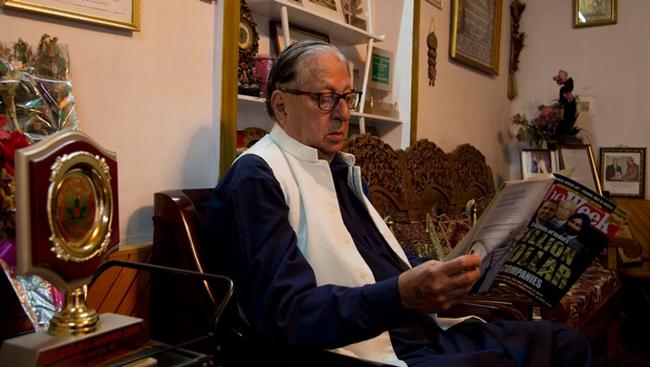
India’s literary community is disgusted. Dozens of writers say every day brings more evidence of intolerance and bigotry going mainstream — a man lynched allegedly for eating beef, an atheist critic of Hindu idol worship gunned down — all met by a deafening silence from the government.
As of Wednesday, 41 novelists, essayists, playwrights and poets had returned the awards they received from India’s prestigious literary academy to protest what they call a growing climate of intolerance under Prime Minister Narendra Modi’s government.
The writers are also angry that India’s Sahitya Akademi, or National Academy of Letters, has said little about the murder of the well-known rationalist Malleshappa Kalburgi, an award-winning Kannada-language writer, gunned down in August for his writings against superstition and false beliefs.
The government has dismissed the writers’ protests, questioning their motives and accusing them of being politically motivated.
“If they say they are unable to write, let them stop writing,” culture minister Mahesh Sharma told reporters.
The writers say they cannot remain mute spectators to numerous incidents of communal violence, attacks on intellectuals and increasing curbs on free speech.
“It’s become a question of an individual’s right to speak, to think, to write, to eat, to dress, to debate,” said Maya Krishna Rao, a playwright and theater actress, who returned her award to the academy this week.
When Modi won a landslide victory in May 2014, many voiced fears of right-wing Hindu nationalism leading to communal violence and religious intolerance. Modi, who had spent years dodging allegations of failing to stop riots in Gujarat state in which around 1,000 Muslims died, assured the nation that he was prime minister for all and would work for everyone.
But the last year has seen a rising crescendo of violence by Hindu fringe groups, trying to force a regressive Hindu nationalism on all, causing fear among India’s minority communities. State governments ruled by the BJP have cracked down on cow slaughter, and even buffalo meat, a key source of protein for poor Muslims and lower caste Hindus, has become scarce. The ban on cow slaughter has given rise to Hindu vigilante groups and mob violence has risen. Last month a Muslim man was lynched in northern India over false rumors that his family had eaten beef for dinner.
On Wednesday, in response to persistent demands that the prime minister break his silence on the lynching, Modi said the mob killing was ” sad and undesirable,” but added that his government could not be blamed as the local administration was responsible for the state.
Last week, well-known writer Nayantara Sahgal returned her academy award, triggering the return of awards by other writers. Sahgal, a niece of India’s first prime minister, Jawaharlal Nehru, is known as a fiercely independent political writer who had crossed swords with her cousin and another former prime minister, Indira Gandhi, when she imposed a state of emergency in India in the mid-70s.
Referring to recent violence by Hindu groups, Sahgal said in an interview to The Indian Express newspaper that there was “an attempt to blow up the idea of India and to put in its place a kind of travesty of Hinduism, a kind of monoculture, which has nothing to do with Hinduism.”
Sahgal’s views are echoed across the literary spectrum.
Ghulam Nabi Khayal, a Kashmiri language writer, said earlier governments would try to restore peace in situations of communal conflict.
“But that’s no more the case with the rise of Hindu rightwing BJP,” Khayal said in Srinagar. “For the past one year, the Indian state has become suffocating and extremely intolerant.”
The government was “now brazenly and institutionally backing this communal hatred,” he said, justifying his decision to return his award.
It wasn’t the first time that Hindu conservatives silenced an author or forced a book to be withdrawn.
In January, novelist Perumal Murugan went into hiding and said he had quit writing after his latest book sparked virulent protests.
Hindu nationalists organized weeks of demonstrations demanding that Murugan delete portions of the Tamil-language book because they found them offensive. Instead, the writer stopped writing altogether, his voice muted by the angry protests.
Last year, Penguin India decided to destroy all copies of historian Wendy Doniger’s book on Hinduism after an outcry. In 2011, the state of Gujarat banned Joseph Lelyveld’s biography on pacifist freedom fighter Mohandas K. Gandhi, after reviews suggested Gandhi had a homosexual relationship.
Writers who voiced support for Sahgal and other authors are facing the wrath of Hindu hard-liners on social media as well.
Internationally renowned novelist Salman Rushdie, who was born in Mumbai, said he had received nearly 10,000 hate messages after he came out in support of the writers. Rushdie said the government’s silence was allowing a new “degree of thuggish violence” in India.
BJP has often tried to distance itself from extremist fringe Hindu groups, but the failure to crack down has emboldened them.
“The prime minister remains silent about this reign of terror. We must assume he dare not alienate evil-doers who support his ideology,” Sahgal said in a letter to the academy while returning her award.






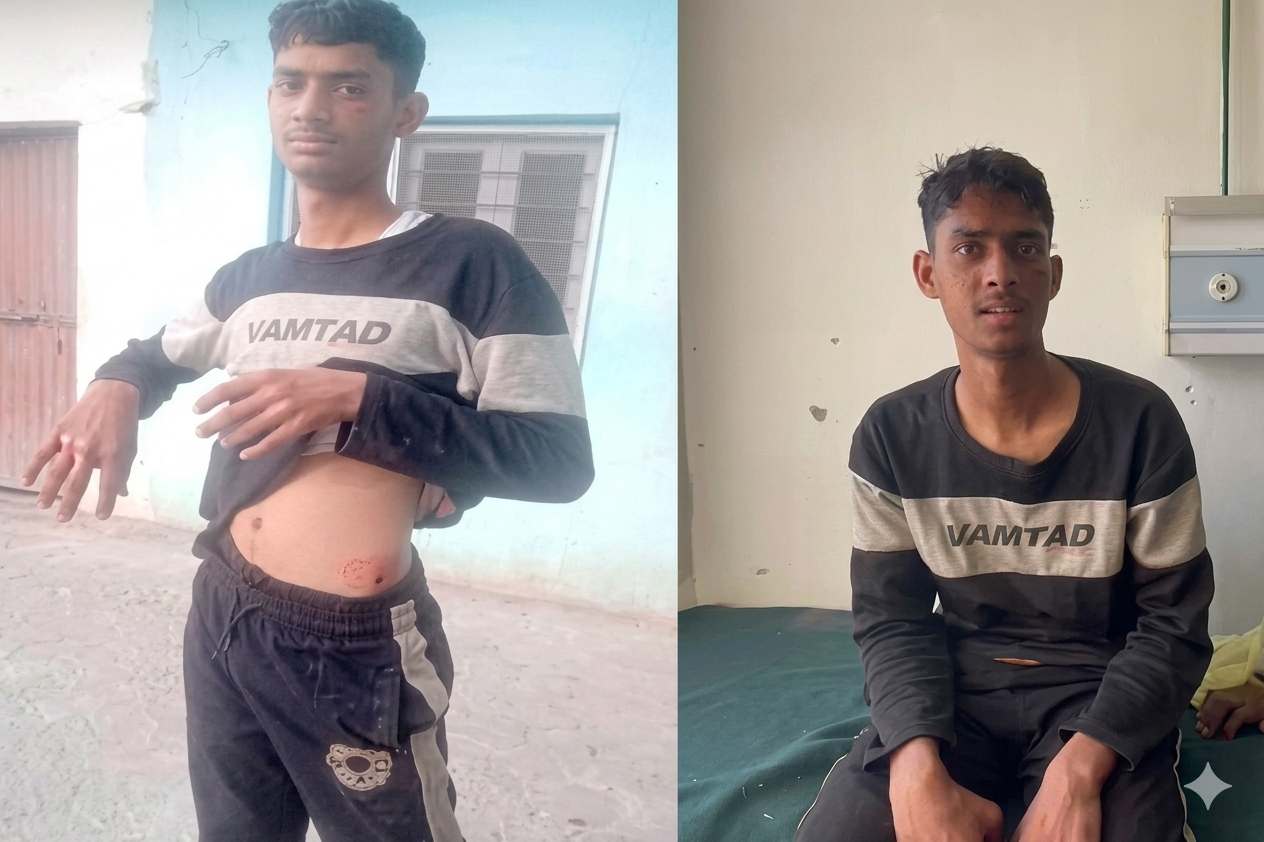
Solan—In a shocking incident on Monday, an 18-year-old youth, Pravesh, survived a vicious leopard attack in Sarli village of Arki subdivision. The teenager reportedly fought the leopard for nearly 12 minutes before breaking its jaw, killing the animal on the spot.
Quick Thinking Saved His Life
Pravesh told the media that he was walking from the fields to a nearby shop in the morning to fetch milk when the leopard, hidden in the crops, lunged at him. Noticing the leopard’s tail, he attempted to run but fell after a short distance. During the attack, he covered his neck with his hands to protect himself from fatal bites.
The teenager continued to struggle with the leopard, repeatedly attempting to put distance between himself and the predator. In a desperate move, he grabbed the leopard by its mouth, twisted its jaw, and broke it, killing the animal instantly. Pravesh sustained multiple injuries, including deep claw marks, and is currently receiving treatment at Arki Hospital. Police and forest department teams have launched an investigation into the incident.
Serious Allegations of HP Forest Department’s Negligence
One of Pravesh’s relatives accused the forest department of negligence, noting that similar attacks had occurred in the area previously.
Earlier, a leopard had attempted to attack a scooter rider, who managed to escape. The family said they had informed the forest department on March 6 about potential danger, but no concrete action was taken. Villagers waited for three hours for a forest team to arrive, but none came. When the Block Officer eventually visited, he reportedly told villagers to ensure their own safety. Requests for cages to capture the leopard were also denied, with officials asking for written complaints instead.


SHIMLA | 7 August 2025 –The India Meteorological Department (IMD) has forecast light to moderate rainfall across Himachal Pradesh over the next two weeks, with isolated heavy to very heavy showers likely over the low hills, plains, and adjoining mid-hill regions. While the ongoing monsoon remains vital for agriculture, it also brings an elevated risk of localized flooding and landslides.
Week of August 8–14
Maximum temperatures will range from 22°C to 34°C, depending on elevation—22°C to 28°C in high hills, 26°C to 30°C in mid-hills, and up to 34°C in lower regions. Minimum temperatures are expected to remain near normal, between 12°C and 24°C. Cooler conditions may persist in districts like Kullu and Lahaul-Spiti.
Week of August 15–21
Similar rainfall patterns are expected to continue, with scattered heavy rain episodes. Temperature trends will remain stable, though slightly below-normal maximum temperatures are likely in parts of Lahaul-Spiti, Mandi, Kangra, and Kullu districts.
Outlook for Late August
Rainfall is expected to remain broadly normal, with region-specific variations. Districts such as Kinnaur, Shimla, and Sirmaur may see below-normal precipitation, while Una, Kangra, Hamirpur, Bilaspur, and Solan are likely to receive above-average rainfall. Both maximum and minimum temperatures are forecast to stay close to seasonal norms.
Officials at the Meteorological Centre in Shimla have urged residents and local authorities to remain alert for sudden heavy downpours, which could disrupt road connectivity and trigger landslides—especially along vulnerable hillside routes. Past monsoon episodes have blocked key highways, including routes between Mandi and Kullu and near Banjar, underscoring the ongoing challenges in the region.
This advisory comes as Himachal Pradesh continues to face the dual pressures of sustaining its agriculture-dependent economy while managing the life and infrastructure risks posed by an active monsoon. Continued vigilance and preparedness remain crucial.

SHIMLA | 7 August 2025 –Himachal Pradesh continues to deal with the impacts of the 2025 monsoon season, reporting extensive property damage, loss of lives, and widespread disruptions across the state. According to the official reports from the State Emergency Operations Centre (SEOC), the Department of Revenue, and the India Meteorological Department, from June 20 to August 6, 2025, heavy monsoon rains caused significant damage across multiple districts:
- Casualties: 199 deaths due to landslides, flash floods, cloudbursts, drowning, lightning, electrocution, and accidents; 304 injuries reported.
- Property Loss: Extensive damage to houses (both pucca and kaccha), shops, factories, labor sheds, animal shelters, and substantial crop losses in agriculture and horticulture.
- Public Infrastructure: Over ₹1,900 crore in damages to roads (including PWD), power supply, health, education, fisheries, rural and urban development, and animal husbandry.
Most affected districts include Mandi, Kangra, and Hamirpur, with severe crop and infrastructure losses.

Additionally, 91 deaths occurred due to monsoon-related road accidents.
Public Utilities and Infrastructure Disruptions
The SEOC report dated August 7, 2025, highlights ongoing disruptions:
- Roads Blocked: About 493 major roads and 3 national highways (NH-305, NH-21, NH-05) remain blocked by landslides and floods.
- Power Supply: Disruption of 1,120 distribution transformers (DTRs).
- Water Supply: 245 water schemes affected, threatening access to potable water for communities.
Key blockages include NH-21 between Mandi and Kullu and NH-305 near Banjar and Jhed.
Weather Forecast and Warnings
The India Meteorological Department’s forecast valid from August 7, 2025, includes:
- Isolated heavy rainfall expected throughout the week.
- Thunderstorms and lightning predicted in isolated areas.
- Minimum temperatures near normal or slightly below.
- Maximum temperatures showing a moderate increase.
The public is urged to remain vigilant due to the risks of further landslides and flash floods.
Himachal Pradesh remains vulnerable as the monsoon season continues, with thousands affected by damage, displacement, and disruption of essential services. Authorities are continuing with rescue and recovery operations and are urging residents to stay alert to the ongoing adverse weather. This situation highlights the pressing need for enhanced infrastructure and disaster management strategies to mitigate monsoon-related risks.


Himachal’s LPG Supply Hit Amid Global Tensions, Likely to Affect Hospitality Industry

Himachal Teen Survives 12-Minute Leopard Attack, Kills Predator in Self-Defense

Weather Forecast for Himachal Pradesh For the Next Two Weeks

Monsoon 2025: Himachal Pradesh Suffers 199 Casualties, Over ₹1,905.50 Cr in Damages

 Home Decor Ideas 2020