
Environment
HP Govt. letting Kinnaur Hydro-Projects kill people and destroy villages knowingly: Himdhara

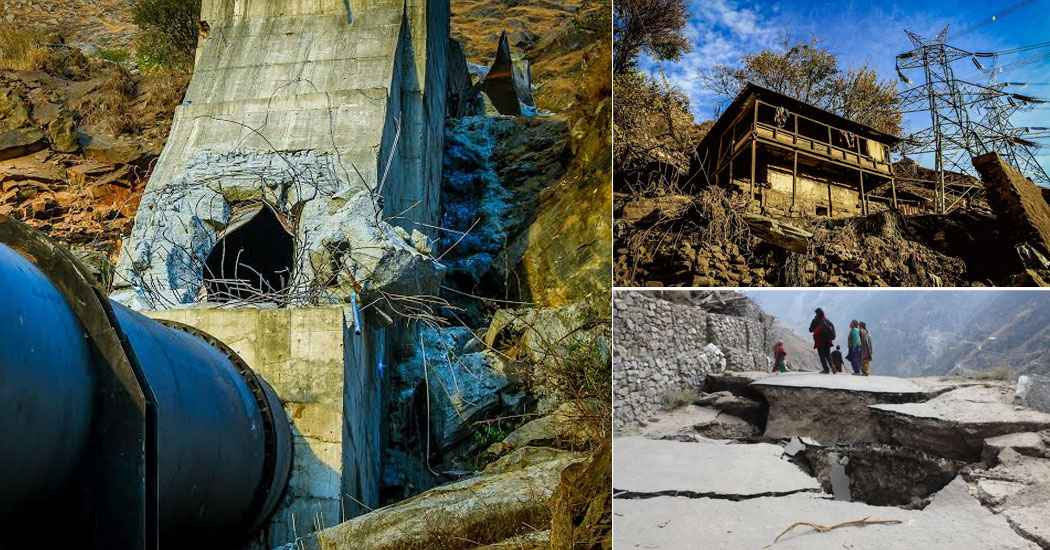
In the last two weeks a half a dozen lives have been lost in the Kinnaur region alone in three separate incidents that have one thing in common – accidents at hydropower project sites. The first event took place in Burang village on the 18th of November 2015 where a penstock pipe burst off the 100 MW Sorang Hydro-electric project led to the death of three people.
Himdhara, an Environment Research and Action Collective in Himachal,has been fighting against irregularities in the construction of hydro-power projects and negligence of the Himachal Pradesh Government towards lethal consequences of it. After recent mishaps, the group is demanding strict safety norms and monitoring of such projects.
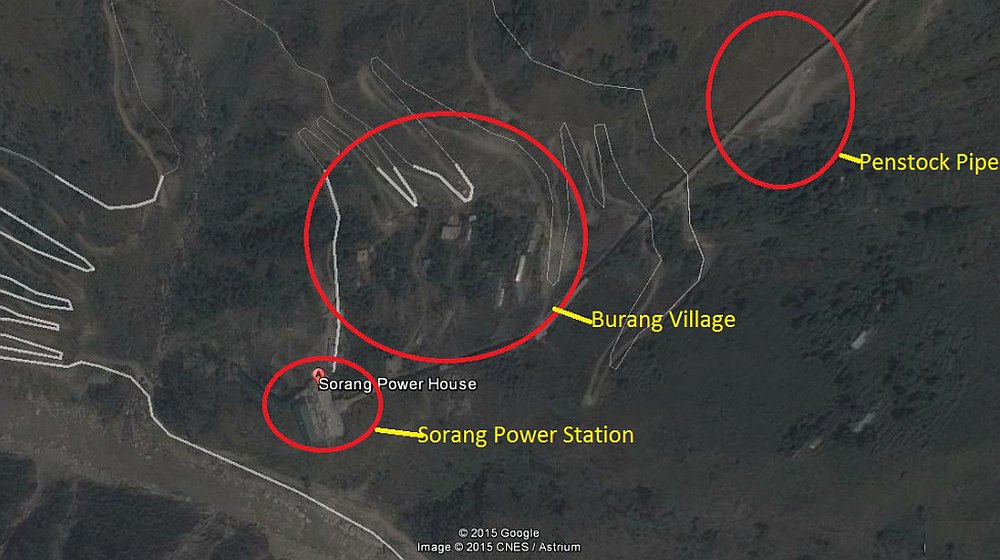
Image: SANDRP
On November 29, 2015, two labourers died in blasting operations in the 450 MW Shongthong Karchham project, some others were seriously injured. And on the same day in the Bhabha Valley, a young teacher lost her life in a landslide that occurred in the area.
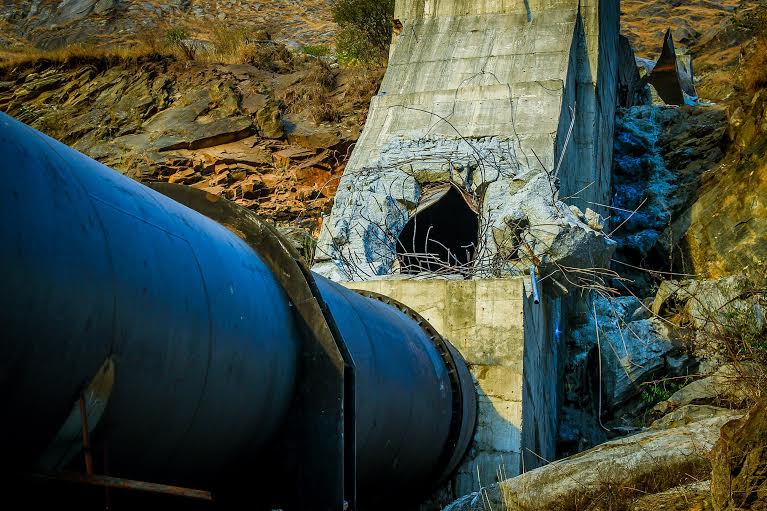
Penstock pipe burst at 100 MW Sorang Hydro-electric project/ Image Credit:Sumit Mahar
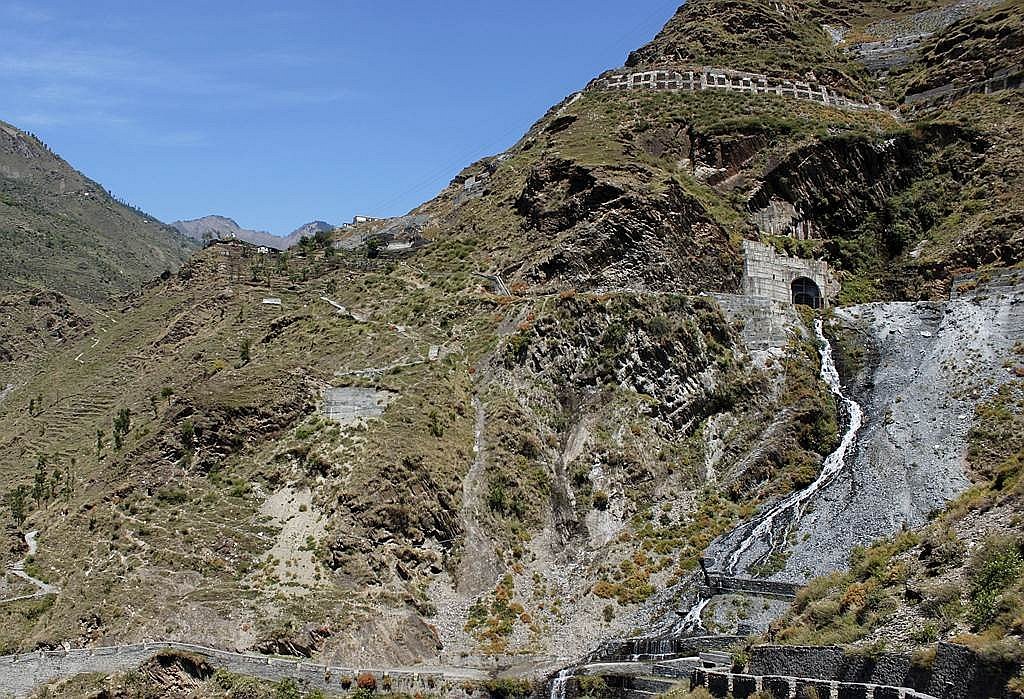
Even now more lives are at stake – Four days after the Sorang project disaster on 22nd November, a massive landslide occurred in Chagaon Village, located on the alignment of the Karchham Wangtoo project’s tunnel. While houses and property was damaged fortunately there were no fatalities. More of the area is likely to slide soon. Residents of Panvi Panchayat from Kinnaur carried out a demonstration last week at Shimla protesting the cracks in their houses due to the underground construction by the 9 MW Ralla-Taranda project.
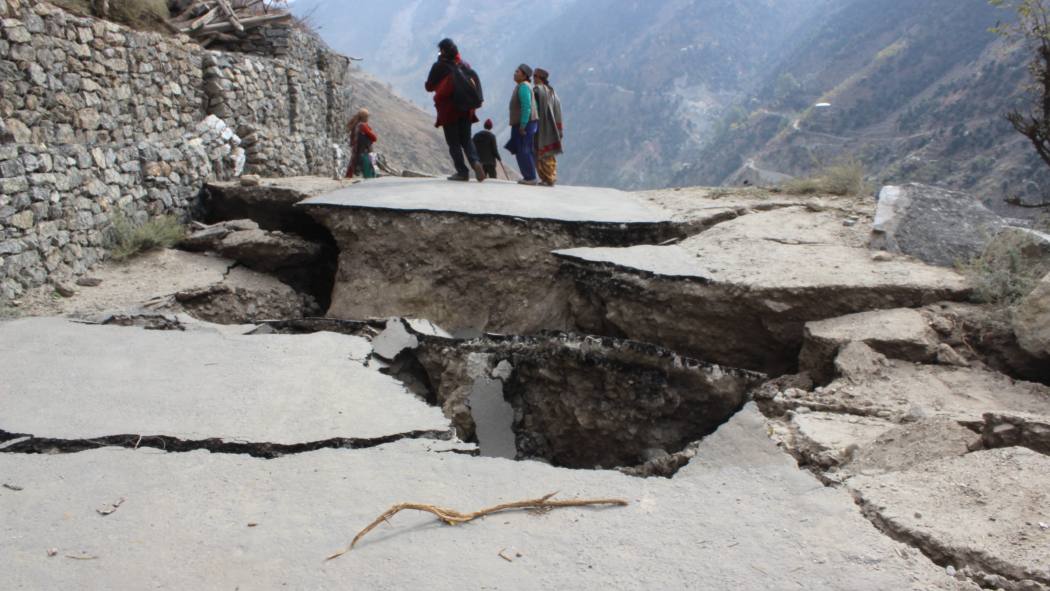
Cracks on link road Chagaoun/Image Credit: Sumit Mahar
It is time that the Himachal government wake up from its long slumber, because these events are not freak accidents, they are the result of sheer negligence in the construction of hydropower projects in the state. This negligence is evident at two levels – firstly the failure in ensuring compliance to environmental and safety norms by project authorities and the government. The second, is the negligence towards the very impacts of unregulated hydropower development. In both cases the project authorities have shown sheer callousness, continuously ignoring the issues raised by local people and environmentalists.
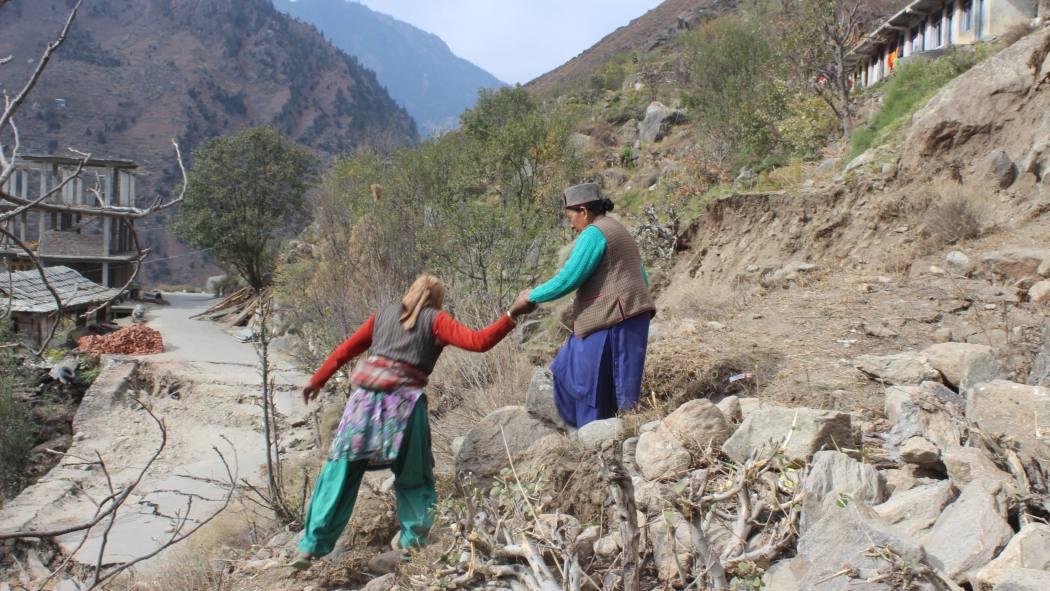
Land Destabilisation at Chagaoun/Image Credit: Sumit Mahar
Now the geological, ecological and hydrological impacts of these projects, especially in fragile zones like Kinnaur are emerging clearly.
For instance, during tunnel digging heavy blastings are used which causes cracks in the houses. Around 80% people of project area are affected by this problem. It has also caused drying up of springs, grazing and agricultural fields. According to data obtained by Him Dhara, a Himachal based environment action group, under the Right to Information Act in 2012 from the Irrigation and Public Health Department, 43 out of 167 water sources had dried up in villages affected by the Karchham Wangtoo project, and discharge in another 67 has gone down. That was three years ago. The condition has worsen.
According to forest department estimates, over 9,000 hectares of forest land have so far been diverted to non-forest use. Of this, 7,000 hectares were used for hydel projects.
However, Himdhara alleged that the government has not just overlooked these impacts but justified each and every project making excuses and even trying to cover these impacts. For instance, the issue of slope destabilisation and landlsides in Kinnaur has been blamed on rainfall fluctuations, floods or other natural factors without conducting any independent studies. The project authorities have gone to the stupid extent of saying that these landslides are occurring naturally in the area. If that is the case, is it not all the more reason that the construction in these regions has to be controlled and regulated rather than allowing disastrous projects like Karchham Wangtoo to come up here?
No action against companies openly flaunting Safety Regulations and Monitoring<
As far as issues of safety regulations and monitoring goes, there are an ample number of incidences vis a vis hydropower projects that have occurred in the last couple of years apart from the ones that happened in the last two weeks in Kinnaur.
The seepage in the Chamera III project had washed off Mokhar village’s habitations. The reservoir of the Aleo-II project in Kullu in its first testing, had burst washing off the labour camps.
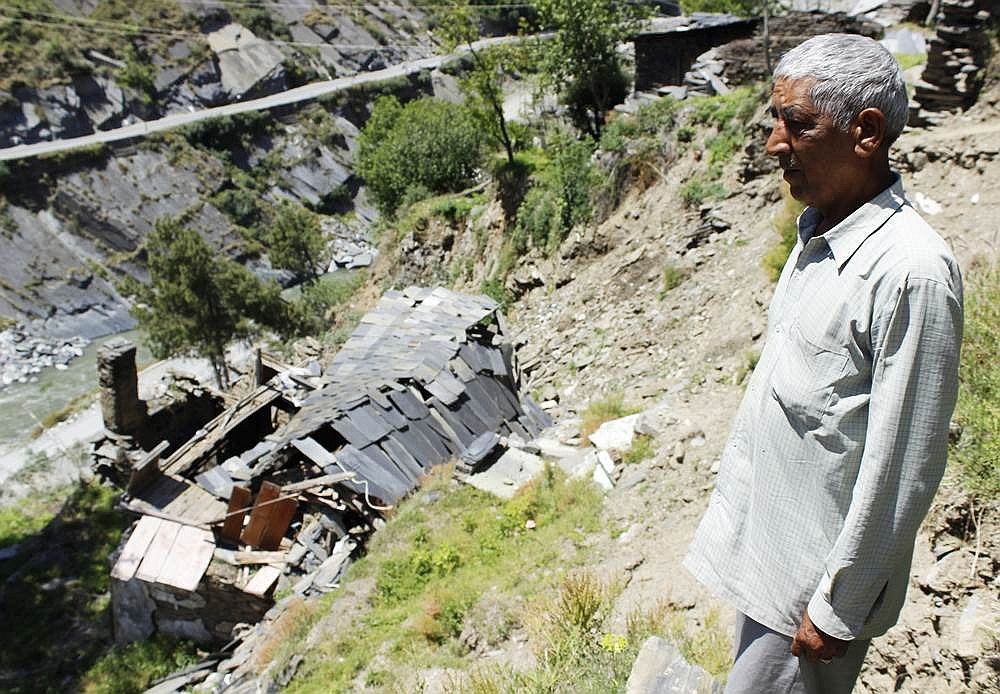
A villager standing in front of the debris of his leftover house after the leakage tragedy
Gallery Showing Horrific Chamera III Project Disaster in 2012

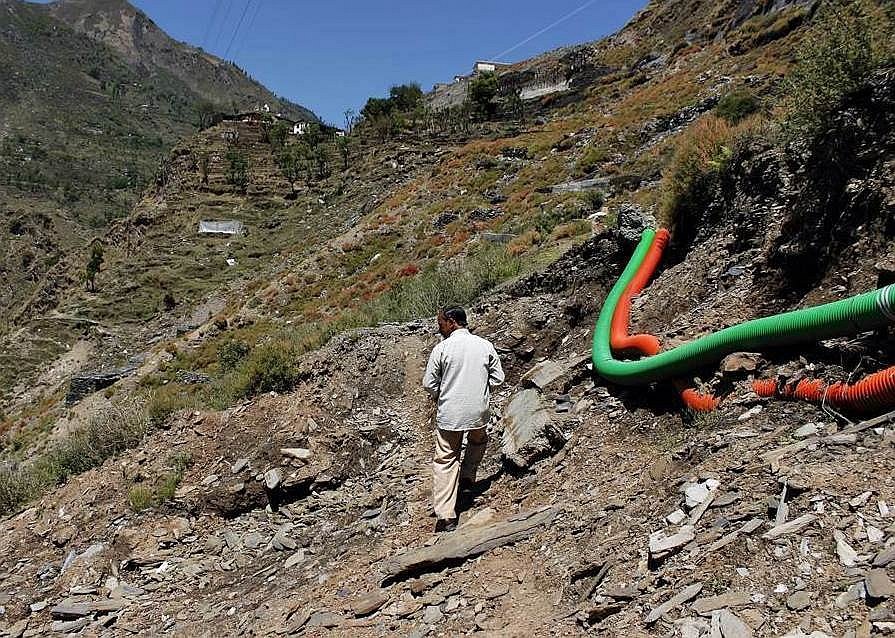
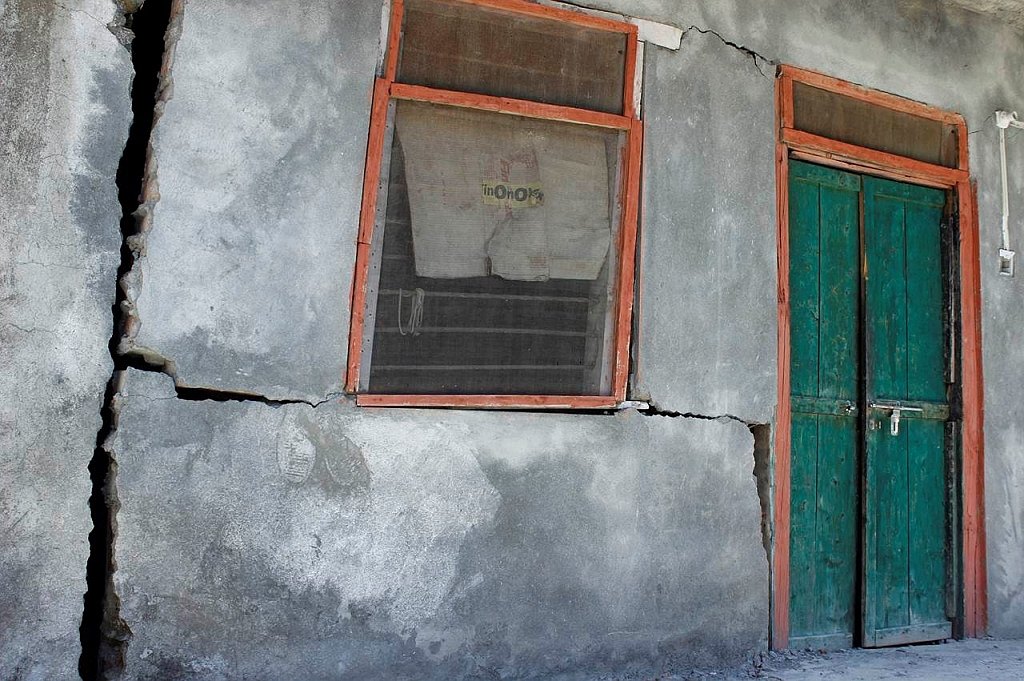
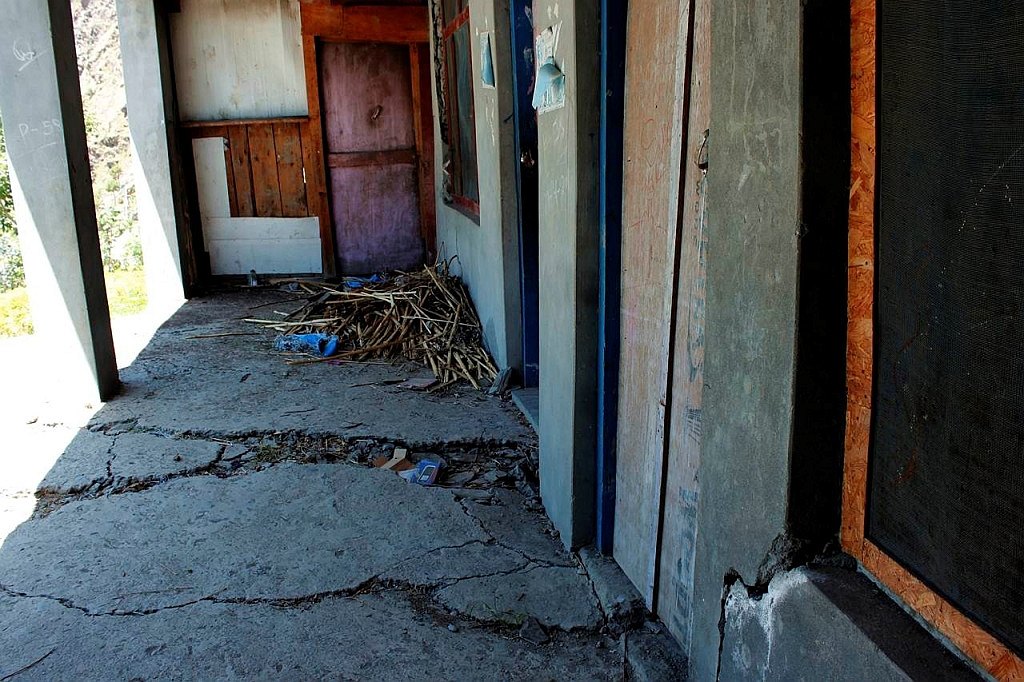

Images by South Asia Network on Dams, Rivers and People
Three engineers were suffocated to death at the state-run Rongtong hydropower project in Spiti valley when a valve at the plant burst all of a sudden.
The seepages in the Karchham Wangtoo tunnel which were noticed in 2011 – are indicators of a disaster waiting to happen. Despite it being mandatory as per the Hydropower Policy 2006 that there will be a safety monitoring authority in the state that will look into the safety quality monitoring for hydropower projects, no such authority existed till recently.
As late as August 2013, the Department of Power and MPP issued a notification about the creation of such an authority. Now the government should immediately make public all the work that has been done by this authority in the last two years. The people have a right to know, how often this committee convened its meetings, which are the projects it has monitored and what action has been taken in the cases of negligence and accidents. Has any punitive action been taken against power companies for negligence?
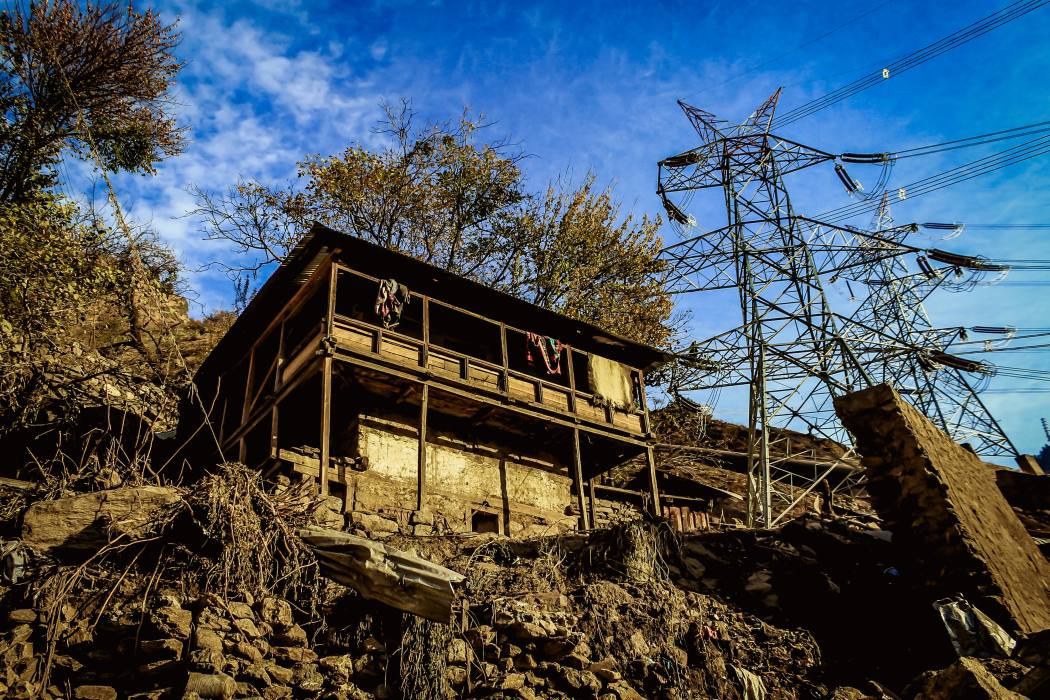
House is sliding Burang, Shorang HEP/ Image Credit :Sumit Mahar
It needs to be put on record, in the context of the 100 Mw Sorang Hydro-Electric Project that the villagers had brought to the company’s notice that there were leakages in the penstock pipe at an earlier date on 8th May 2015. This indicates that there was some technical fault in the project despite which the testing was carried out. Further, it needs to be raised that on the night of the testing (when the accident occurred) no warning was issued by the project authorities while carrying out the testing of the penstock pipe.
Disaster awaits Burang Village
Today, the Burang village is nothing less than a danger zone with rock and debris just hanging above heads of the residents. We wonder how the company even had the audacity to carry out construction in an area where there was habitation – even if temporary/ for part of the year. In event of heavy rains or tremors of any sort there will be additional damage and fatality which should be avoided at any cost. All families who are residing in Burang need to be protected so that they do not become victims of yet another accident which will be caused due to sheer negligence of the company as well as the administration, who is now responsible for the safety of the people.
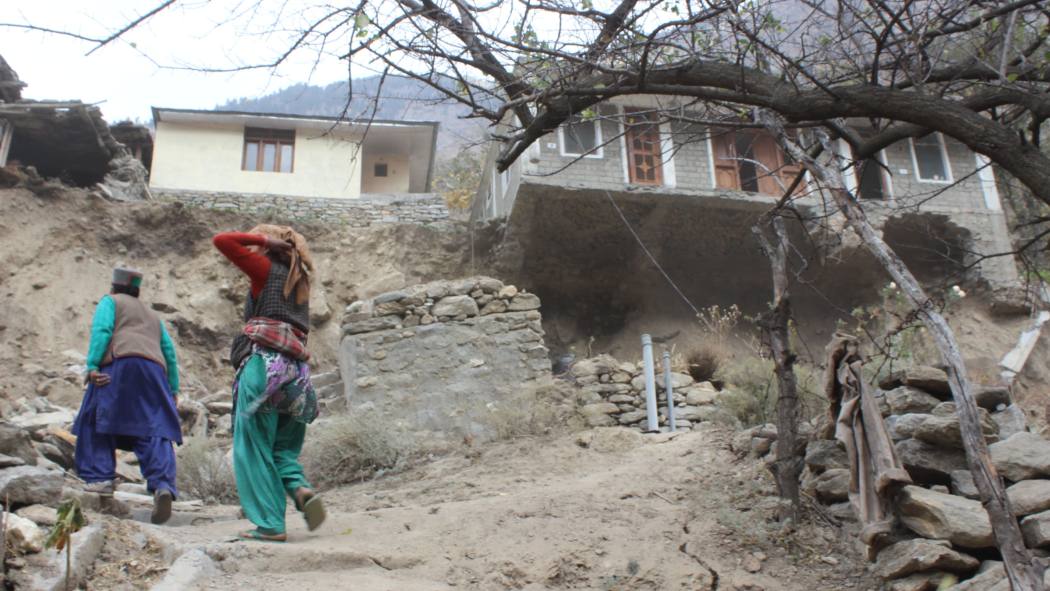
House sliding down Chagaoun/Image Credit: Sumit Mahar
Complete Failure of Central and State Government
As per a report (2013) by Comptroller and Auditor General of India (CAG), a total of 559 run-of-river hydro projects with an aggregate generation capacity of 10,131 MW were allotted to independent power producers from November 1991 to January 2012.
The central and state monitoring and regulatory authorities have failed miserably and have ignored several incidents of landslides, massive erosion, drying up of water sources, sudden reappearance of water sources, deforestation leading to soil erosion, illegal muck dumping etc. Despite the impact of these on the horticulture, local vegetable cultivation, day to day life and safety of the people the government has not taken any action whatsoever on project proponents and have been blind to the issues raised by the affected people time and again.


Environment
Shimla: Retaining Wall Collapses During Four-Lane Construction, Residents Flee Homes to Save Lives


SHIMLA | 3 July 2025 –A major mishap occurred in the Lindi Dhar village of Shimla district during the ongoing four-lane highway construction, raising fresh concerns over safety and construction quality. A retaining wall, constructed as part of the project, collapsed once again—posing a serious threat to nearby homes and destroying hundreds of apple trees.
According to local residents, this is not the first time the wall has caved in. Despite previous incidents, authorities failed to take adequate corrective measures. The latest collapse forced several families to abandon their homes for safety, fearing further landslides and structural damage.
Villagers have accused the National Highways Authority of India (NHAI) and its contractors of negligence. They allege that no proper safety precautions were taken in the construction process, even though the area is known to be vulnerable to landslides.
“This wall had collapsed earlier too, but no permanent solution was provided. Now, we are facing the same threat again. Our lives and properties are at constant risk,” said a local resident.
The landslide also damaged a large number of apple orchards—adding to the losses of local farmers who depend on horticulture for their livelihood.
Residents have demanded immediate intervention from the administration and strict action against those responsible for the substandard construction. They have also urged NHAI to put in place robust safety measures to prevent such incidents in the future.
Local officials have visited the site, and further assessment is awaited.
Environment
Police Complaint Alleges Criminal Negligence in Four-Lane Highway Project Between Parwanoo and Solan

Solan | 30 June 2025 – A police complaint has been filed at the Parwanoo Police Station in Solan district, alleging criminal negligence and environmental damage in the construction of the four-lane highway between Parwanoo and Solan. The complaint, submitted by former Deputy Mayor of Shimla Tikender Singh Panwar, accuses the National Highways Authority of India (NHAI) and its executing contractor, G R Infraprojects Limited, of serious lapses that have endangered lives, property, and the natural ecosystem.
According to the complaint, NHAI officials based at the Chakkar office in Shimla, along with planning teams at Rishikesh Sadan, Shanti Kutia, and the executing agency G R Infra, with its corporate office in Sector 18, Gurugram, failed in their duty to ensure minimal damage to the hilly terrain. It is alleged that the project was undertaken without proper consultation with the Geological Department, resulting in a project report that is “completely erroneous.”
Panwar contends that the design and method of slope cutting are fundamentally flawed, driven by ill-conceived ideas and profit motives.
“Instead of cutting the hills at a slope, the excavation has been done vertically,” the complaint states, warning that this approach poses a permanent threat to residents living near the construction site.
The complaint further highlights that since the beginning of the construction, there have been recurring losses of life and property, which the complainant attributes directly to unsafe and irresponsible construction practices.
Significantly, the complaint raises concerns about possible collusion between NHAI and GR Infra, and urges law enforcement to determine whether the negligence was circumstantial or the result of deliberate wrongdoing.
Panwar has demanded that both NHAI and G R Infraprojects Limited be held criminally liable and subjected to legal proceedings under relevant provisions.
As of now, neither NHAI nor G R Infra has issued an official response.
Environment
Himachal Bans Small PET Bottle, Rs 5,000 Fine on Littering of Single-Use Plastics, Compostable Bags

Shimla, May 27, 2025 – Small PET bottles (up to 500 ml) are littering Himachal Pradesh’s hills, forests, and water bodies, threatening its fragile ecosystem.
Ban on Small PET Bottles
Under the HP Non-Biodegradable Garbage (Control) Act, 1995, the state has banned these bottles in all government-organized indoor meetings, conferences, and events, effective June 1, 2025.
Impact on Hotels
The ban extends to HPTDC and private hotels, which must switch to glass bottles or steel water dispensers. A grace period allows clearing existing stocks to avoid financial losses.
Fines for Littering
A Rs 5,000 fine targets littering of single-use plastics, including compostable bags, by individuals, hotels, restaurants, and other institutions.
Mandatory Car Bins
From April 29, 2025, all taxis and public transport vehicles, including HRTC buses, must install ‘car bins’ for waste collection.
Enforcement Measures
Regional Transport Officers and Motor Vehicle Inspectors will verify bins during vehicle registration. Non-compliance incurs a Rs 10,000 fine, with Rs 1,500 for littering biodegradable waste.
Awareness Campaigns
Government bodies will conduct awareness campaigns to discourage small PET bottle use and promote sustainable practices.
Challenges
Himachal’s ban on small PET bottles and vehicle littering targets plastic pollution but faces challenges. Past bans faltered due to weak enforcement, especially in rural and tourist areas.
Small businesses may struggle with costly alternatives like glass or steel containers. Tourists, a major litter source, need better awareness. The car bin mandate requires rigorous monitoring to ensure compliance. Without robust recycling systems and public cooperation, the ban risks limited impact. Subsidizing eco-friendly options and strengthening enforcement are critical to protect Himachal’s ecosystem effectively.


Himachal’s LPG Supply Hit Amid Global Tensions, Likely to Affect Hospitality Industry

Himachal Teen Survives 12-Minute Leopard Attack, Kills Predator in Self-Defense

Weather Forecast for Himachal Pradesh For the Next Two Weeks

Monsoon 2025: Himachal Pradesh Suffers 199 Casualties, Over ₹1,905.50 Cr in Damages

 Home Decor Ideas 2020