
Nation
List of Government’s Revised “Lockdown Guidelines”: Know What’s Permitted, What’s Not

New Delhi-Government of India issued an Order on 14th April 2020 that the lockdown measures stipulated in the Consolidated Guidelines of Union Ministry of Home Affairs (MHA) for containment of COVID-19 epidemic in the country, will continue to remain in force upto 3rd May 2020.
In pursuance of the above-said order of Government of India, MHA has issued consolidated revised guidelines regarding lockdown measures to be taken by Ministries/Departments of Government of India, State/UT Governments for containment of COVID-19 epidemic in the country. The guidelines also prescribe National Directives for COVID-19 management; SOPs for Social Distancing at offices, workplaces, factories and establishments; and, penalties for offences regarding violation of lockdown measures under relevant sections of Disaster Management Act 2005 and IPC, 1860.
MHA has directed all the Ministries/Departments of Government of India and State Governments /Union Territory Administrations for the strict implementation of enclosed consolidated revised guidelines.
Note: Below Given Document has not been edited by Himachal Watcher. It was published as it was received from by the Union Government.
List of Services to Remain Prohibited During Lockdown
With the extension of the lockdown period, the following activities will continue to remain prohibited across the country until 3rd May 2020:
- All domestic and international air travel of passengers, except for purposes enumerated in para 4 (ix), and for security purposes.
- All passenger movement by trains, except for security purposes.
- Buses for public transport.
- Metro rail services.
- Inter-district and inter-State movement of individuals except for medical reasons or for activities permitted under these guidelines.
- All educational, training, coaching institutions etc. shall remain closed.
- All industrial and commercial activities other than those specifically permitted
under these guidelines. - Hospitality services other than those specifically permitted under these guidlines
- Taxis (including auto-rickshaws and cycle rickshaws) and services of cab
- All cinema halls, malls, shopping complexes, gymnasiums, sports complexes, swimming pools, entertainment parks, theatres, bars and auditoriums, assembly halls and similar places.
- All social/ political/ sports/ entertainment/ academic/ cultural/ religious
functions/ other gatherings. - All religious places/ places of worship shall be closed for public. Religious
congregations are strictly prohibited. - In case of funerals, congregation of more than twenty persons will not be
Operation of guidelines in Hotspots and containment zones
- `Hotspots’, areas of large COVID-19 outbreaks, or clusters with significant spread of COVID-19, will be determined as per the guidelines issued by Ministry of Health and Family Welfare (MoHFW), Government of India (Gal).
- In these hotspots, containment zones will be demarcated by States/ UTs/ District administrations as per the guidelines of MoHFW.
- In these containment zones, the activities allowed under these guidelines will not be permitted. There shall be strict perimeter control in the area of the containment zones to ensure that there is no unchecked inward/ outward movement of population from these zones except for maintaining essential services (including medical emergencies and law and order related duties) and Government business continuity. The guidelines issued in this regard by MoHFW will be strictly implemented by State/ UT Governments and the local district authorities.
Services Permitted
Selected permitted activities allowed with effect from 20th April, 2020:
To mitigate hardship to the public, select additional activities have been allowed which will come into effect from 20th April, 2020. These limited exemptions will be operationalized by States/ UTs/ district administrations based on strict compliance to the existing guidelines. Also, before allowing these select additional activities. States/ UTs/ district administrations shall ensure that all preparatory arrangements with regard to the Standard Operating Procedures (SOPs) for social distancing in offices, workplaces, factories and establishments, as also other sectoral requirements are in place.
The consolidated revised guidelines incorporating these select permitted activities have been enumerated in paras 5-20 below.
Strict enforcement of the lockdown guidelines
State/ UT Governments shall not dilute these guidelines issued under the Disaster Management Act, 2005, in any manner, and shall strictly enforce the samee.
State/ UT Governments, may, however, impose stricter measures than these guidelines as per requirement of the local areas.
All health services (including AYUSH) to remain functional, such as:
- Hospitals, nursing homes, clinics, telemedicine facilities.
- Dispensaries, chemists, pharmacies, all kinds of medicine shops including Jan Aushadhi Kendras and medical equipment shops.
- Medical laboratories and collection centres.
- Pharmaceutical and medical research labs, institutions carrying out COVI 0-19 related research.
- Veterinary Hospitals, dispensaries, clinics, pathology labs, sale and supply of vaccine and medicine.
- Authorised private establishments, which support the provisioning of essential services, or efforts for containment of COVID-19, including home care providers, diagnostics, supply chain firms serving hospitals.
- Manufacturing units of drugs, pharmaceuticals, medical devices, medical oxygen, their packaging material, raw material and intermediates.
- Construction of medical/ health infrastructure including manufacture of ambulances.
- Movement (inter and intra State, including by air) of all medical and veterinary personnel, scientists, nurses, para-medical staff, lab technicians, midwives and other hospital support services, including ambulances.
Agricultural and related activities:
All agricultural and horticultural activities to remain fully functional, such as:
- Farming operations by farmers and farm workers in field.
- Agencies engaged in procurement of agriculture products, including MSP operations.
- ‘Mandis’ operated by the Agriculture Produce Market Committee (APMC) or as notified by the State/ UT Government (e.g., satellite mandis).
- Direct marketing operations by the State/ UT Government or by industry directly from farmers/ group of farmers, FPOs’ co-operatives etc. States/ UTs may promote decentralized marketing and procurement at village level.
- Shops of agriculture machinery, its spare parts (including its supply chain) and repairs to remain open.
- ‘Custom Hiring Centres (CHC)’ related to farm machinery.
- Manufacturing, distribution and retail of fertilizers, pesticides and seeds.
- Movement (inter and Intra State) of harvesting and sowing related machines like combined harvester and other agriculture/ horticulture implements.
Fisheries – the following activities will be functional:
- Operations of the fishing (marine and inland)/ aquaculture industry, including feeding & maintenance, harvesting, processing, packaging, cold chain, sale and marketing.
- Hatcheries, feed plants, commercial aquaria.
- Movement of fish/ shrimp and fish products, fish seed/ feed and workers for all these activities.
Plantations- the following activities will be functional:
Operations of tea, coffee and rubber plantations, with maximum of 50% of workers
Processing, packaging, sale and marketing of tea, coffee, rubber and cashew, with maximum of 50% workers.
Animal husbandry — the following activities will be functional:
Collection, processing, distribution and sale of milk and milk products by milk processing plants, including transport and supply chain.
- Operation of animal husbandry farms including poultry farms & hatcheries and livestock farming activity.
- Animal feed manufacturing and feed plants, including supply of raw material, such as maize and soya.
- Operation of animal shelter homes
Financial sector: following to remain functional:
- Reserve Bank of India (RBI) and RBI regulated financial markets and entities
- like NPCI, CCIL, payment system operators and standalone primary dealers.
- Bank branches and ATMs, IT vendors for banking operations, Banking
- Correspondents (BCs), ATM operation and cash management agencies.
- Bank branches be allowed to work as per normal working hours till disbursal of DBT cash transfers is complete.
- Local administration to provide adequate security personnel at bank branches and BCs to maintain social distancing. law and order and staggering of account holders.
- SEBI, and capital and debt market services as notified by the Securities and
- Exchange Board of India (SEBI).
- IRDAI and Insurance companies.
Social sector: following to remain functional:
- Operation of homes for children/ disabled/ mentally challenged/ seniorcitizens/ destitutes/ women/ widows.
- Observation homes, after care homes and places of safety for juveniles.
- Disbursement of social security pensions, e.g., old age/ widow/ freedom fighter pensions; pension and provident fund services provided by Employees Provident Fund Organisation (EPFO).
- Operation of Anganwadis — distribution of food items and nutrition once in 15 days at the doorsteps of beneficiaries, e.g., children, women and lactating mothers.
Online teaching/ distance learning to be encouraged:
- All educational, training, coaching institutions etc. shall remain closed.
- However, these establishments are expected to maintain the academic schedule through online teaching.
- Maximum use of Doordarshan (DD) and other educational channels may be made for teaching purposes.
MNREGA works to be allowed:
- MNREGA works are allowed with strict implementation of social distancing and face mask.
- Priority to be given under MNREGA to irrigation and water conservation works.
- Other Central and State sector schemes in irrigation and water conservation sectors may also be allowed to be implemented and suitably dovetailed with MNREGA works.
Public utilities: following to remain functional:
- Operations of Oil and Gas sector, including refining, transportation, distribution, storage and retail of products, e.g., petrol, diesel, kerosene, CNG, LPG, PNG etc.
- Generation, transmission and distribution of power at Central and State/ UT
- Postal services, including post offices.
- Operations of utilities in water, sanitation and waste management sectors, at municipal/ local body levels in States and UTs.
- Operation of utilities providing telecommunications and Internet services.
Movement, loading/ unloading of goods/ cargo (inter and intra State) is allowed, as under:
- All goods traffic will be allowed to ply.
- Operations of Railways: Transportation of goods and parcel trains.
- Operations of Airports and related facilities for air transport for cargo movement, relief and evacuation.
- Operations of Seaports and Inland Container Depots (ICDs) for cargo transport, including authorized custom clearing and forwarding agents.
- Operations of Land Ports for cross land border transportation of essential goods, including petroleum products and LPG, food products, medical
- Movement of all trucks and other goods/ carrier vehicles with two drivers and one helper subject to the driver carrying a valid driving license; an empty truck/ vehicle will be allowed to ply after the delivery of goods, or for pick up of Shops for truck repairs and dhabas on highways, with a stipulated minimum distance as prescribed by the State/ UT authorities.
- Movement of staff and contractual labour for operations of railways, airports/ air carriers, seaports/ ships/ vessels.
- Landports and ICDs is allowed on passes being issued by the local authority on the basis of authorizations issued by the respective designated authority of the railways, airports, seaports, landports and 1CDs.
Supply of essential goods is allowed, as under:
- All facilities in the supply chain of essential goods, whether involved in manufacturing, wholesale or retail of such goods through local stores, large brick and mortar stores or e-Commerce companies should be allowed to operate, ensuring strict social distancing without any restriction on their timing of opening and closure.
- Shops (including Kirana and single shops selling essential goods) and carts, including ration shops (under PDS), dealing with food and groceries (for daily use), hygiene items, fruits and vegetables, dairy and milk booths, poultry, meat and fish, animal feed and fodder etc, should be allowed to operate, ensuring strict social distancing without any restriction on their timing of opening and closure.
- District authorities may encourage and facilitate home delivery to minimize the
movement of individuals outside their homes.
Commercial and private establishments, as listed below, will be allowed to operate:
- Print and electronic media including broadcasting, DTH and cable services.
- IT and IT enabled Services, with upto 50% strength.
- Data and call centres for Government activities only.
- Government approved Common Service Centres (CSCs) at Gram Panchayat
- E-commerce companies. Vehicles used by e-commerce operators will be allowed to ply with necessary permissions.
- Courier services.
- Cold storage and warehousing services, including at ports, airports, railway stations, container Depots, individual units and other links in the logistics
- Private security services and facilities management services for maintenance and upkeep of office and residential complexes.
- Hotels, homestays, lodges and motels, which are accommodating tourists and persons stranded due to lockdown, medical and emergency staff, air and sea
- Establishments used/ earmarked for quarantine facilities.
- Services provided by self-employed persons, e.g., electrician, IT repairs, plumbers, motor mechanics, and carpenters.
Industries/ Industrial Establishments (both Government and private), as listed below, will be allowed to operate:
- Industries operating in rural areas, i.e., outside the limits of municipal corporations and municipalities.
- Manufacturing and other industrial establishments with access control in Special Economic Zones (SEZs) and Export Oriented Units (EoUs), industrial estates, and industrial townships. These establishments shall make arrangements for stay of workers within their premises as far as possible and/ or adjacent buildings and for implementation of the Standard operating protocol (SOP) as referred to in para 21 (ii) below. The transportation of workers to workplace shall be arranged by the employers in dedicated transport by ensuring social distancing.
- Manufacturing units of essential goods, including drugs, pharmaceuticals, medical devices, their raw material and intermediates.
- Food processing industries in rural areas, i.e., outside the limits of municipal corporations and municipalities.
- Production units, which require continuous process, and their supply chain.
- Manufacturing of IT hardware.
- Coal production, mines and mineral production, their transportation, supply of explosives and activities incidental to mining operations.
- Manufacturing units of packaging material.
- Jute industries with staggered shifts and social distancing.
- Oil and gas exploration/ refinery.
- Brick kilns in rural areas i.e., outside the limits of municipal corporations.
Construction activities, listed as below, will be allowed to operate:
- Construction of roads, irrigation projects, buildings and all kinds of industrial projects, including MSMEs, in rural areas, i.e., outside the limits of municipal corporations and municipalities; and all kinds of projects in industrial estates.
- Construction of renewable energy projects.
- Continuation of works in construction projects, within the limits of municipal corporations and municipalities, where workers are available on site and no workers are required to be brought in from outside (in situ construction).
Movement of persons is allowed in the following cases:
- Private vehicles for emergency services, including medical and veterinary and for procuring essential commodities. In such cases, one passenger besides the private vehicle driver can be permitted in the backseat, in case of four-wheelers; however, in case of two-wheelers, only the driver of the vehicle is to be permitted.
- All personnel travelling to place of work and back in the exempted categories, as per the instructions of the State/ UT local authority.
Offices of the Government of India, its Autonomous/ Subordinate Offices will remain open, as mentioned below:
- Defence, Central Armed Police Forces, Health and Family Welfare, Disaster management and Early Warning Agencies (IMD, INCOIS, SASE and National Centre of Seismology.
- CWC), National Informatics Centre (NIG), Food Corporation of India (FCI), NCC, Nehru Yuva Kendras (NYKs) and Customs to function without any restriction.
- Other Ministries and Departments, and offices under their control, are to function with 100% attendance of Deputy Secretary and levels above that.
- Remaining officers and staff to attend upto 33% as per requirement.
Offices of the State/ Union Territory Governments, their Autonomous Bodies and Local Governments will remain open, as mentioned below:
- Police, home guards, civil defence, fire and emergency services, disaster management, prisons and municipal services will function without any All other Departments of State/ UT Governments to work with restricted staff.
- Group ‘A’ and ‘B’ officers may attend as required. Group ‘C’ and levels below that may attend upto 33% of strength, as per requirement to ensure social However, delivery of public services shall be ensured, and necessary staff will be deployed for such purpose.
- District administration and Treasury (including field offices of the Accountant General) will function with restricted staff. However, delivery of public services shall be ensured, and necessary staff will be deployed for such purpose.
- Resident Commissioner of States/ UTs, in New Delhi, only to the extent of coordinating COVID-19 related activities and internal kitchen operations.
- Forest offices: staff/ workers required to operate and maintain zoo, nurseries, wildlife, fire-fighting in forests, watering plantations, patrolling and their necessary transport movement.
Persons to remain under mandatory quarantine, as under:
- All such persons who have been directed by health care personnel to remain under strict home/ institutional quarantine for a period as decided by local Health Authorities.
- Persons violating quarantine will be liable to legal action under Section 188 of the IPC, 1860.
- Quarantined persons, who have arrived in India after 15.2.2020, after expiry of their quarantine period and being tested COVID-19 negative, will be released following the protocol prescribed in the SOP issued by MHA.





Nation
Possible Causes of Air India Flight AI171 Crash in Ahmedabad: Expert Insights and Historical Comparisons

New Delhi- On June 12, 2025, Air India Flight AI171, a Boeing 787-8 Dreamliner, crashed seconds after takeoff from Sardar Vallabhbhai Patel International Airport in Ahmedabad, India, en route to London Gatwick Airport. The disaster, which killed 241 of the 242 passengers and crew and at least 24 people on the ground, is under investigation by India’s Aircraft Accident Investigation Bureau (AAIB) with international support. The aircraft issued a Mayday call and lost signal at 625 feet.
Potential Causes of the Crash
Preliminary investigations suggest multiple possible factors, though no definitive cause has been confirmed. CCTV footage shows the aircraft struggling to climb, with its landing gear down and flaps retracted—an unusual configuration for takeoff. Experts cited in Indian news outlets have outlined the following potential causes:
- Engine Failure: Captain Saurabh Bhatnagar, a former senior pilot, told NDTV, “The take-off was perfect, but just short of retracting the gear, the aircraft started descending, which can only happen if the engine loses power or the aircraft fails to generate lift.” Amit Singh, from Safety Matters Foundation, told Hindustan Times that a compressor failure or sudden power loss could be responsible, noting the aircraft’s abnormal configuration.
- Systemic Failure: Singh further stated, “That should not have been the case at all,” referring to the retracted flaps and extended landing gear, suggesting issues with flaps or elevators. An aviation expert, Sanjay Lazar told NDTV, “The catastrophic failure to achieve lift occurred at a very low altitude of 825 feet,” indicating a possible mechanical or configuration issue.
- Human Error: Captain Shakti Lumba, a retired Air India pilot, told The Times of India, “The landing gear was down, and the flaps appeared retracted, which is not the correct configuration for takeoff.” This suggests a potential pilot error in flap settings, though Captain Anupam Banerjee noted in Hindustan Times that the Boeing 787’s warning systems should have alerted the crew to such errors.
- Environmental Factors: Vipul Saxena told Hindustan Times that strong crosswinds and high temperatures (above 30°C) could have reduced lift, particularly with the aircraft’s 100,000-litre fuel load. Mohan Ranganathan highlighted Ahmedabad airport’s history of bird activity during the monsoon season. Still, Sam Thomas, president of the Airline Pilots Association of India, dismissed dual-engine failure from bird strikes as unlikely, stating, “The probability is one in a billion flying hours.”
The investigation continues, with Air India clarifying that reports of black box recovery remain unconfirmed. The pilots, Captain Sumeet Sabharwal and First Officer Clive Kunder, had over 9,000 combined flying hours, and the aircraft had no reported maintenance issues before the flight.
Other Devastating Plane Crashes
The Air India Flight AI171 crash, with at least 265 fatalities, ranks among the deadliest aviation disasters in recent history. Below is a comparison with other significant crashes worldwide, based on casualty figures and causes, as reported by credible Indian news sources:
- Malaysia Airlines Flight 17 (2014): 298 fatalities. The Boeing 777 was shot down over Ukraine by a surface-to-air missile, as reported by The Hindu. Unlike AI171, this was a deliberate act of sabotage.
- Japan Airlines Flight 123 (1985): 520 fatalities. A Boeing 747 crashed into a mountain due to improper repairs on the rear pressure bulkhead, causing explosive decompression, as noted by The Times of India. This mechanical failure contrasts with AI171’s potential engine or configuration issues but highlights maintenance risks.
- Air India Flight 182 (1985): 329 fatalities. A bomb explosion destroyed the Boeing 747 over the Atlantic Ocean, as covered by Hindustan Times. This terrorism-related incident differs from AI171’s likely technical causes.
- American Airlines Flight 191 (1979): 271 fatalities. A DC-10 crashed after an engine detached during takeoff due to maintenance errors, as reported by NDTV. This shares similarities with AI171’s possible engine failure or systemic issues during takeoff.
- Tenerife Airport Disaster (1977): 583 fatalities. Two Boeing 747s collided on a runway due to miscommunication and fog, as documented by The Indian Express. Unlike AI171, this involved human error in ground operations.
The AI171 crash is notable as the first fatal incident involving a Boeing 787 Dreamliner, introduced in 2011 with a previously clean safety record. Its low-altitude failure during takeoff aligns with data indicating that most crashes occur during takeoff or landing, as reported by The Indian Express.
The AAIB is analyzing flight data, pilot actions, and maintenance records to determine whether mechanical failure, human error, or environmental factors were primary contributors. The investigation’s findings will have implications for Air India’s Boeing 787 fleet, which India is considering grounding. Captain A.K. Sachdev, a retired Air Force officer, told The Print, “The rapid loss of altitude points to a critical failure, likely in propulsion or control systems.” The probe will be crucial for enhancing aviation safety protocols.
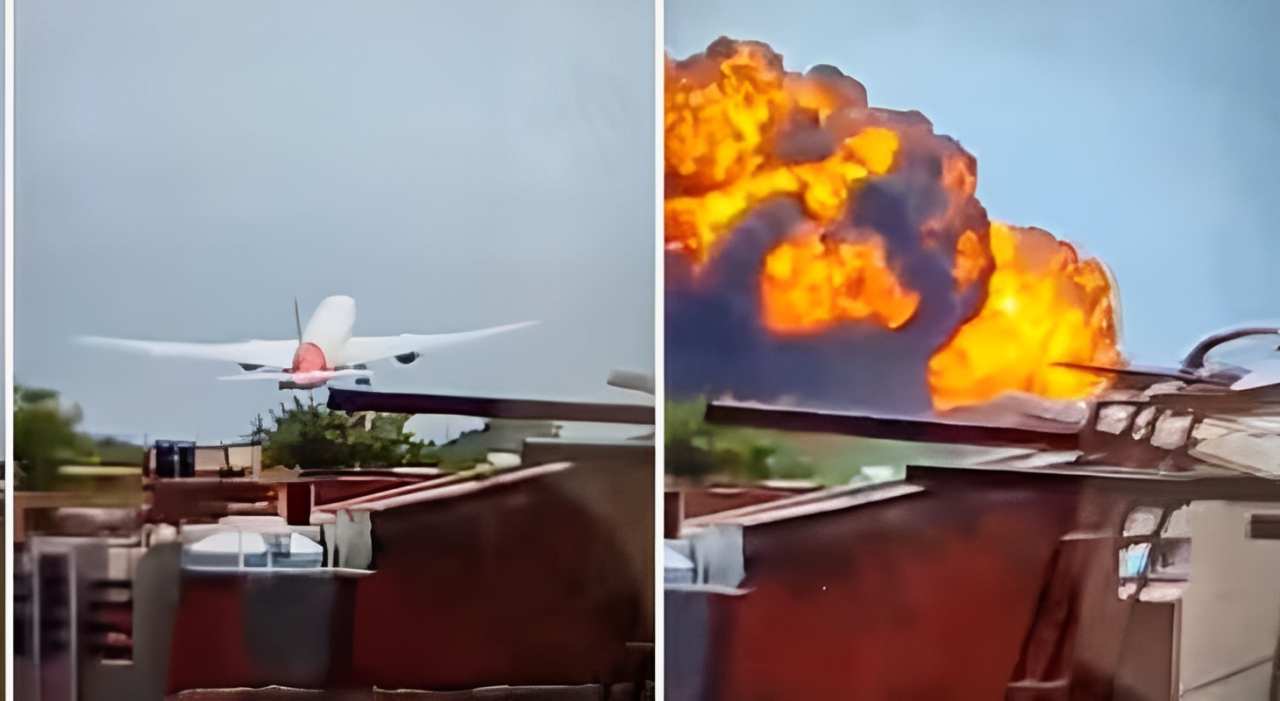
Ahmedabad | June 12, 2025 – An Air India Boeing 787-8 Dreamliner, operating Flight AI-171 from Ahmedabad to London Gatwick, plummeted shortly after departing Sardar Vallabhbhai Patel International Airport. The aircraft, with 242 people on board—including 230 passengers and 12 crew members—lost altitude moments after reaching approximately 625 feet, crashing into a residential doctors’ hostel in Ahmedabad’s Meghani Nagar neighbourhood.
A video capturing the tragic crash of Air India Flight AI-171, a Boeing 787-8 Dreamliner en route from Ahmedabad to London Gatwick, has been circulating on social media as well as in print media. The footage shared by several credible news channels, reportedly shows the aircraft… pic.twitter.com/vPybEZtBnb
— Himachal Watcher (@HimachalW) June 12, 2025
Emergency response teams are actively searching the wreckage, with numerous casualties reported and many feared trapped. Several survivors with severe injuries have been rushed to local hospitals. Authorities confirmed the aircraft issued a Mayday call seconds before the crash, indicating a critical emergency.
Ahmedabad plane crash: visuals from the crash site of Air India flight AI171 https://t.co/pPnFC9wR8O
— The Hindu (@the_hindu) June 12, 2025
According to Air India officials, the flight carried passengers from multiple countries, including 169 Indian nationals, 53 British nationals, seven Portuguese nationals, and one Canadian. Twelve fire brigades, ambulances, and six National Disaster Response Force (NDRF) units are assisting at the scene, where thick smoke and flames were visible for miles.
Prime Minister Narendra Modi expressed his grief, stating on X, “It is heartbreaking beyond words. In this sad hour, my thoughts are with everyone affected by it.” He added that he is closely coordinating with authorities to support rescue efforts. Air India has established an emergency response center and deployed teams to aid affected families.
The Directorate General of Civil Aviation (DGCA) has initiated an investigation, collaborating with Boeing representatives to determine the crash’s cause. Early speculation by experts suggests a possible bird strike may have impaired the aircraft’s takeoff performance. The incident is believed to be the first fatal crash involving a Boeing 787 Dreamliner.
Ahmedabad airport has halted operations temporarily to facilitate debris removal and the ongoing investigation.
Nation
India Spoils Pakistan’s Drone and Missile Attacks, 16 Civilians, Including 3 Women and 5 Children Killed in Shelling from the Pakistani side

New Delhi – India on Thursday carried out calibrated military strikes targeting Pakistani air defence infrastructure, in response to an attempted drone and missile attack on multiple Indian military installations during the night of May 7–8. The Ministry of Defence stated that the Indian response was “in the same domain and with the same intensity” as Pakistan’s actions.
According to a statement issued by the Ministry of Defence, Pakistani forces attempted to engage several military targets in northern and western India, including locations in Awantipora, Srinagar, Jammu, Pathankot, Amritsar, Kapurthala, Jalandhar, Ludhiana, Adampur, Bathinda, Chandigarh, Nal, Phalodi, Uttarlai, and Bhuj.
These threats were effectively neutralised by India’s Integrated Counter-Unmanned Aerial Systems (UAS) Grid and Air Defence systems, the statement said. Debris recovered from various sites has confirmed the Pakistani origin of the attempted strikes.
In response, Indian forces on Thursday morning targeted Pakistani air defence radars and related infrastructure. “It has been reliably learnt that an air defence system near Lahore has been neutralised,” the Ministry said, adding that the Indian strikes were proportionate and focused solely on military assets.
The development follows the briefing on Operation Sindoor held on May 7, during which Indian officials described their earlier military actions as “focused, measured, and non-escalatory.” At the time, it was specifically stated that Pakistani military installations had not been targeted, and that any attack on Indian military targets would invite a suitable response.
Meanwhile, Pakistan has escalated ceasefire violations across the Line of Control (LoC), employing mortars and heavy artillery in the Kupwara, Baramulla, Uri, Poonch, Mendhar, and Rajouri sectors of Jammu and Kashmir.
According to the Ministry, sixteen civilians, including three women and five children, have lost their lives due to unprovoked shelling from the Pakistani side. Indian troops responded to suppress and halt further Pakistani fire.
The Indian Armed Forces reiterated their commitment to avoiding escalation, while emphasising that restraint would be maintained “provided it is respected by the Pakistani military.”
The government has yet to issue further details regarding the operational fallout of the counterstrikes, but sources have confirmed that all actions undertaken so far remain confined to military targets and are in accordance with India’s stated position of defensive preparedness and strategic restraint.


Himachal’s LPG Supply Hit Amid Global Tensions, Likely to Affect Hospitality Industry

Himachal Teen Survives 12-Minute Leopard Attack, Kills Predator in Self-Defense

Weather Forecast for Himachal Pradesh For the Next Two Weeks

Monsoon 2025: Himachal Pradesh Suffers 199 Casualties, Over ₹1,905.50 Cr in Damages

 Home Decor Ideas 2020