
Nation
New Corona Variant More Transmissible and Affecting Younger Population, Indian Govt Issues SOPs

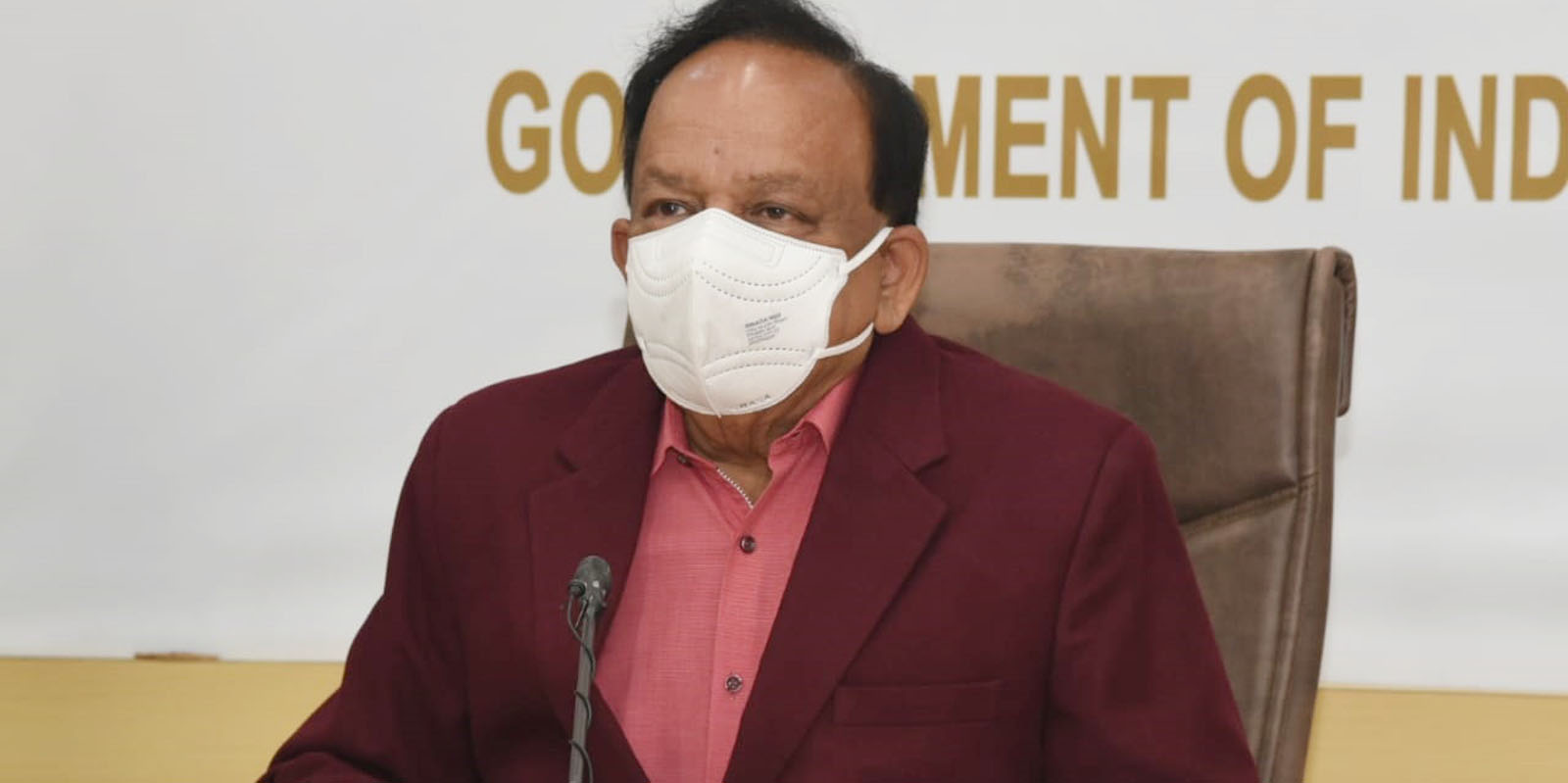
Delhi-A new variant of SARS- CoV 2 virus has been reported by the Government of the United Kingdom (UK) to the World Health Organization (WHO). This variant is estimated by the European Center for Disease Control (ECDC) to be more transmissible and affecting the younger population, the government informed. This variant is defined by a set of 17 changes or mutations. One of the most significant is an N501Y mutation in the spike protein that the virus uses to bind to the human ACE2 receptor. Changes in this part of the spike protein may result in the virus becoming more infectious and spreading more easily between people.
The new VUI-202012/01 variant has been identified in several countries including Australia, Denmark, Italy, Iceland and the Netherlands.
“Preliminary reports by the UK are that this variant is more transmissible than previous circulating viruses, with an estimated increase of between 40% and 70% in transmissibility (adding 0.4 to the basic reproduction number R0, bringing it to a range of 1.5 to 1.7). Laboratory studies are ongoing to determine whether these variant viruses have different biological properties or alter vaccine efficacy. There is not enough information at present to determine if this variant is associated with any change in the severity of the clinical disease, antibody response or vaccine efficacy,”
said WHO on Tuesday.
Indian Ministry of Health has issued SOP for Epidemiological Surveillance and Response for the same. The Standard Operating Procedure (SOP) describes the activities to be undertaken at the point of entry and in the community for all International passengers who have travelled from or transited through the UK in the past 4 weeks (from 25th November to 23rd December 2020). Any reference to testing in this SOP implies RT-PCR testing only.
The flights from the UK are suspended temporarily from 23rd December till 31st December 2020 or till further orders. All the passengers travelling from or transiting through airports in the UK and disembarking in India during the intervening period from 21st to 23rd December 2020 would be subjected to RT-PCR test on arrival. In the case of a positive sample, it is recommended that spike gene-based RT-PCR test should also be performed.
Passengers testing positive will be isolated in an institutional isolation facility in a separate (isolation) unit coordinated by the respective State Health Authorities. Necessary action to send the samples to National Institute of Virology (NIV), Pune or any other appropriate lab for genomic sequencing will be initiated at the facility level. If the genomic sequencing indicates the presence of a new variant of SARS-CoV-2 then the patient will be kept in the separate isolation unit and treated as per the clinical protocol.
Those who are found negative on testing with RT-PCR at the airport would be advised quarantine at home. Prior to check-in, the traveler will be explained about this SOP and In-flight announcements must also be made.
Those international travelers from the UK who arrived in India since last one month will be contacted by District Surveillance Officers and monitored in the community.
State Governments/ Integrated Disease Surveillance Programme will ensure that all the contacts of those travelers from the UK or transiting through the UK in the last four weeks will be traced and monitored. They will also be tested as per protocol and contacts of positive cases would be subjected to institutional quarantine in separate quarantine centers for effective isolation and monitoring.
Read Complete List of SOPS






Nation
Possible Causes of Air India Flight AI171 Crash in Ahmedabad: Expert Insights and Historical Comparisons

New Delhi- On June 12, 2025, Air India Flight AI171, a Boeing 787-8 Dreamliner, crashed seconds after takeoff from Sardar Vallabhbhai Patel International Airport in Ahmedabad, India, en route to London Gatwick Airport. The disaster, which killed 241 of the 242 passengers and crew and at least 24 people on the ground, is under investigation by India’s Aircraft Accident Investigation Bureau (AAIB) with international support. The aircraft issued a Mayday call and lost signal at 625 feet.
Potential Causes of the Crash
Preliminary investigations suggest multiple possible factors, though no definitive cause has been confirmed. CCTV footage shows the aircraft struggling to climb, with its landing gear down and flaps retracted—an unusual configuration for takeoff. Experts cited in Indian news outlets have outlined the following potential causes:
- Engine Failure: Captain Saurabh Bhatnagar, a former senior pilot, told NDTV, “The take-off was perfect, but just short of retracting the gear, the aircraft started descending, which can only happen if the engine loses power or the aircraft fails to generate lift.” Amit Singh, from Safety Matters Foundation, told Hindustan Times that a compressor failure or sudden power loss could be responsible, noting the aircraft’s abnormal configuration.
- Systemic Failure: Singh further stated, “That should not have been the case at all,” referring to the retracted flaps and extended landing gear, suggesting issues with flaps or elevators. An aviation expert, Sanjay Lazar told NDTV, “The catastrophic failure to achieve lift occurred at a very low altitude of 825 feet,” indicating a possible mechanical or configuration issue.
- Human Error: Captain Shakti Lumba, a retired Air India pilot, told The Times of India, “The landing gear was down, and the flaps appeared retracted, which is not the correct configuration for takeoff.” This suggests a potential pilot error in flap settings, though Captain Anupam Banerjee noted in Hindustan Times that the Boeing 787’s warning systems should have alerted the crew to such errors.
- Environmental Factors: Vipul Saxena told Hindustan Times that strong crosswinds and high temperatures (above 30°C) could have reduced lift, particularly with the aircraft’s 100,000-litre fuel load. Mohan Ranganathan highlighted Ahmedabad airport’s history of bird activity during the monsoon season. Still, Sam Thomas, president of the Airline Pilots Association of India, dismissed dual-engine failure from bird strikes as unlikely, stating, “The probability is one in a billion flying hours.”
The investigation continues, with Air India clarifying that reports of black box recovery remain unconfirmed. The pilots, Captain Sumeet Sabharwal and First Officer Clive Kunder, had over 9,000 combined flying hours, and the aircraft had no reported maintenance issues before the flight.
Other Devastating Plane Crashes
The Air India Flight AI171 crash, with at least 265 fatalities, ranks among the deadliest aviation disasters in recent history. Below is a comparison with other significant crashes worldwide, based on casualty figures and causes, as reported by credible Indian news sources:
- Malaysia Airlines Flight 17 (2014): 298 fatalities. The Boeing 777 was shot down over Ukraine by a surface-to-air missile, as reported by The Hindu. Unlike AI171, this was a deliberate act of sabotage.
- Japan Airlines Flight 123 (1985): 520 fatalities. A Boeing 747 crashed into a mountain due to improper repairs on the rear pressure bulkhead, causing explosive decompression, as noted by The Times of India. This mechanical failure contrasts with AI171’s potential engine or configuration issues but highlights maintenance risks.
- Air India Flight 182 (1985): 329 fatalities. A bomb explosion destroyed the Boeing 747 over the Atlantic Ocean, as covered by Hindustan Times. This terrorism-related incident differs from AI171’s likely technical causes.
- American Airlines Flight 191 (1979): 271 fatalities. A DC-10 crashed after an engine detached during takeoff due to maintenance errors, as reported by NDTV. This shares similarities with AI171’s possible engine failure or systemic issues during takeoff.
- Tenerife Airport Disaster (1977): 583 fatalities. Two Boeing 747s collided on a runway due to miscommunication and fog, as documented by The Indian Express. Unlike AI171, this involved human error in ground operations.
The AI171 crash is notable as the first fatal incident involving a Boeing 787 Dreamliner, introduced in 2011 with a previously clean safety record. Its low-altitude failure during takeoff aligns with data indicating that most crashes occur during takeoff or landing, as reported by The Indian Express.
The AAIB is analyzing flight data, pilot actions, and maintenance records to determine whether mechanical failure, human error, or environmental factors were primary contributors. The investigation’s findings will have implications for Air India’s Boeing 787 fleet, which India is considering grounding. Captain A.K. Sachdev, a retired Air Force officer, told The Print, “The rapid loss of altitude points to a critical failure, likely in propulsion or control systems.” The probe will be crucial for enhancing aviation safety protocols.

Ahmedabad | June 12, 2025 – An Air India Boeing 787-8 Dreamliner, operating Flight AI-171 from Ahmedabad to London Gatwick, plummeted shortly after departing Sardar Vallabhbhai Patel International Airport. The aircraft, with 242 people on board—including 230 passengers and 12 crew members—lost altitude moments after reaching approximately 625 feet, crashing into a residential doctors’ hostel in Ahmedabad’s Meghani Nagar neighbourhood.
A video capturing the tragic crash of Air India Flight AI-171, a Boeing 787-8 Dreamliner en route from Ahmedabad to London Gatwick, has been circulating on social media as well as in print media. The footage shared by several credible news channels, reportedly shows the aircraft… pic.twitter.com/vPybEZtBnb
— Himachal Watcher (@HimachalW) June 12, 2025
Emergency response teams are actively searching the wreckage, with numerous casualties reported and many feared trapped. Several survivors with severe injuries have been rushed to local hospitals. Authorities confirmed the aircraft issued a Mayday call seconds before the crash, indicating a critical emergency.
Ahmedabad plane crash: visuals from the crash site of Air India flight AI171 https://t.co/pPnFC9wR8O
— The Hindu (@the_hindu) June 12, 2025
According to Air India officials, the flight carried passengers from multiple countries, including 169 Indian nationals, 53 British nationals, seven Portuguese nationals, and one Canadian. Twelve fire brigades, ambulances, and six National Disaster Response Force (NDRF) units are assisting at the scene, where thick smoke and flames were visible for miles.
Prime Minister Narendra Modi expressed his grief, stating on X, “It is heartbreaking beyond words. In this sad hour, my thoughts are with everyone affected by it.” He added that he is closely coordinating with authorities to support rescue efforts. Air India has established an emergency response center and deployed teams to aid affected families.
The Directorate General of Civil Aviation (DGCA) has initiated an investigation, collaborating with Boeing representatives to determine the crash’s cause. Early speculation by experts suggests a possible bird strike may have impaired the aircraft’s takeoff performance. The incident is believed to be the first fatal crash involving a Boeing 787 Dreamliner.
Ahmedabad airport has halted operations temporarily to facilitate debris removal and the ongoing investigation.
Nation
India Spoils Pakistan’s Drone and Missile Attacks, 16 Civilians, Including 3 Women and 5 Children Killed in Shelling from the Pakistani side

New Delhi – India on Thursday carried out calibrated military strikes targeting Pakistani air defence infrastructure, in response to an attempted drone and missile attack on multiple Indian military installations during the night of May 7–8. The Ministry of Defence stated that the Indian response was “in the same domain and with the same intensity” as Pakistan’s actions.
According to a statement issued by the Ministry of Defence, Pakistani forces attempted to engage several military targets in northern and western India, including locations in Awantipora, Srinagar, Jammu, Pathankot, Amritsar, Kapurthala, Jalandhar, Ludhiana, Adampur, Bathinda, Chandigarh, Nal, Phalodi, Uttarlai, and Bhuj.
These threats were effectively neutralised by India’s Integrated Counter-Unmanned Aerial Systems (UAS) Grid and Air Defence systems, the statement said. Debris recovered from various sites has confirmed the Pakistani origin of the attempted strikes.
In response, Indian forces on Thursday morning targeted Pakistani air defence radars and related infrastructure. “It has been reliably learnt that an air defence system near Lahore has been neutralised,” the Ministry said, adding that the Indian strikes were proportionate and focused solely on military assets.
The development follows the briefing on Operation Sindoor held on May 7, during which Indian officials described their earlier military actions as “focused, measured, and non-escalatory.” At the time, it was specifically stated that Pakistani military installations had not been targeted, and that any attack on Indian military targets would invite a suitable response.
Meanwhile, Pakistan has escalated ceasefire violations across the Line of Control (LoC), employing mortars and heavy artillery in the Kupwara, Baramulla, Uri, Poonch, Mendhar, and Rajouri sectors of Jammu and Kashmir.
According to the Ministry, sixteen civilians, including three women and five children, have lost their lives due to unprovoked shelling from the Pakistani side. Indian troops responded to suppress and halt further Pakistani fire.
The Indian Armed Forces reiterated their commitment to avoiding escalation, while emphasising that restraint would be maintained “provided it is respected by the Pakistani military.”
The government has yet to issue further details regarding the operational fallout of the counterstrikes, but sources have confirmed that all actions undertaken so far remain confined to military targets and are in accordance with India’s stated position of defensive preparedness and strategic restraint.


Himachal’s LPG Supply Hit Amid Global Tensions, Likely to Affect Hospitality Industry

Himachal Teen Survives 12-Minute Leopard Attack, Kills Predator in Self-Defense

Weather Forecast for Himachal Pradesh For the Next Two Weeks

Monsoon 2025: Himachal Pradesh Suffers 199 Casualties, Over ₹1,905.50 Cr in Damages

 Home Decor Ideas 2020