
News
Shimla: HIMCOSTE Arranges Viewing Solar Eclipse to Promote Science Behind it & Remove Superstitions

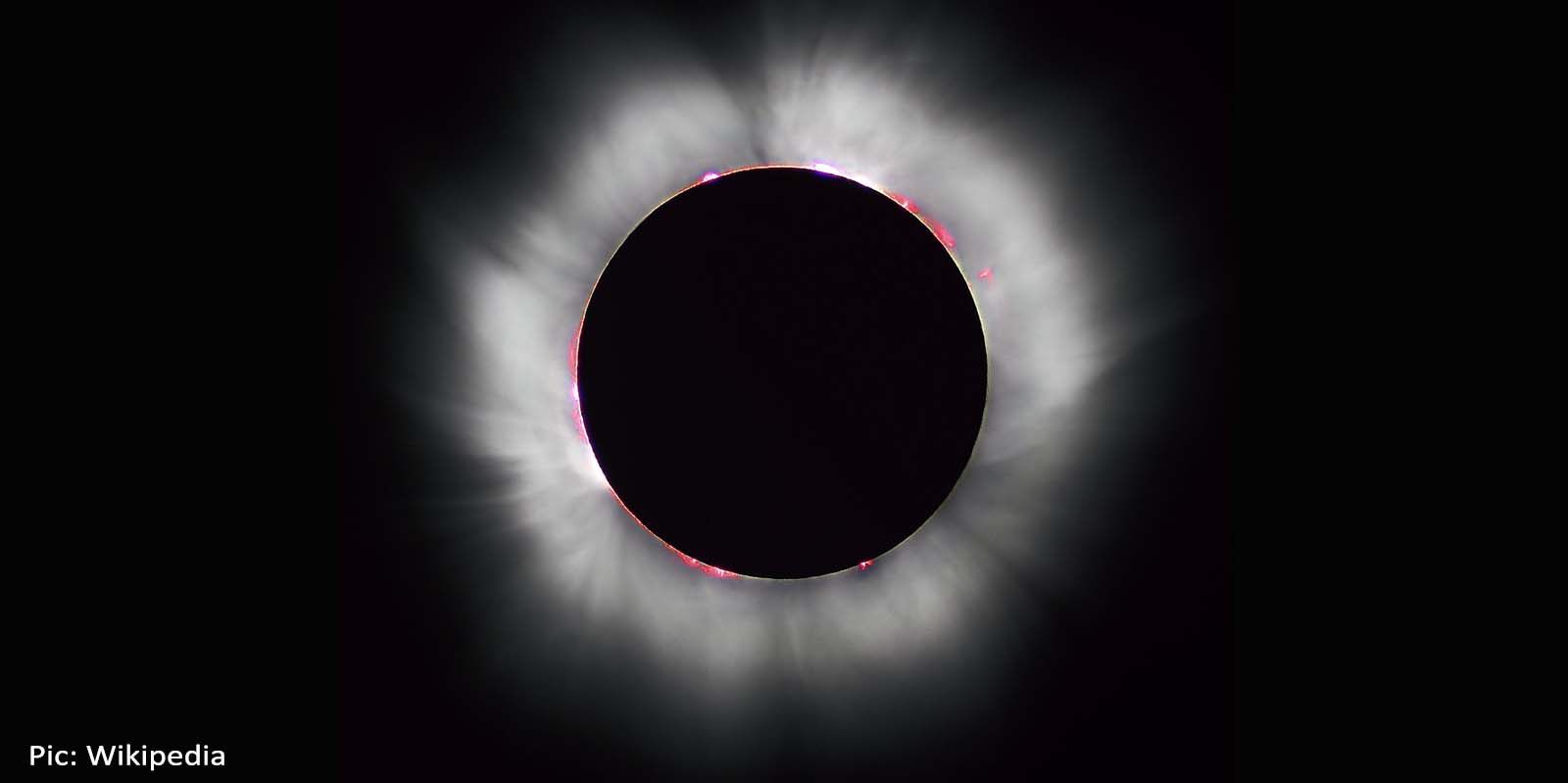
Shimla-Himachal Pradesh would witness a celestial event in the form of solar eclipse on 21 June, 2020. This would be an annual solar eclipse visible from most parts of the state. The eclipse would start at 10.23 AM and would be maximum at 12.03 PM and would end at 1.48 pm. The solar eclipse would be 95 percent around noon. Such event is happening after 25 years in Himachal Pradesh.
The first solar eclipse of this year takes place on the summer solstice, which is the longest day in the Northern Hemisphere. While people living along the path annular eclipse passing through Anupgarh, Suratgarh, Sirsa, Jakhal, Kurukshetra, Yamunanagar, Dehradun, Tapowan and Joshimath will be able to see the annular phase, people in rest of India can witness a partial eclipse.
“If we miss this opportunity, in India, we have to wait for about 28 months for the next solar eclipse. The next solar eclipse , which will be a partial solar eclipse, visible from India will take place on October 25, 2022. It would be visible in the western part of India”
said Aniket Sule, Chairperson, Public Outreach & Education Committee of the Astronomical Society of India.
To popularise and promote the science of eclipses and remove the misconceptions and superstitions associated with such kind of celestial events, the Himachal Pradesh Council for Science, Technology & Environment (HIMCOSTE) is arranging for viewing of solar eclipse for limited viewers at some places such as near parking of Ellerslie Building, HP Secretariat, State Headquarters Shimla and Padam Dev Complex, The Ridge, Shimla.
The HIMCOSTE has sought write-ups/ppts from students on their experiences of watching celestial event. The write up should not be more than three pages (less than 1500 words) or power-point presentation having maximum of 10 slides. The students can send their entries at ([email protected]) latest by 23 June, 2020. The best entries will be suitably awarded.
The HIMCOSTE has asked all Deputy Directors of Elementary Education in respective Districts to arrange for solar filters and make them available to general public to witness this unique event. The general public can witness the solar eclipse at a place designated by Deputy Director (Elementary Education) office in their respective districts.
Looking at Solar Eclipse Directly Dangerous, Could Harm Eyes
Sun is a very bright object, and looking at it directly can cause severe damage to the eye and vision. There are special goggles made for looking at the Sun. These goggles filter the sunlight for safe viewing.
“Often the Public Outreach and Education Committee of Astronomical Society of India and other astronomical institutions/ planetariums and other science popularisation agencies usually make arrangements for safe viewing of the eclipse. However, due to the lockdown this time, we are not able to make solar filters available. Further, we strongly advise people not to gather in large numbers to view the eclipse given the pandemic situation. There are easy tips for viewing the eclipse from the safety of your home”
says Arvind Paranjpye, Director, Nehru Planetarium, Mumbai.
Allying rumours that the eclipse will mark the end of coronavirus, Aniket Sule said
“Solar eclipse is caused when the Moon comes in front of the Sun for a short time. As seen from Earth eclipses occur somewhere in the Earth 2 to 5 times a year. Eclipses do not impact microorganisms on Earth. Likewise there no danger in eating or stepping out during an eclipse. No mysterious rays come out of the Sun during an eclipse.”
Tips for viewing the eclipse:-
- Do not use sunglasses, goggles, exposed x-ray sheet or lampblack over a glass. They are not safe. Nor is viewing the Sun’s image on the surface of the water.
Welders glass #13 or # 14 can be used to see the Sun directly with naked eyes. - Make a pinhole in a card sheet and hold it under the Sun. At some distance, keep a screen of white paper. Image of the Sun can be seen on this sheet. By adjusting the gap between the sheet and the screen, the image can be made larger.
- Look at the shadow of a bush or a tree. With the gaps between the leaves acting like a pinhole, numerous images of the eclipsed Sun can be seen on the ground.
You can use a strainer for making pinhole images. - Cover the ‘compact’ makeup kit mirror with black paper, with a small hole at the centre. Reflect the image of the Sun on a distant wall in shadow. You can get a projected image of the eclipsed Sun.
Bhuj will be the first town in India to see the beginning of the eclipse 9:58 a.m. The eclipse ends 4 hours later at Dibrugarh, Assam at 2:29 p.m. Ghersana at the western boundary of India will be the first to witness the annular phase of the eclipse at 11:50 a.m. It will last for 30 seconds. Kalanka peak in Uttarakhand will be the last major landmark to see the annular eclipse at 12:10 p.m. lasting for 28 seconds.



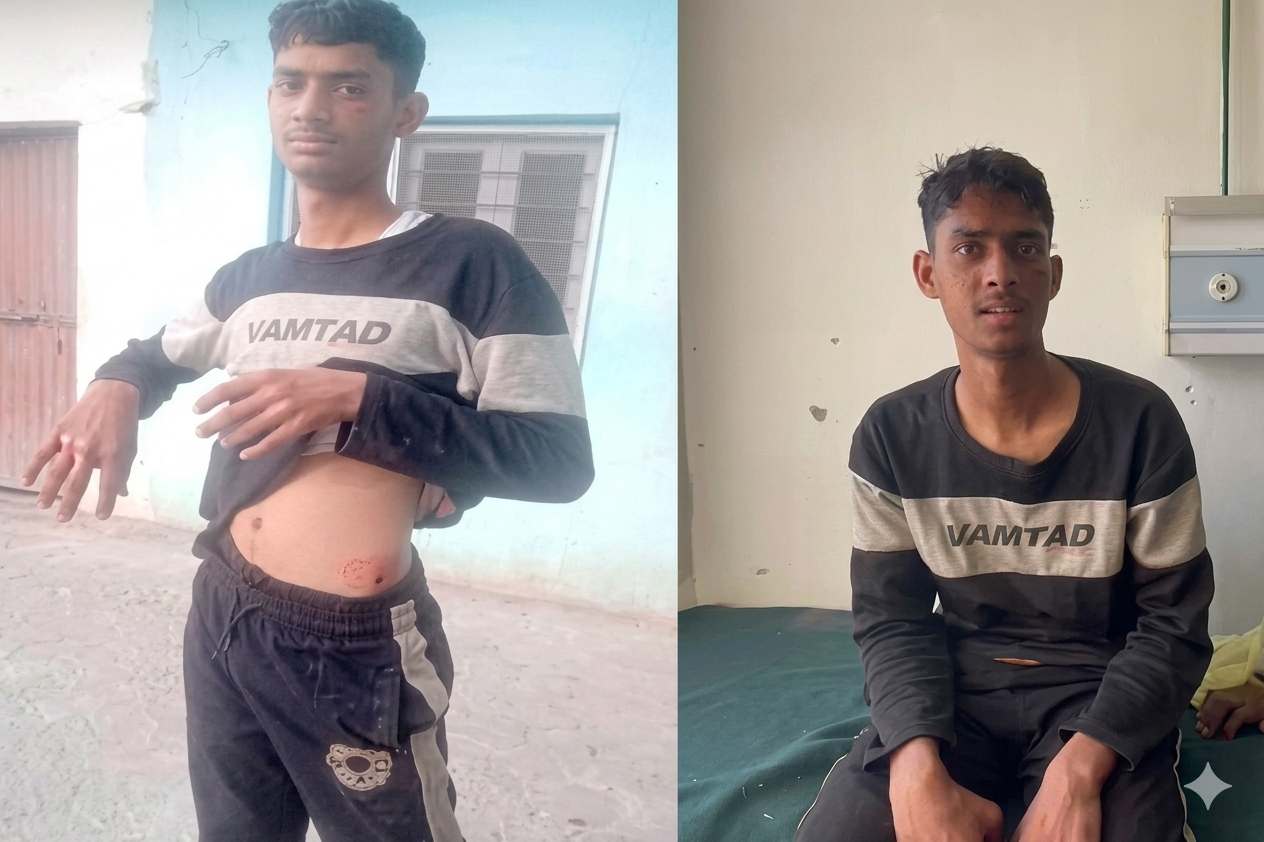
Solan—In a shocking incident on Monday, an 18-year-old youth, Pravesh, survived a vicious leopard attack in Sarli village of Arki subdivision. The teenager reportedly fought the leopard for nearly 12 minutes before breaking its jaw, killing the animal on the spot.
Quick Thinking Saved His Life
Pravesh told the media that he was walking from the fields to a nearby shop in the morning to fetch milk when the leopard, hidden in the crops, lunged at him. Noticing the leopard’s tail, he attempted to run but fell after a short distance. During the attack, he covered his neck with his hands to protect himself from fatal bites.
The teenager continued to struggle with the leopard, repeatedly attempting to put distance between himself and the predator. In a desperate move, he grabbed the leopard by its mouth, twisted its jaw, and broke it, killing the animal instantly. Pravesh sustained multiple injuries, including deep claw marks, and is currently receiving treatment at Arki Hospital. Police and forest department teams have launched an investigation into the incident.
Serious Allegations of HP Forest Department’s Negligence
One of Pravesh’s relatives accused the forest department of negligence, noting that similar attacks had occurred in the area previously.
Earlier, a leopard had attempted to attack a scooter rider, who managed to escape. The family said they had informed the forest department on March 6 about potential danger, but no concrete action was taken. Villagers waited for three hours for a forest team to arrive, but none came. When the Block Officer eventually visited, he reportedly told villagers to ensure their own safety. Requests for cages to capture the leopard were also denied, with officials asking for written complaints instead.


SHIMLA | 7 August 2025 –The India Meteorological Department (IMD) has forecast light to moderate rainfall across Himachal Pradesh over the next two weeks, with isolated heavy to very heavy showers likely over the low hills, plains, and adjoining mid-hill regions. While the ongoing monsoon remains vital for agriculture, it also brings an elevated risk of localized flooding and landslides.
Week of August 8–14
Maximum temperatures will range from 22°C to 34°C, depending on elevation—22°C to 28°C in high hills, 26°C to 30°C in mid-hills, and up to 34°C in lower regions. Minimum temperatures are expected to remain near normal, between 12°C and 24°C. Cooler conditions may persist in districts like Kullu and Lahaul-Spiti.
Week of August 15–21
Similar rainfall patterns are expected to continue, with scattered heavy rain episodes. Temperature trends will remain stable, though slightly below-normal maximum temperatures are likely in parts of Lahaul-Spiti, Mandi, Kangra, and Kullu districts.
Outlook for Late August
Rainfall is expected to remain broadly normal, with region-specific variations. Districts such as Kinnaur, Shimla, and Sirmaur may see below-normal precipitation, while Una, Kangra, Hamirpur, Bilaspur, and Solan are likely to receive above-average rainfall. Both maximum and minimum temperatures are forecast to stay close to seasonal norms.
Officials at the Meteorological Centre in Shimla have urged residents and local authorities to remain alert for sudden heavy downpours, which could disrupt road connectivity and trigger landslides—especially along vulnerable hillside routes. Past monsoon episodes have blocked key highways, including routes between Mandi and Kullu and near Banjar, underscoring the ongoing challenges in the region.
This advisory comes as Himachal Pradesh continues to face the dual pressures of sustaining its agriculture-dependent economy while managing the life and infrastructure risks posed by an active monsoon. Continued vigilance and preparedness remain crucial.

SHIMLA | 7 August 2025 –Himachal Pradesh continues to deal with the impacts of the 2025 monsoon season, reporting extensive property damage, loss of lives, and widespread disruptions across the state. According to the official reports from the State Emergency Operations Centre (SEOC), the Department of Revenue, and the India Meteorological Department, from June 20 to August 6, 2025, heavy monsoon rains caused significant damage across multiple districts:
- Casualties: 199 deaths due to landslides, flash floods, cloudbursts, drowning, lightning, electrocution, and accidents; 304 injuries reported.
- Property Loss: Extensive damage to houses (both pucca and kaccha), shops, factories, labor sheds, animal shelters, and substantial crop losses in agriculture and horticulture.
- Public Infrastructure: Over ₹1,900 crore in damages to roads (including PWD), power supply, health, education, fisheries, rural and urban development, and animal husbandry.
Most affected districts include Mandi, Kangra, and Hamirpur, with severe crop and infrastructure losses.

Additionally, 91 deaths occurred due to monsoon-related road accidents.
Public Utilities and Infrastructure Disruptions
The SEOC report dated August 7, 2025, highlights ongoing disruptions:
- Roads Blocked: About 493 major roads and 3 national highways (NH-305, NH-21, NH-05) remain blocked by landslides and floods.
- Power Supply: Disruption of 1,120 distribution transformers (DTRs).
- Water Supply: 245 water schemes affected, threatening access to potable water for communities.
Key blockages include NH-21 between Mandi and Kullu and NH-305 near Banjar and Jhed.
Weather Forecast and Warnings
The India Meteorological Department’s forecast valid from August 7, 2025, includes:
- Isolated heavy rainfall expected throughout the week.
- Thunderstorms and lightning predicted in isolated areas.
- Minimum temperatures near normal or slightly below.
- Maximum temperatures showing a moderate increase.
The public is urged to remain vigilant due to the risks of further landslides and flash floods.
Himachal Pradesh remains vulnerable as the monsoon season continues, with thousands affected by damage, displacement, and disruption of essential services. Authorities are continuing with rescue and recovery operations and are urging residents to stay alert to the ongoing adverse weather. This situation highlights the pressing need for enhanced infrastructure and disaster management strategies to mitigate monsoon-related risks.


Himachal’s LPG Supply Hit Amid Global Tensions, Likely to Affect Hospitality Industry

Himachal Teen Survives 12-Minute Leopard Attack, Kills Predator in Self-Defense

Weather Forecast for Himachal Pradesh For the Next Two Weeks

Monsoon 2025: Himachal Pradesh Suffers 199 Casualties, Over ₹1,905.50 Cr in Damages

 Home Decor Ideas 2020