
Nation
Read All Short & Long Term Measures Announced for Small Businesses Migrants, Farmers, Street Vendors etc.

- Free food grains supply to Migrants for 2 months.
- Technology system to be used enabling Migrants to access PDS(Ration) from any Fair Price Shops in India by March,2021-One Nation one Ration Card.
- Scheme for Affordable Rental Housing Complexes for Migrant Workers and Urban Poor to be launched.
- 2% Interest Subvention for 12 months for Shishu MUDRA loanees- Relief of Rs. 1500 crore.
- Rs 5000 crore Credit facility for Street Vendors.
- Rs70,000 crore boost to the housing sector and middle-income group through the extension of Credit Linked Subsidy Scheme for MIG under PMAY(Urban).
- Rs 6,000 crore for Creating employment using CAMPA funds.
- Rs 30,000 crore Additional Emergency Working Capital for farmers through NABARD.
- Rs 2 lakh crore concessional credit boost to 2.5 crore farmers under Kisan Credit Card Scheme.
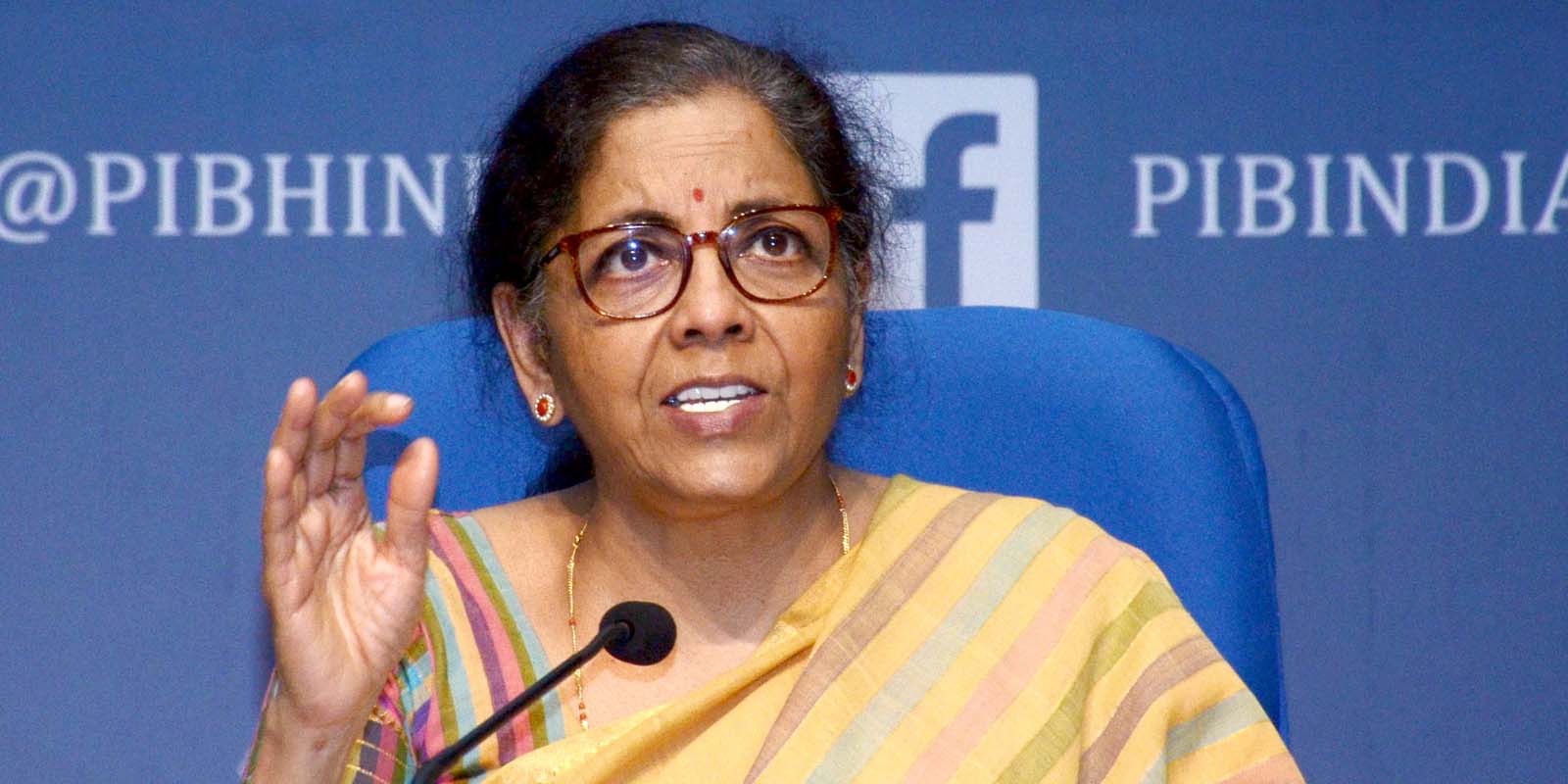
New Delhi-Union Finance & Corporate Affairs Minister Nirmala Sitharaman on May 14, 2020, in a press conference detailed the short term and long-term measures for supporting the poor, including migrants, farmers, tiny businesses and street vendors.
Following short term and long-term measures for supporting the poor, including migrants, farmers, tiny businesses and street vendors were announced on Thursday:-
Note: The information given by the GoI has been published unedited or with little editing
Free food grains supply to migrants for 2 months
For the migrant labour, additional food grain to all the States/UTs at the rate of 5 kg per migrant labourer and 1 kg Chana per family per month for two months i.e. May and June, 2020 free of cost shall be allocated. Migrant labourers not covered under National Food Security Act or without a ration card in the State/UT in which they are stranded at present will be eligible. States/UTs shall be advised to put a mechanism for targeted distribution as envisaged in the scheme. 8 Lakh MT of food-grain and 50,000 MT of Chana shall be allocated. The entire outlay of Rs. 3500 crore will be borne by Government of India.
Technology system to be used enabling Migrants to access PDS (Ration) from any Fair Price Shops in India by March,2021-One Nation one Ration Card
Pilot scheme for portability of ration cards will be extended to 23 states. By that, 67 crore beneficiaries covering 83% of PDS population will be covered by National portability of Ration cards by August, 2020. 100% National portability will be achieved by March, 2021. This is part of PM’s Technology-Driven System Reforms This scheme will enable a migrant worker and their family members to access PDS benefits from any Fair Price Shop in the country. This will ensure that the people in transit, especially migrant workers can also get the benefit of PDS benefit across the country.
Scheme for Affordable Rental Housing Complexes for Migrant Workers and Urban Poor to be launched
Central Government will launch a scheme for migrant workers and urban poor to provide ease of living at affordable rent. Affordable Rental Housing Complexes will provide social security and quality life to migrant labour, urban poor, and students etc. This will be done through converting government-funded houses in the cities into Affordable Rental Housing Complexes (ARHC) under PPP mode through concessionaire; manufacturing units, industries, institutions, associations to develop Affordable Rental Housing Complexes (ARHC) on their private land and operate; and Incentivizing State Govt agencies/Central Government Organizations on similar lines to develop Affordable Rental Housing Complexes (ARHC) and operate. The exact details of the scheme will be released by the Ministry/Department.
2% Interest Subvention for 12 months for Shishu MUDRA loanees- Relief of Rs. 1,500 crore
Government of India will provide Interest subvention of 2% for prompt payees for 12 months to MUDRA Shishu loanees, who have loans below Rs 50,000. The current portfolio of MUDRA Shishu loans is around Rs 1.62 Lakh crore. This will provide relief of about Rs 1,500 crore to Shishu MUDRA loanee.
Rs 5,000 crore Credit facility for Street Vendors
A special scheme will be launched within a month to facilitate easy access to credit to Street vendors, who are amongst the most adversely impacted by the present situation for enabling them to restart their businesses. Under this scheme, a bank credit facility for initial working capital up to Rs. 10,000 for each enterprise will be extended. This scheme will cover urban as well as rural vendors doing business in the adjoining urban areas. Use of digital payments and timely repayments will be incentivized through monetary rewards. It is expected that 50 lakh street vendors will be benefitted under this scheme and credit of Rs. 5,000 crore would flow to them.
Rs 70,000 crore boost to the housing sector and middle-income group through the extension of Credit Linked Subsidy Scheme for MIG under PMAY(Urban)
The Credit Linked Subsidy Scheme for Middle Income Group (annual Income between Rs 6 and 18 lakhs) will be extended up to March 2021. This will benefit 2.5 lakhs middle income families during 2020-21 and will lead to an investment of over Rs 70,000 crore in the housing sector. This will create significant number of jobs by giving boost to the Housing sector and will stimulate demand for steel, cement, transport and other construction materials.
Rs 6,000 crore for Creating employment using CAMPA funds
Approximately Rs 6,000 crore of funds under Compensatory Afforestation Management & Planning Authority (CAMPA) will be used for Afforestation and Plantation works, including in urban areas, Artificial regeneration, assisted natural regeneration, forest management, soil & moisture conservation works, Forest protection, forest and wildlife-related infrastructure development, wildlife protection and management etc. Government of India will grant immediate approval to these plans amounting to Rs 6000 crore. This will create job opportunities in urban, semi-urban and rural areas and also for Tribals (Adivasis).
Rs 30,000 crore Additional Emergency Working Capital for farmers through NABARD
NABARD will extend additional re-finance support of Rs 30,000 crore for meeting crop loan requirement of Rural Cooperative Banks and RRBs. This refinance will be front-loaded and available on tap. This is over and above Rs 90,000 crore that will be provided by NABARD to this sector in the normal course. This will benefit around 3 crore farmers, mostly small and marginal and it will meet their post-harvest Rabi and current Kharif requirements.
Rs 2 lakh crore credit boost to 2.5 crore farmers under the Kisan Credit Card Scheme
A special drive to provide concessional credit to PM-KISAN beneficiaries through Kisan Credit Cards. Fisherman and Animal Husbandry Farmers will also be included in this drive. This will inject additional liquidity of Rs 2 lakh crore in the farm sector. 2.5 crore farmers will be covered.





Nation
Possible Causes of Air India Flight AI171 Crash in Ahmedabad: Expert Insights and Historical Comparisons

New Delhi- On June 12, 2025, Air India Flight AI171, a Boeing 787-8 Dreamliner, crashed seconds after takeoff from Sardar Vallabhbhai Patel International Airport in Ahmedabad, India, en route to London Gatwick Airport. The disaster, which killed 241 of the 242 passengers and crew and at least 24 people on the ground, is under investigation by India’s Aircraft Accident Investigation Bureau (AAIB) with international support. The aircraft issued a Mayday call and lost signal at 625 feet.
Potential Causes of the Crash
Preliminary investigations suggest multiple possible factors, though no definitive cause has been confirmed. CCTV footage shows the aircraft struggling to climb, with its landing gear down and flaps retracted—an unusual configuration for takeoff. Experts cited in Indian news outlets have outlined the following potential causes:
- Engine Failure: Captain Saurabh Bhatnagar, a former senior pilot, told NDTV, “The take-off was perfect, but just short of retracting the gear, the aircraft started descending, which can only happen if the engine loses power or the aircraft fails to generate lift.” Amit Singh, from Safety Matters Foundation, told Hindustan Times that a compressor failure or sudden power loss could be responsible, noting the aircraft’s abnormal configuration.
- Systemic Failure: Singh further stated, “That should not have been the case at all,” referring to the retracted flaps and extended landing gear, suggesting issues with flaps or elevators. An aviation expert, Sanjay Lazar told NDTV, “The catastrophic failure to achieve lift occurred at a very low altitude of 825 feet,” indicating a possible mechanical or configuration issue.
- Human Error: Captain Shakti Lumba, a retired Air India pilot, told The Times of India, “The landing gear was down, and the flaps appeared retracted, which is not the correct configuration for takeoff.” This suggests a potential pilot error in flap settings, though Captain Anupam Banerjee noted in Hindustan Times that the Boeing 787’s warning systems should have alerted the crew to such errors.
- Environmental Factors: Vipul Saxena told Hindustan Times that strong crosswinds and high temperatures (above 30°C) could have reduced lift, particularly with the aircraft’s 100,000-litre fuel load. Mohan Ranganathan highlighted Ahmedabad airport’s history of bird activity during the monsoon season. Still, Sam Thomas, president of the Airline Pilots Association of India, dismissed dual-engine failure from bird strikes as unlikely, stating, “The probability is one in a billion flying hours.”
The investigation continues, with Air India clarifying that reports of black box recovery remain unconfirmed. The pilots, Captain Sumeet Sabharwal and First Officer Clive Kunder, had over 9,000 combined flying hours, and the aircraft had no reported maintenance issues before the flight.
Other Devastating Plane Crashes
The Air India Flight AI171 crash, with at least 265 fatalities, ranks among the deadliest aviation disasters in recent history. Below is a comparison with other significant crashes worldwide, based on casualty figures and causes, as reported by credible Indian news sources:
- Malaysia Airlines Flight 17 (2014): 298 fatalities. The Boeing 777 was shot down over Ukraine by a surface-to-air missile, as reported by The Hindu. Unlike AI171, this was a deliberate act of sabotage.
- Japan Airlines Flight 123 (1985): 520 fatalities. A Boeing 747 crashed into a mountain due to improper repairs on the rear pressure bulkhead, causing explosive decompression, as noted by The Times of India. This mechanical failure contrasts with AI171’s potential engine or configuration issues but highlights maintenance risks.
- Air India Flight 182 (1985): 329 fatalities. A bomb explosion destroyed the Boeing 747 over the Atlantic Ocean, as covered by Hindustan Times. This terrorism-related incident differs from AI171’s likely technical causes.
- American Airlines Flight 191 (1979): 271 fatalities. A DC-10 crashed after an engine detached during takeoff due to maintenance errors, as reported by NDTV. This shares similarities with AI171’s possible engine failure or systemic issues during takeoff.
- Tenerife Airport Disaster (1977): 583 fatalities. Two Boeing 747s collided on a runway due to miscommunication and fog, as documented by The Indian Express. Unlike AI171, this involved human error in ground operations.
The AI171 crash is notable as the first fatal incident involving a Boeing 787 Dreamliner, introduced in 2011 with a previously clean safety record. Its low-altitude failure during takeoff aligns with data indicating that most crashes occur during takeoff or landing, as reported by The Indian Express.
The AAIB is analyzing flight data, pilot actions, and maintenance records to determine whether mechanical failure, human error, or environmental factors were primary contributors. The investigation’s findings will have implications for Air India’s Boeing 787 fleet, which India is considering grounding. Captain A.K. Sachdev, a retired Air Force officer, told The Print, “The rapid loss of altitude points to a critical failure, likely in propulsion or control systems.” The probe will be crucial for enhancing aviation safety protocols.
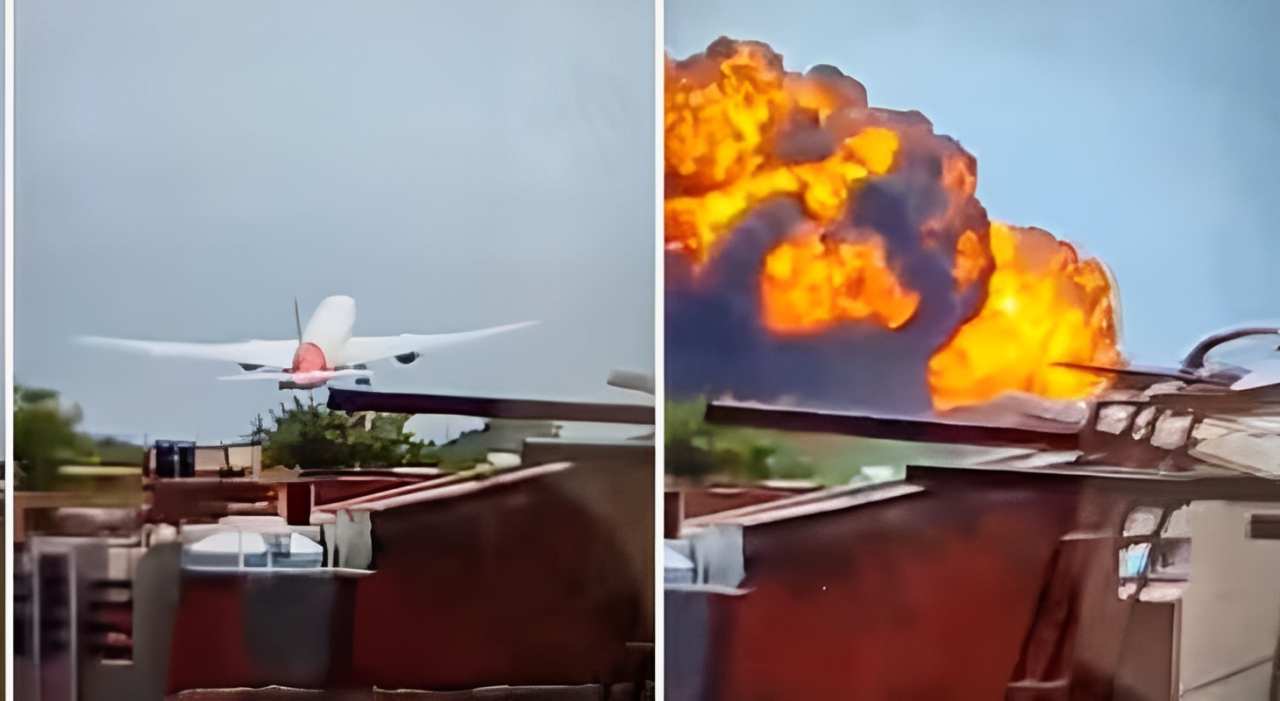
Ahmedabad | June 12, 2025 – An Air India Boeing 787-8 Dreamliner, operating Flight AI-171 from Ahmedabad to London Gatwick, plummeted shortly after departing Sardar Vallabhbhai Patel International Airport. The aircraft, with 242 people on board—including 230 passengers and 12 crew members—lost altitude moments after reaching approximately 625 feet, crashing into a residential doctors’ hostel in Ahmedabad’s Meghani Nagar neighbourhood.
A video capturing the tragic crash of Air India Flight AI-171, a Boeing 787-8 Dreamliner en route from Ahmedabad to London Gatwick, has been circulating on social media as well as in print media. The footage shared by several credible news channels, reportedly shows the aircraft… pic.twitter.com/vPybEZtBnb
— Himachal Watcher (@HimachalW) June 12, 2025
Emergency response teams are actively searching the wreckage, with numerous casualties reported and many feared trapped. Several survivors with severe injuries have been rushed to local hospitals. Authorities confirmed the aircraft issued a Mayday call seconds before the crash, indicating a critical emergency.
Ahmedabad plane crash: visuals from the crash site of Air India flight AI171 https://t.co/pPnFC9wR8O
— The Hindu (@the_hindu) June 12, 2025
According to Air India officials, the flight carried passengers from multiple countries, including 169 Indian nationals, 53 British nationals, seven Portuguese nationals, and one Canadian. Twelve fire brigades, ambulances, and six National Disaster Response Force (NDRF) units are assisting at the scene, where thick smoke and flames were visible for miles.
Prime Minister Narendra Modi expressed his grief, stating on X, “It is heartbreaking beyond words. In this sad hour, my thoughts are with everyone affected by it.” He added that he is closely coordinating with authorities to support rescue efforts. Air India has established an emergency response center and deployed teams to aid affected families.
The Directorate General of Civil Aviation (DGCA) has initiated an investigation, collaborating with Boeing representatives to determine the crash’s cause. Early speculation by experts suggests a possible bird strike may have impaired the aircraft’s takeoff performance. The incident is believed to be the first fatal crash involving a Boeing 787 Dreamliner.
Ahmedabad airport has halted operations temporarily to facilitate debris removal and the ongoing investigation.
Nation
India Spoils Pakistan’s Drone and Missile Attacks, 16 Civilians, Including 3 Women and 5 Children Killed in Shelling from the Pakistani side

New Delhi – India on Thursday carried out calibrated military strikes targeting Pakistani air defence infrastructure, in response to an attempted drone and missile attack on multiple Indian military installations during the night of May 7–8. The Ministry of Defence stated that the Indian response was “in the same domain and with the same intensity” as Pakistan’s actions.
According to a statement issued by the Ministry of Defence, Pakistani forces attempted to engage several military targets in northern and western India, including locations in Awantipora, Srinagar, Jammu, Pathankot, Amritsar, Kapurthala, Jalandhar, Ludhiana, Adampur, Bathinda, Chandigarh, Nal, Phalodi, Uttarlai, and Bhuj.
These threats were effectively neutralised by India’s Integrated Counter-Unmanned Aerial Systems (UAS) Grid and Air Defence systems, the statement said. Debris recovered from various sites has confirmed the Pakistani origin of the attempted strikes.
In response, Indian forces on Thursday morning targeted Pakistani air defence radars and related infrastructure. “It has been reliably learnt that an air defence system near Lahore has been neutralised,” the Ministry said, adding that the Indian strikes were proportionate and focused solely on military assets.
The development follows the briefing on Operation Sindoor held on May 7, during which Indian officials described their earlier military actions as “focused, measured, and non-escalatory.” At the time, it was specifically stated that Pakistani military installations had not been targeted, and that any attack on Indian military targets would invite a suitable response.
Meanwhile, Pakistan has escalated ceasefire violations across the Line of Control (LoC), employing mortars and heavy artillery in the Kupwara, Baramulla, Uri, Poonch, Mendhar, and Rajouri sectors of Jammu and Kashmir.
According to the Ministry, sixteen civilians, including three women and five children, have lost their lives due to unprovoked shelling from the Pakistani side. Indian troops responded to suppress and halt further Pakistani fire.
The Indian Armed Forces reiterated their commitment to avoiding escalation, while emphasising that restraint would be maintained “provided it is respected by the Pakistani military.”
The government has yet to issue further details regarding the operational fallout of the counterstrikes, but sources have confirmed that all actions undertaken so far remain confined to military targets and are in accordance with India’s stated position of defensive preparedness and strategic restraint.


Himachal’s LPG Supply Hit Amid Global Tensions, Likely to Affect Hospitality Industry

Himachal Teen Survives 12-Minute Leopard Attack, Kills Predator in Self-Defense

Weather Forecast for Himachal Pradesh For the Next Two Weeks

Monsoon 2025: Himachal Pradesh Suffers 199 Casualties, Over ₹1,905.50 Cr in Damages

 Home Decor Ideas 2020