
Art & Culture
Waiting for Godot staged at Gaiety


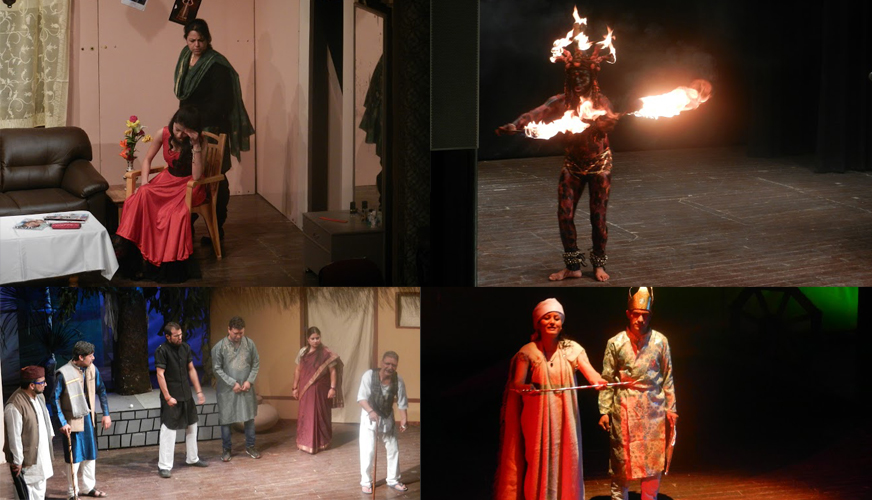
SHIMLA: Recently people of city got an opportunity to experience the magic of Samuel Beckett’s Waiting for Godot at the historic Gaiety Theatre. The play was organized by Renaissance Theatre Society in association with Sankalp Theater Group.
It is one of the well know plays belonging to theater of absurd genre. The story of play revolved around two characters waiting endlessly and in vain for the arrival of someone named Godot. Two men, Vladimir and Estragon, meet near a tree. They converse on various topics and reveal that they are waiting there for a man named Godot. While they wait, two other men enter. Pozzo is on his way to the market to sell his slave, Lucky. He pauses for a while to converse with Vladimir and Estragon. Lucky entertains them by dancing and thinking, and Pozzo and Lucky leave.
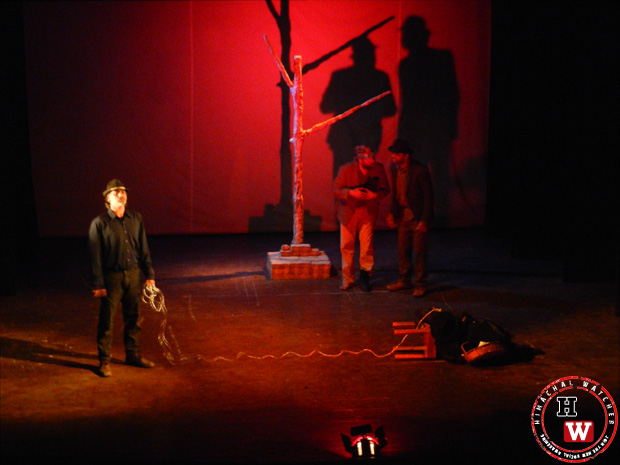
After Pozzo and Lucky leave, a boy enters and tells Vladimir that he is a messenger from Godot. He tells Vladimir that Godot will not be coming tonight, but that he will surely come tomorrow. Vladimir asks him some questions about Godot and the boy departs. After his departure, Vladimir and Estragon decide to leave, but they do not move as the curtain falls.
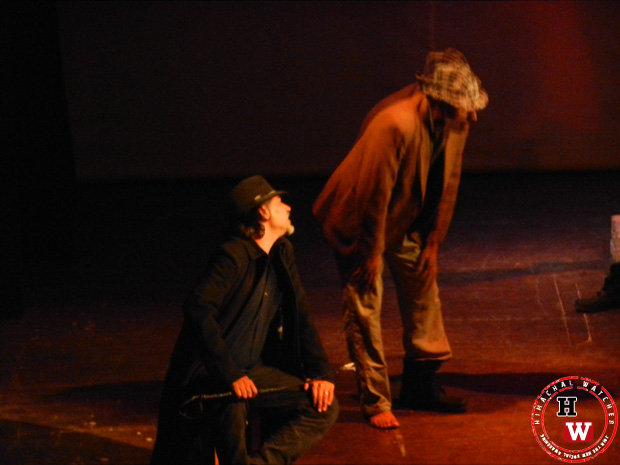
The next night, Vladimir and Estragon again meet near the tree to wait for Godot. Lucky and Pozzo enter again, but this time Pozzo is blind and Lucky is dumb. Pozzo does not remember meeting the two men the night before. They leave and Vladimir and Estragon continue to wait.
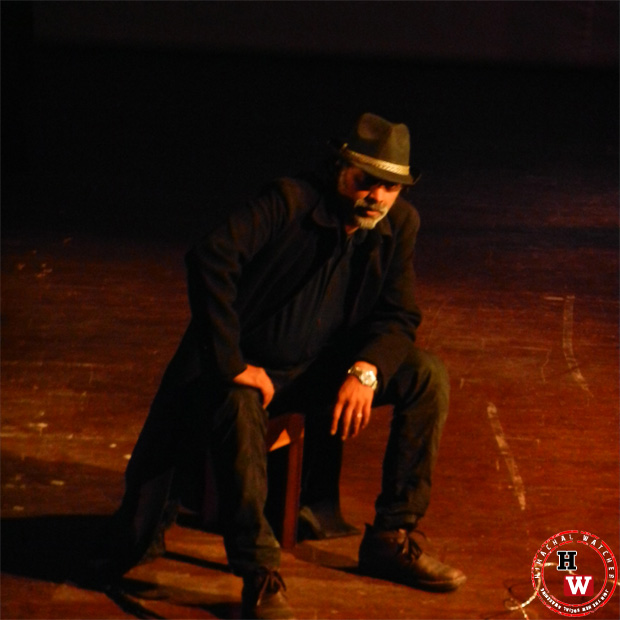
Shortly after, the boy enters and once again tells Vladimir that Godot will not be coming. He insists that he did not speak to Vladimir yesterday. After he leaves, Estragon and Vladimir decide to leave, but again they do not move as the curtain falls, ending the play.
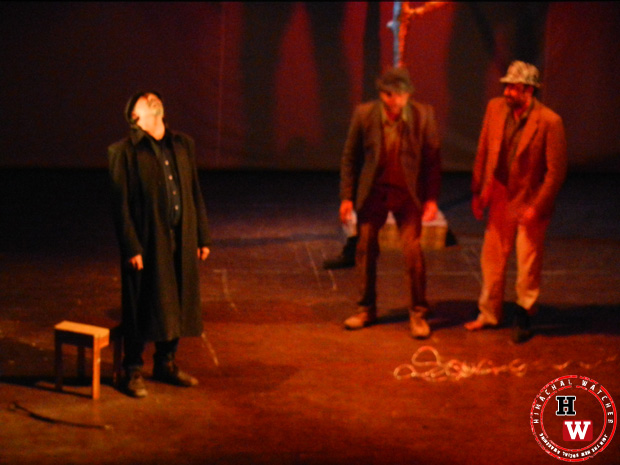
One can say that it was play for classes and not masses. Theater of absurd is not something that can be understood and catch the whim and fancy of all.




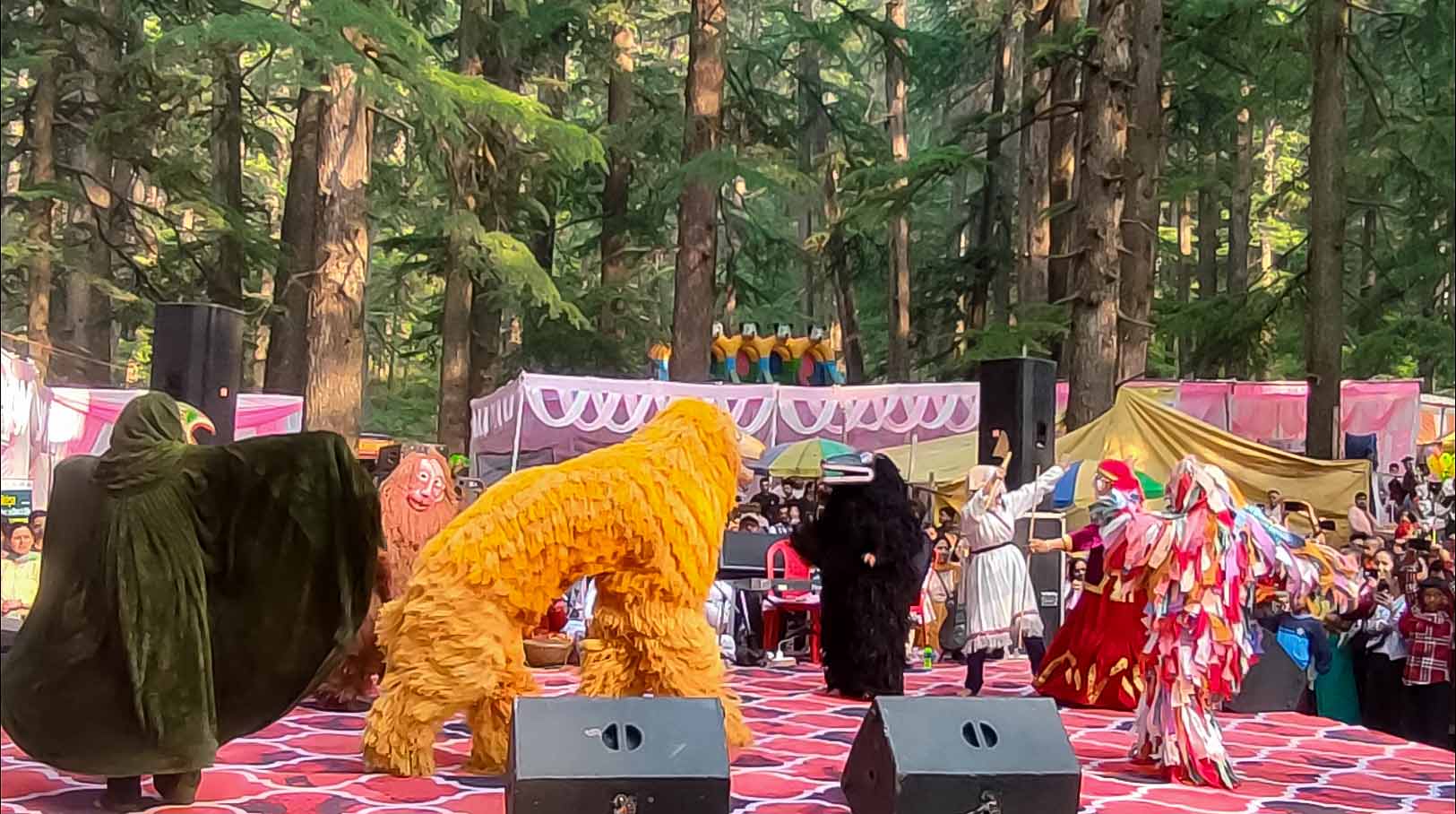
Shimla– This clip of the the Singhtu dance, a captivating and popular folk tradition from Himachal Pradesh’s Sirmaur district, was captured at the Seepur Mela held in Mashobra recently.
It is a cherished jewel in the state’s rich and diverse cultural mosaic. This mesmerizing performance, steeped in ancient traditions, enjoys immense popularity, enchanting audiences on both local and international stages. In the Sirmauri dialect, “Singhtu” refers to a lion cub, and in Hindu mythology, the lion is revered as the sacred vehicle of Goddess Durga, lending profound spiritual significance to the dance.
Performed exclusively twice a year during Diwali and Ekadashi, the Singhtu dance is a ritualistic offering at temples and sacred sites, where it has been presented since time immemorial.
Performers don intricately crafted masks depicting animals such as lions, bears, leopards, and mythical forest beings, which are brought out from temples only for these occasions.
These masks, combined with the dancers’ rhythmic movements, vividly evoke Sirmaur’s ancient culture, transporting spectators to a bygone era while celebrating the region’s deep connection to nature.
Himachal Pradesh is a vibrant tapestry of unique traditions, with each district showcasing distinct folk dances, music, and rituals that reflect the state’s multifaceted heritage.
The Singhtu dance, blending spirituality, artistry, and environmental consciousness, stands as a powerful testament to this diversity. Beyond its aesthetic allure, it conveys a timely message of wildlife conservation and environmental preservation, resonating with global concerns.
Art & Culture
Use Offerings Made at Himachal’s Hindu Religious Institutions Only For Hindus, Employ Only Hindus: HP Govt

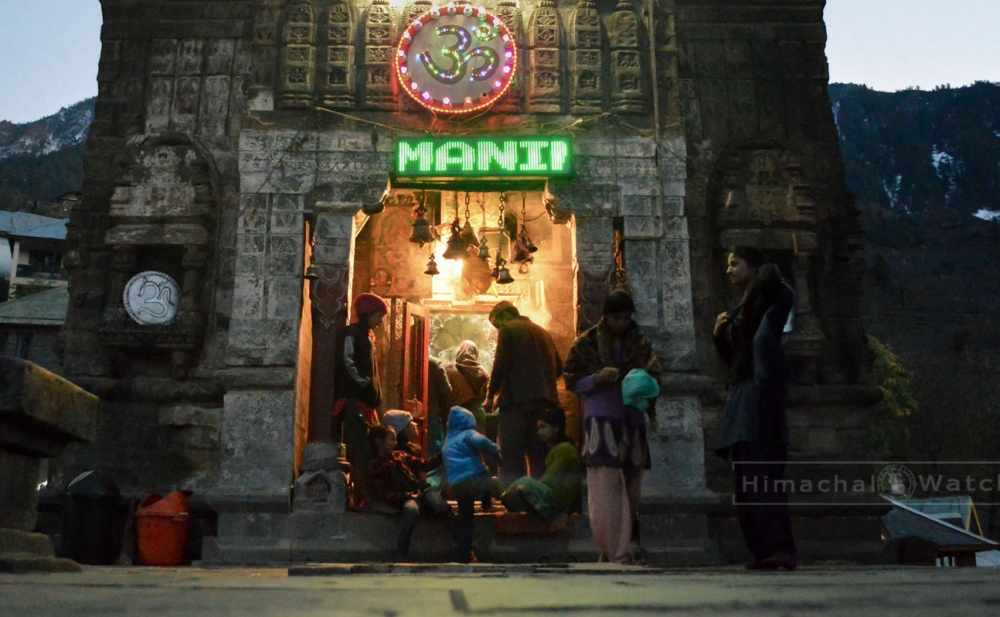
Shimla-The Additional Chief Secretary of the Himachal Pradesh Language, Art & Culture Department has issued a notification barring the use of offerings made at the Hindu religious places or institutions for non-Hindu Communities.
Directions in this regard have been issued to Commissioners (temple) under Section 27 of the Himachal Pradesh Hindu Public Religious Institutions and Charitable Endowments Act, 1984.
“All the receipts or offerings including gold and silver of the Hindu Public Religious Institutions and Charitable Endowments shall be used only for the purposes pertaining to the welfare and other activities relating to only Hindus. No receipts or offerings shall be used for the purposes associated with activities relating to Non-Hindus,” the notification said.
Further, now, no non-Hindu person would be given any sort of employment at the Hindu religious institutions/places.
“All the officers and officials including the personnel related to security etc. whether appointed or deputed or taken on outsourcing basis shall be out of the persons professing the Hindu religion only,” the notification said.
No further clarification was provided regarding the intended purpose of this move.
Art & Culture
Kullu Dussehra 2021: All Religious Ceremonies to be Allowed, But No Commercial and Cultural Events
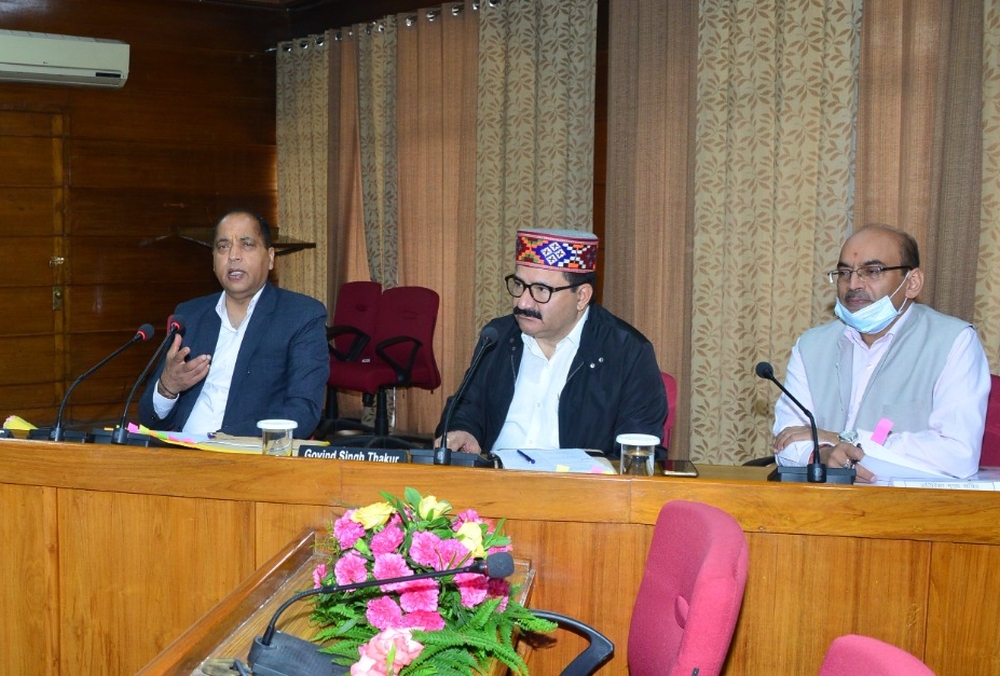
Shimla-The International Kullu Dussehra would be organised from 15th October to 21st October, 2021, the Himachal Pradesh Government informed today after holding a meeting regarding the same.
The HP Government has decided that all deities would be invited for the Dussehra festival. Orgnaization of all religious ceremonies would be allowed traditionally, but the cultural and commercial activities would not be held.
Chief Minister Jai Ram Thakur presided over meeting of State Level Kullu Dussehra Committee. Directions were given to ensure proper security system, uninterrupted electricity supply and adherence of Covid-19 guidelines.
It was also decided in the meeting that Language, Art and Culture Department would provide an additional amount of Rs. 10 lakh to district administration Kullu for organising Kullu Dussehra festival.


Himachal’s LPG Supply Hit Amid Global Tensions, Likely to Affect Hospitality Industry

Himachal Teen Survives 12-Minute Leopard Attack, Kills Predator in Self-Defense

Weather Forecast for Himachal Pradesh For the Next Two Weeks

Monsoon 2025: Himachal Pradesh Suffers 199 Casualties, Over ₹1,905.50 Cr in Damages

 Home Decor Ideas 2020