
News
Youth of Himachal should pay attention to this new research on effects of marijuana use during adolescence

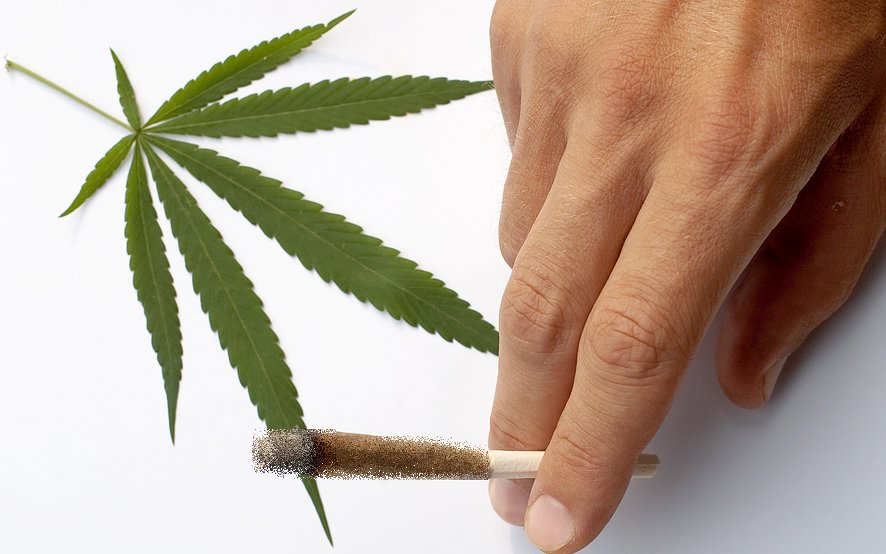
Boys who started occasionally using cannabis around 15 or 16 years old and had a dramatic increase in use by the time they were 19 had the greatest dysfunction in brain reward circuitry, the highest rates of depression and the lowest educational achievements.
Shimla – How an adolescent uses marijuana, in particular, a pattern of escalating use, may make an adolescent more prone to higher rates of depression and lower educational accomplishments by the time they reach adulthood. Those findings come from a new study led by researchers from the Department of Psychiatry at the University of Pittsburgh School of Medicine and Pitt Department of Psychology published today in the journal Addiction.
The drug menace among the adolescents and youth of Himachal Pradesh is on an alarming level. The recent case of gruesome rape and murder of a school girl in Kotkhai region of Shimla district is being associated with increased substance and drug abuse among youth. Now the substance abuse is not limited only to smoking marijuana. A variety of synthetic drugs are consuming the youth of Himachal. Unfortunately, school children nowadays are exposed to drugs at a very tender age.
More unfortunate is the fact that even the most prestigious schools in Himachal don’t want to spend on services of professional child psychologists to deal with it in the proper way. The State Education Department is also in deep slumber and representatives of people are busy in politics.
Meanwhile, a section of youth in Himachal favors marijuana believing it is not a drug. They believe it cast a lesser negative impact on their brains. While smoking, its users often hold unofficial debates in enclosed groups advocating legalisation of marijuana in Himachal. The adolescents here should pay special attention to findings of this new research before they fall into this trap.
According to Erika Forbes, Ph.D., professor of psychiatry, psychology and pediatrics, and lead author of the study,
We know that cannabis use in adolescence is associated with outcomes like lower educational level, and difficulties with mood and depression, but through this long-term study, we’ve been able to provide a much deeper insight into this relationship, showing that certain characteristics of use may be more important than others.
The researcher further adds,
The findings highlight that understanding marijuana use across the entire period of adolescence, which we know is an extremely vulnerable developmental phase, may tell us much more about detrimental long-term impacts than knowing about overall or one time use,
.
Researchers analyzed 158 boys and young men from Pittsburgh who were part of The Pitt Mother & Child Project (PMCP), a long-running longitudinal study of males at high risk for antisocial behavior and other psychopathology based on low income, family size and child gender, led by Daniel Shaw, Ph.D., distinguished professor of psychology at the University of Pittsburgh.
At age 20, the young men self-reported annual cannabis use characteristics for every year since they started use during an interview. Each man’s brain was also scanned using fMRI to assess functional connectivity in the brain’s reward circuit. The study participants completed questionnaires at ages 20 and 22 that examined psychosocial outcomes measuring depression and educational attainment.
The researchers analyzed frequency of cannabis use from ages 14 to 19 to determine the relationship between use during adolescence and psychosocial outcomes. In an unexpected finding, boys who started occasionally using cannabis around 15 or 16 years old and had a dramatic increase in use by the time they were 19 had the greatest dysfunction in brain reward circuitry, the highest rates of depression and the lowest educational achievements.
We expected to see that the young men who had a high, consistent level of marijuana use would have differences in brain function. However, it turned out that those who had an increasing pattern of use over their teens had the biggest differences,
Forbes added.
Though the results do not show a direct causal link, it’s important to note that even though most people think marijuana isn’t harmful, it may have severe consequences for some people’s functioning, education and mood,
Forbes said.
While that may seem unimportant at age 20, the level of education you receive will likely have a huge effect on your quality of life and socioeconomic status later in adulthood.
Additional authors on this research are Sarah D. Lichenstein, M.S., Samuel Musselman, B.S., Daniel S. Shaw, Ph.D., and Stephanie Sitnick, Ph.D., all of Pitt.
Photo: Mental Healthy.co.uk







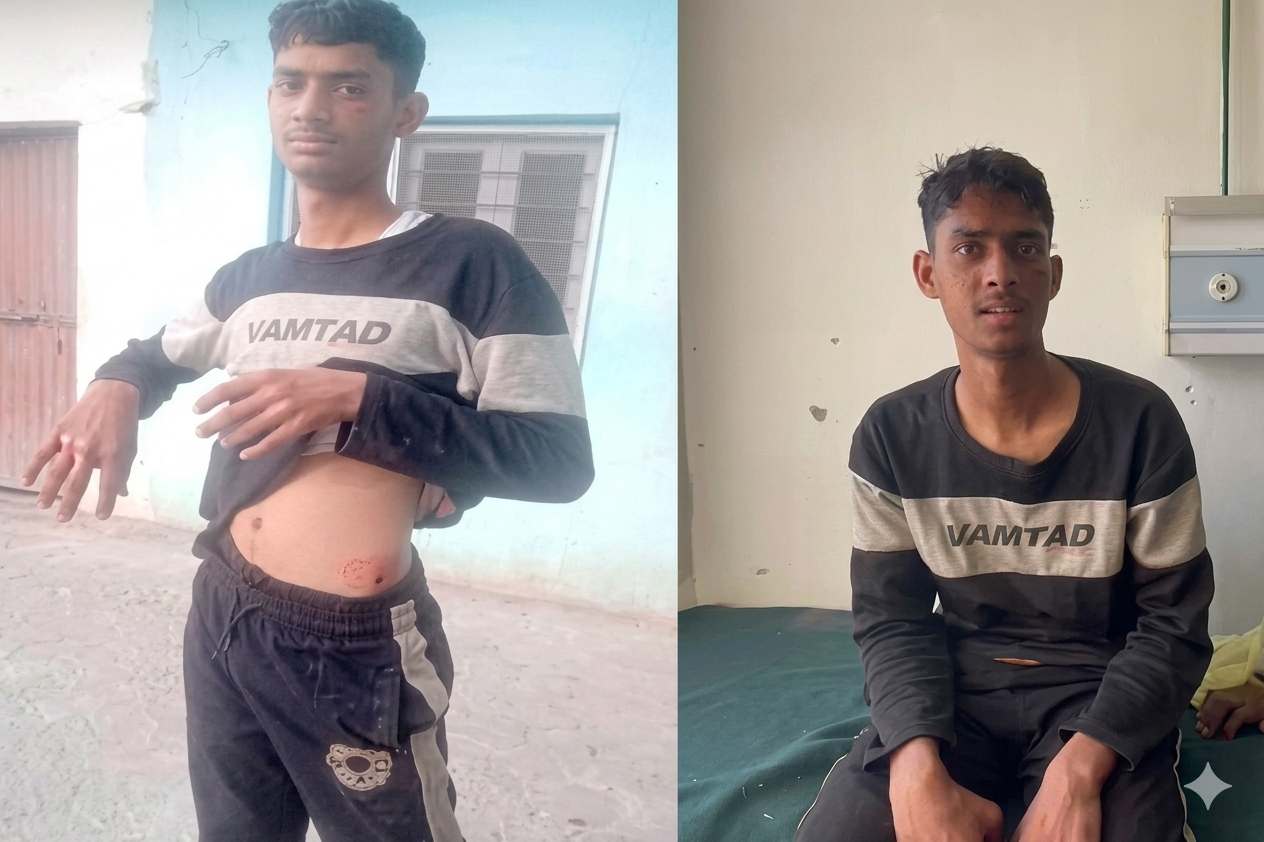
Solan—In a shocking incident on Monday, an 18-year-old youth, Pravesh, survived a vicious leopard attack in Sarli village of Arki subdivision. The teenager reportedly fought the leopard for nearly 12 minutes before breaking its jaw, killing the animal on the spot.
Quick Thinking Saved His Life
Pravesh told the media that he was walking from the fields to a nearby shop in the morning to fetch milk when the leopard, hidden in the crops, lunged at him. Noticing the leopard’s tail, he attempted to run but fell after a short distance. During the attack, he covered his neck with his hands to protect himself from fatal bites.
The teenager continued to struggle with the leopard, repeatedly attempting to put distance between himself and the predator. In a desperate move, he grabbed the leopard by its mouth, twisted its jaw, and broke it, killing the animal instantly. Pravesh sustained multiple injuries, including deep claw marks, and is currently receiving treatment at Arki Hospital. Police and forest department teams have launched an investigation into the incident.
Serious Allegations of HP Forest Department’s Negligence
One of Pravesh’s relatives accused the forest department of negligence, noting that similar attacks had occurred in the area previously.
Earlier, a leopard had attempted to attack a scooter rider, who managed to escape. The family said they had informed the forest department on March 6 about potential danger, but no concrete action was taken. Villagers waited for three hours for a forest team to arrive, but none came. When the Block Officer eventually visited, he reportedly told villagers to ensure their own safety. Requests for cages to capture the leopard were also denied, with officials asking for written complaints instead.


SHIMLA | 7 August 2025 –The India Meteorological Department (IMD) has forecast light to moderate rainfall across Himachal Pradesh over the next two weeks, with isolated heavy to very heavy showers likely over the low hills, plains, and adjoining mid-hill regions. While the ongoing monsoon remains vital for agriculture, it also brings an elevated risk of localized flooding and landslides.
Week of August 8–14
Maximum temperatures will range from 22°C to 34°C, depending on elevation—22°C to 28°C in high hills, 26°C to 30°C in mid-hills, and up to 34°C in lower regions. Minimum temperatures are expected to remain near normal, between 12°C and 24°C. Cooler conditions may persist in districts like Kullu and Lahaul-Spiti.
Week of August 15–21
Similar rainfall patterns are expected to continue, with scattered heavy rain episodes. Temperature trends will remain stable, though slightly below-normal maximum temperatures are likely in parts of Lahaul-Spiti, Mandi, Kangra, and Kullu districts.
Outlook for Late August
Rainfall is expected to remain broadly normal, with region-specific variations. Districts such as Kinnaur, Shimla, and Sirmaur may see below-normal precipitation, while Una, Kangra, Hamirpur, Bilaspur, and Solan are likely to receive above-average rainfall. Both maximum and minimum temperatures are forecast to stay close to seasonal norms.
Officials at the Meteorological Centre in Shimla have urged residents and local authorities to remain alert for sudden heavy downpours, which could disrupt road connectivity and trigger landslides—especially along vulnerable hillside routes. Past monsoon episodes have blocked key highways, including routes between Mandi and Kullu and near Banjar, underscoring the ongoing challenges in the region.
This advisory comes as Himachal Pradesh continues to face the dual pressures of sustaining its agriculture-dependent economy while managing the life and infrastructure risks posed by an active monsoon. Continued vigilance and preparedness remain crucial.

SHIMLA | 7 August 2025 –Himachal Pradesh continues to deal with the impacts of the 2025 monsoon season, reporting extensive property damage, loss of lives, and widespread disruptions across the state. According to the official reports from the State Emergency Operations Centre (SEOC), the Department of Revenue, and the India Meteorological Department, from June 20 to August 6, 2025, heavy monsoon rains caused significant damage across multiple districts:
- Casualties: 199 deaths due to landslides, flash floods, cloudbursts, drowning, lightning, electrocution, and accidents; 304 injuries reported.
- Property Loss: Extensive damage to houses (both pucca and kaccha), shops, factories, labor sheds, animal shelters, and substantial crop losses in agriculture and horticulture.
- Public Infrastructure: Over ₹1,900 crore in damages to roads (including PWD), power supply, health, education, fisheries, rural and urban development, and animal husbandry.
Most affected districts include Mandi, Kangra, and Hamirpur, with severe crop and infrastructure losses.

Additionally, 91 deaths occurred due to monsoon-related road accidents.
Public Utilities and Infrastructure Disruptions
The SEOC report dated August 7, 2025, highlights ongoing disruptions:
- Roads Blocked: About 493 major roads and 3 national highways (NH-305, NH-21, NH-05) remain blocked by landslides and floods.
- Power Supply: Disruption of 1,120 distribution transformers (DTRs).
- Water Supply: 245 water schemes affected, threatening access to potable water for communities.
Key blockages include NH-21 between Mandi and Kullu and NH-305 near Banjar and Jhed.
Weather Forecast and Warnings
The India Meteorological Department’s forecast valid from August 7, 2025, includes:
- Isolated heavy rainfall expected throughout the week.
- Thunderstorms and lightning predicted in isolated areas.
- Minimum temperatures near normal or slightly below.
- Maximum temperatures showing a moderate increase.
The public is urged to remain vigilant due to the risks of further landslides and flash floods.
Himachal Pradesh remains vulnerable as the monsoon season continues, with thousands affected by damage, displacement, and disruption of essential services. Authorities are continuing with rescue and recovery operations and are urging residents to stay alert to the ongoing adverse weather. This situation highlights the pressing need for enhanced infrastructure and disaster management strategies to mitigate monsoon-related risks.


Himachal’s LPG Supply Hit Amid Global Tensions, Likely to Affect Hospitality Industry

Himachal Teen Survives 12-Minute Leopard Attack, Kills Predator in Self-Defense

Weather Forecast for Himachal Pradesh For the Next Two Weeks

Monsoon 2025: Himachal Pradesh Suffers 199 Casualties, Over ₹1,905.50 Cr in Damages

 Home Decor Ideas 2020