
HW Community
HP Elections 2017: Criminal, financial, academic, other facts about winning candidates


The maximum number of MLAs with criminal background came from the BJP at 18(41%) out of total 44 elected MLAs
Shimla: It is of utmost importance that you know about the candidates whom you have elected to the Himachal Pradesh Legislative Assembly 2017 to form the new government. As an overview, let us take a look at the analysis carried out by the Association of Democratic Reforms (ADR).
It says that out of the total 68 MLAs including candidates of all parties, this time the number of elected MLAs with criminal cases has increased to 22(32%) as compared to 14 (21%) in 2012. There are 8 (12%) elected MLAs with serious criminal cases against them as compared to 5 (7%) in 2012.
Party-wise, two (10%) Congress MLAs out of total 21 has criminal cases against them. The maximum number of MLAs with criminal background came from the BJP at 18(41%) out of total 44 elected MLAs. This list also includes one independent and one CPI (M) candidate.
Financial Background
Out of the 68 MLAs, 52 (76%) are crorepatis as compared to 44 (65%) in 2012 assembly elections.
Party wise, these crorepatis include 28 BJP MLAs, 21 (100%) Congress MLAs, one CPI(M) MLA, and two (100%) independent MLAs.

The average of assets per MLA in the elections is Rs 8.88 Crores as compared to Rs 7.45 crores in 2012.
If the party-wise average assets are considered, among the major parties, the average assets per MLA for 21 INC MLAs is Rs 13.80 crores, Rs 6.14 crores for 44 BJP MLAs, and Rs. 12.85 Crores for two Independent MLAs.
The top 3 MLAs with highest assets contesting in the 2017 Assembly Elections are:
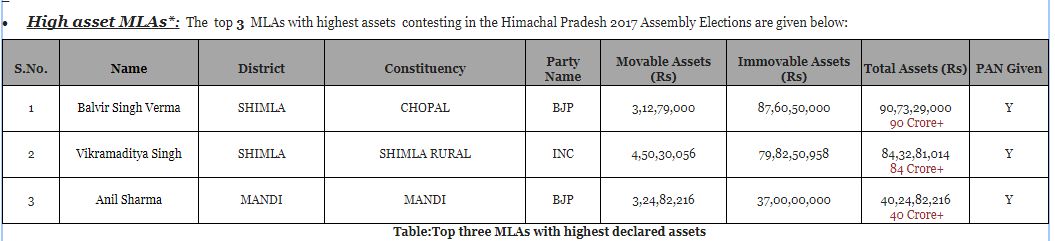
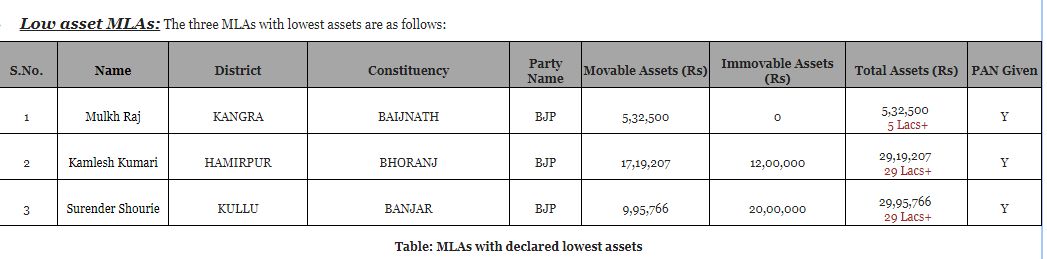
The three MLAs with lowest assets are as follows:
MLAs with high liabilities: 59 (87%) out of 68 MLAs have declared liabilities.
The top three MLAs with highest liabilities are as given below: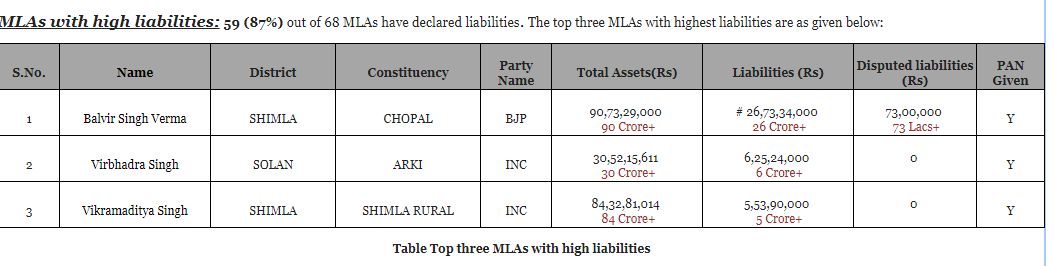
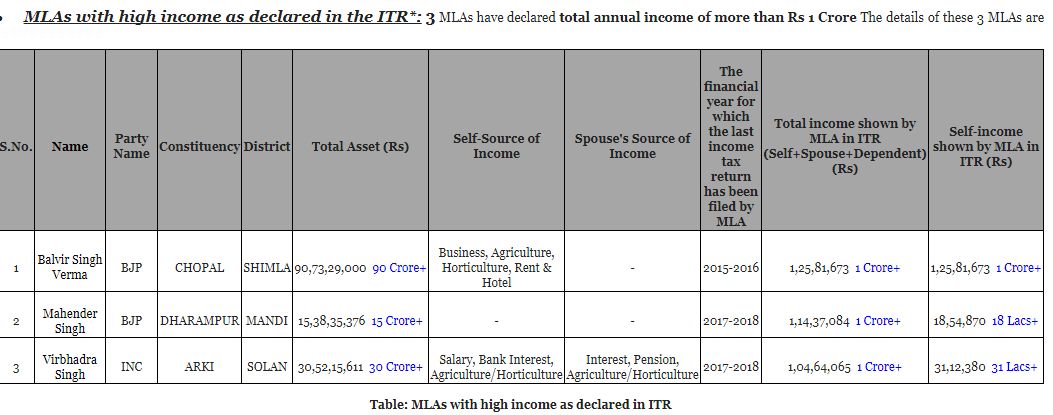
3 MLAs have declared total annual income of more than Rs 1 Crore. The details of these 3 MLAs are as given below:
Further, 10 (15%) out of 68 MLAs have not declared their sources of income while 4(6%) did not declare income tax details.
There are 2 MLAs with assets more than Rs 1 crore and have not declared income tax details. Their details are as given below:

Comparative analysis of assets of re-elected MLAs
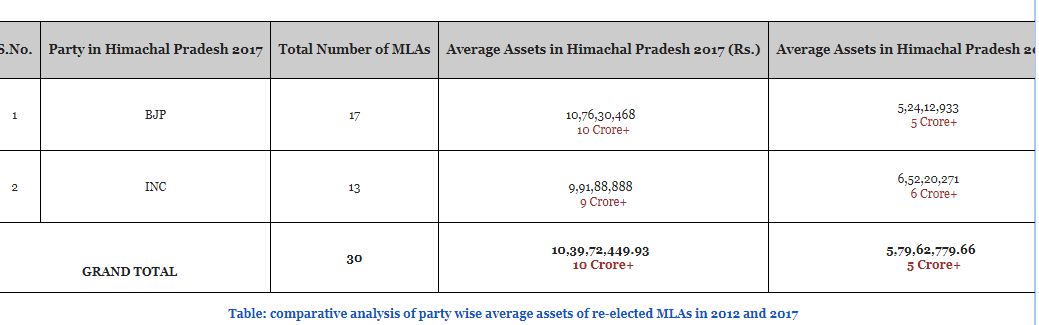
This election 30 MLAs have been re-elected. The average assets of re-elected MLAs in 2017 is Rs. 10:30 crores as compared to Rs 5.79 crores in 2017.
The growth in average assets of re-elected MLAs from 2012 to 2017 is Rs 4.60 crores i.e. by 79%.
Comparative analysis of party wise average assets of re-elected MLAs in 2012 and 2017
Educations
Out of total 68, (31%) MLAs are between 8th pass and 12th pass, while 47(69%) MLAs are graduate or above.
Age
Ou of the total, 20 (29%) MLAs are aged between 25 and 50 years, 46(68%) MLAs are between 51 and 80 years, and one MLA is above 80 years. Out of 68 MLAs, 4 (6%) MLAs are women as compared to 3 (4%) in 2012.





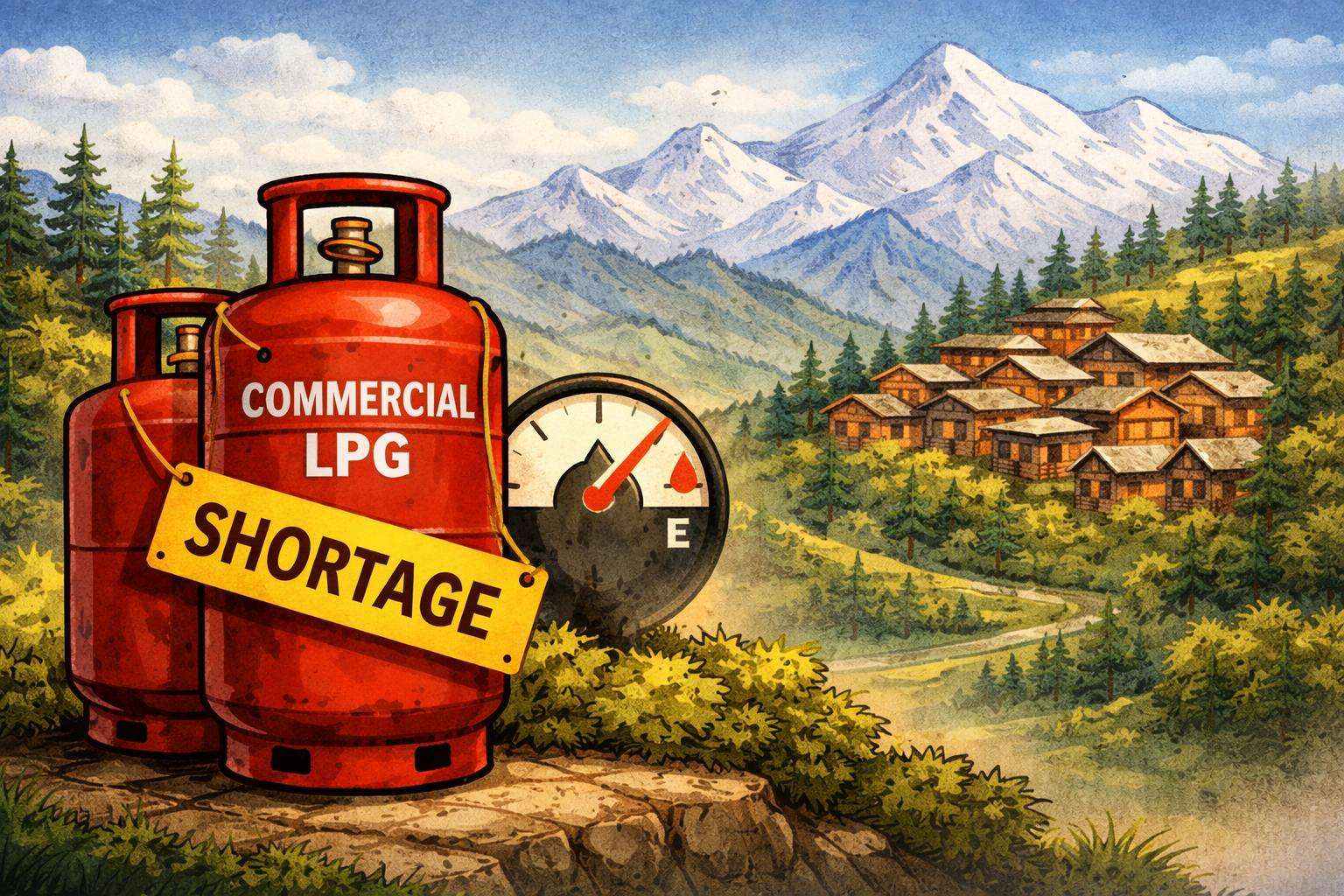
Shimla—A quiet but worrying crisis is unfolding in Himachal Pradesh. Across several districts, traders, hoteliers, and restaurant owners are reporting a sharp shortage of commercial LPG cylinders, leaving many establishments with barely a few days’ supply. In a state where tourism drives the local economy, disruptions in cooking fuel supply can quickly escalate into a wider economic concern.
Local reports indicate the shortage is already affecting hospitality businesses. Traders in Shimla have warned that commercial gas stocks may last only a couple of days if fresh deliveries do not arrive soon, according to a report by Amar Ujala. Restaurant owners have echoed similar concerns in Solan and nearby tourist towns, where businesses fear that kitchens may soon struggle to operate without regular supplies, as reported by Dainik Jagran.
At first glance, the shortage appears to be a regional supply bottleneck. In reality, the problem is tied to wider disruptions in global energy markets triggered by the ongoing tensions in West Asia.
Tourism economy vulnerable to fuel disruption
Himachal Pradesh’s tourism sector relies heavily on thousands of small and medium establishments—restaurants, cafés, dhabas, and hotels. Unlike large metropolitan areas where piped natural gas networks are expanding, most commercial kitchens in the hill state still depend almost entirely on LPG cylinders.
This dependence makes the sector particularly vulnerable. Even short supply disruptions can force restaurants to reduce operations, limit menus, or temporarily shut down.
Industry bodies across India have already sounded the alarm. Restaurant operators have warned that continued supply disruptions could lead to closures across the sector. For a tourism-driven state like Himachal Pradesh, such disruptions can ripple through the wider economy.
The global trigger: instability in West Asia
The roots of the crisis lie thousands of kilometers away. The conflict involving the United States and Iran has begun affecting energy markets and shipping routes in the Gulf region.
A key concern is the Strait of Hormuz, one of the world’s most important energy corridors through which a large share of global oil and LPG shipments pass. India’s dependence on this route is substantial. Energy analysts estimate that a majority of India’s LPG imports originate from Gulf countries and move through this narrow maritime passage, as noted in a report by The New Indian Express.
Any instability in the region immediately affects supply chains. Shipping risks rise, insurance premiums increase, and cargo movement slows. These pressures eventually filter down to domestic markets.
Recent reports have also linked rising LPG prices and supply concerns to the Middle East crisis, with consumers expressing worry about the impact of the conflict on cooking gas costs, according to ANI News.
Domestic prioritisation, commercial shortage
When supplies tighten, governments typically prioritise household consumption. Domestic LPG cylinders are considered essential for daily cooking, and maintaining their availability becomes a policy priority.
However, this often leaves commercial users facing reduced allocations. Restaurants and hotels depend almost entirely on commercial cylinders, which are distributed through a separate supply channel.
In response to the emerging supply concerns, the government has reportedly taken steps to ensure adequate domestic availability of LPG, including directing refiners to increase production and manage distribution more closely, as reported by The Economic Times.
While such measures protect households, they can intensify shortages for commercial establishments.
Geography amplifies the problem
Himachal Pradesh faces additional logistical challenges. LPG cylinders used in the state are largely transported from bottling plants located outside its borders. Moving these supplies across mountainous terrain involves long supply chains and limited transport routes.
When upstream deliveries slow down—whether at ports, refineries, or bottling plants—the impact reaches hill towns more quickly and more sharply.
At the same time, alternatives remain limited. Large-scale piped gas networks are rare in the state, and many commercial kitchens lack the electrical capacity required for high-energy cooking equipment.
A warning for energy resilience
The emerging LPG shortage in Himachal Pradesh is more than a temporary supply issue. It highlights a deeper vulnerability in India’s energy system—heavy dependence on imported fuel and fragile supply chains exposed to geopolitical shocks.
For a café owner in Shimla or a hotel operator in Manali, the geopolitics of West Asia may seem distant. Yet the current situation demonstrates how closely global energy flows are tied to local economies.
A disruption in the Persian Gulf can slow tanker shipments, delay fuel supplies at Indian ports, disrupt distribution networks—and ultimately affect the availability of cooking gas in a Himalayan kitchen.
As the situation evolves, the hope in Himachal Pradesh is that supply lines stabilise quickly. But the episode offers a clear lesson: in an interconnected world, even the quiet kitchens of the mountains are not insulated from global conflict.
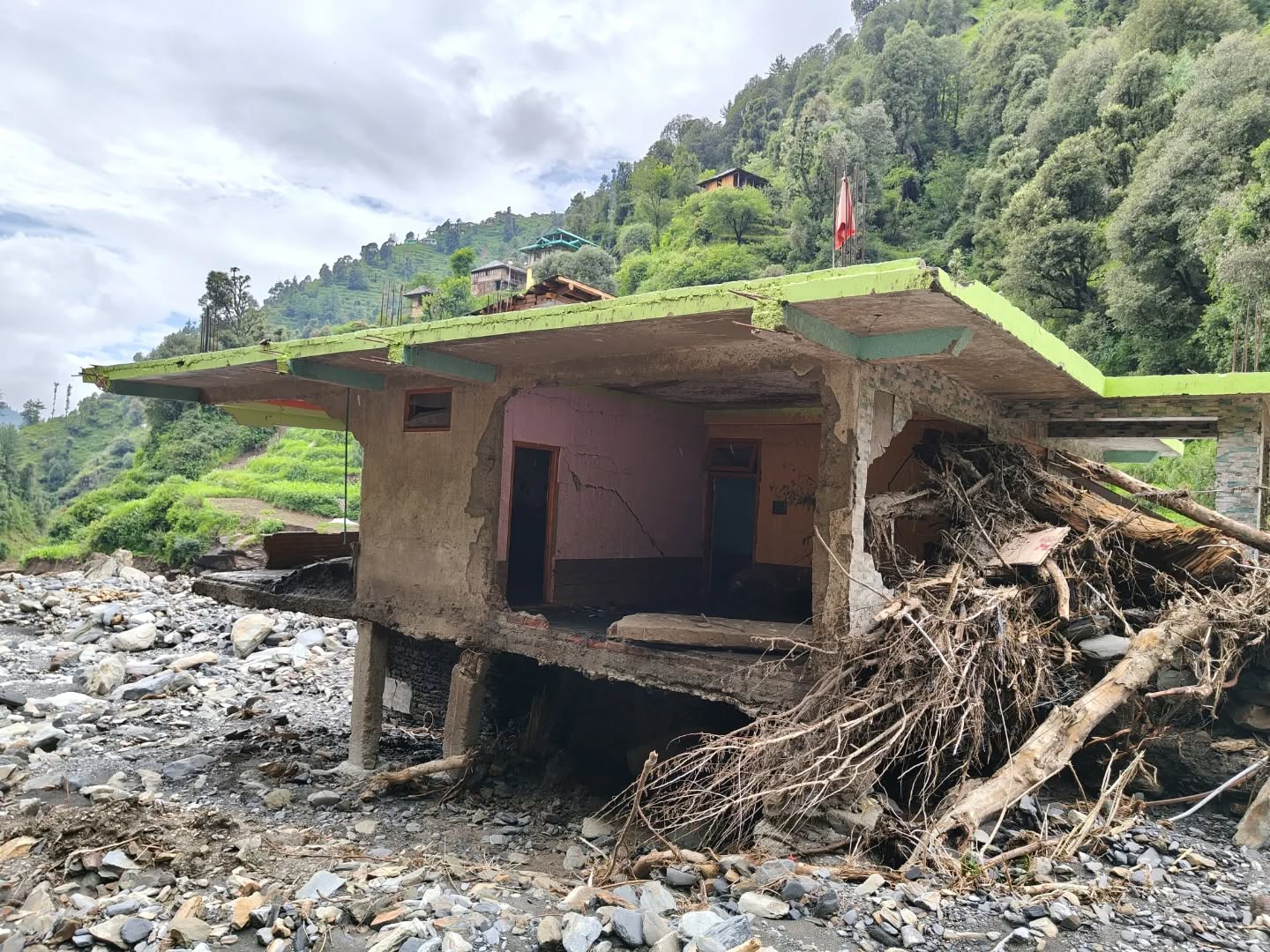
Mandi|July 11, 2025 — In the lap of the Himalayas, nestled among deodar forests and flowing streams, the district of Mandi has long stood as a symbol of Himachal’s tranquil beauty. But in the monsoon of 2025, that tranquillity was shattered — not by nature alone, but by a deadly combination of climate extremes, administrative apathy, and long-ignored warnings.
This year’s monsoon came not as a nurturing rain, but as a devastating deluge. What began in late June as a forecasted spell of heavy rainfall turned into one of the deadliest natural disasters in recent memory for Himachal Pradesh. And no place bore the brunt quite like Mandi.
The Collapse of Safety
Between June 20 and July 10, the state witnessed 91 rain-related deaths, out of which 17 occurred in Mandi district alone, making it the hardest-hit region according to the State Disaster Management Authority. More than 750 homes were completely destroyed, and another 880 partially damaged, while 10 bridges, multiple roads, and entire stretches of power and water infrastructure were washed away. In just 21 days, the estimated damage statewide crossed ₹750 crore.

The primary culprits? Landslides, cloudbursts, and flash floods — many of which occurred in the dead of night, catching villagers off guard.
In Siyathi village, 67 lives were saved not by sirens or warning systems, but by a dog’s bark. A resident, Narendra, told media:
“It was midnight. We were sleeping. Suddenly the dog began barking non-stop. We ran out. Within minutes, the entire hillside collapsed and our homes were buried.”
The dog, unnamed but hailed as a hero, became a symbol of what worked in a place where institutional response did not.
A Night of Heroes in Deji Village
In nearby Deji, two college students — Ronid Pundir and Sahil Thakur — from Thunag Horticulture College became real-life saviours. When a sudden cloudburst triggered a flash flood in the dead of night, the duo ran from house to house, waking families and helping them escape. Their actions helped evacuate over 150 people.

“We didn’t think twice. We just saw the water rising and started pulling people out,” Ronid told the media.
Despite such moments of courage, the tragedy left deep scars. In many parts of Seraj, Karsog, and Sundernagar subdivisions, residents reported that local authorities failed to respond in time. Emergency shelters were ill-equipped. In remote hamlets, stranded families waited hours, sometimes days, for rescue.

A Failure of Planning, Not Just Weather
Himachal’s vulnerability to extreme weather is well known. Yet critics argue that poor land use planning, unregulated construction near rivers, and unsafe road-cutting practices have greatly magnified the disaster’s impact.
Geologists and environmentalists have warned for years that road expansion projects and large-scale deforestation in hill regions have weakened slope stability. In many places, construction has occurred dangerously close to water channels, despite repeated advisories.
This time, the warnings played out in real-time — with mud, stone, and entire homes tumbling into ravines.
Government Response: Promises and Limitations
Chief Minister Sukhvinder Singh Sukhu visited the worst-affected villages, including Baga, Syanj, and Panglyur, personally distributing relief materials and speaking with the victims.
“No family should feel alone. The state stands with you,” he said during a relief camp visit.
The state government announced ₹7 lakh in compensation per fully destroyed house, and temporary shelters for displaced families. In contrast, the central government’s compensation — capped at ₹1.3 lakh — has drawn criticism from state ministers and the public alike.
Revenue Minister Jagat Singh Negi remarked:
“What we’re getting from the Centre is insufficient. Our people are suffering. We need stronger, faster support.”
A Glimpse into the Future
Perhaps the most chilling aspect of this disaster is that it may be only the beginning. Scientists warn that climate change is accelerating the frequency and intensity of such events in the Himalayas. Increased temperatures are destabilizing glaciers. Erratic rainfall patterns are overwhelming natural drainage systems.
Experts now call for a complete reassessment of infrastructure policy in Himachal — including bans on construction near rivers, better slope-stabilization in road projects, and improved early warning systems for landslides and flash floods.
“What’s happening is not natural anymore,” said a climate scientist from IIT Mandi. “It’s a man-made disaster wrapped in nature’s disguise.”
Beyond Numbers: The Lives Left Behind
In the hills of Mandi, statistics cannot capture the grief. Each day, as clouds gather, a quiet anxiety grips the village once more.

Shimla– In times of conflict, journalism must rise to its noblest purpose: truth, accountability, and responsibility. And yet, as India and Pakistan faced off once again across borders—bullets flying, lives lost, families shattered—a section of the Indian media turned tragedy into theatre.
From the moment reports of cross-border attacks surfaced, several primetime news anchors transformed their studios into shrill war rooms. Not to inform, but to inflame. Graphic war music, animated explosions, ticker tapes screaming “BREAKING”—the spectacle began. As soldiers bled on the border, TV screens bled hyperbole.
The most damning criticism did not come from adversaries but from global media observers. The BBC described Indian news channels’ coverage as “jingoistic and unhinged”. Al Jazeera and The Guardian echoed similar sentiments, noting how unverified reports, doctored videos, and belligerent studio debates replaced sober reportage.
Anchors, who had never seen a trench or a frontline, banged desks demanding military action. Unconfirmed reports were aired without attribution. Words like “annihilation,” “revenge,” and “surgical strike 2.0” were thrown around with theatrical bravado. There was no time to pause for facts. There was no room for nuance. There was only TRP.
The absurdity reached its peak when a few channels aired animations of fighter jets with triumphant music. Meanwhile, real families were burying their dead – soldiers and civilians alike.
In this chaos, journalism died a quiet death.
Media as Vultures
The metaphor is tragically apt. These channels, masquerading as patriots, behaved like vultures—circling the battlefield, feeding off the dead for ratings. Their hunger wasn’t for truth, but for viewership. They amplified hatred, dismissed dissent, and turned war into primetime entertainment.
And in doing so, they embarrassed India, not just at home but before the world.
The Cost of Sensationalism
When media loses its spine, democracy loses its mirror. The consequence is not just embarrassment—it’s danger. Misinformation in wartime can escalate conflict, trigger communal unrest, and mislead policymakers. A responsible media can cool tensions. An irresponsible one can fan the flames.
We must ask: Where is the human cost of war—the widows, the orphans, the destroyed homes? Where is the perspective from peace-builders, historians, and diplomats? Journalism is not supposed to echo government talking points—it is supposed to hold power to account, especially in wartime.
What Needs to Change
The Press Council of India, the News Broadcasting & Digital Standards Authority (NBDSA), and civil society must take stronger action against media outlets that violate ethical standards. Viewers too must switch off noise in favor of news. The Indian media must remember that its loyalty is to truth—not to war, not to government, and certainly not to TRP.
War is not a spectacle. Soldiers are not content. And journalism is not war-mongering.
It is time Indian newsrooms return to their core duty: informing citizens with accuracy, dignity, and humanity.


Himachal’s LPG Supply Hit Amid Global Tensions, Likely to Affect Hospitality Industry

Himachal Teen Survives 12-Minute Leopard Attack, Kills Predator in Self-Defense

Weather Forecast for Himachal Pradesh For the Next Two Weeks

Monsoon 2025: Himachal Pradesh Suffers 199 Casualties, Over ₹1,905.50 Cr in Damages

 Home Decor Ideas 2020