
Environment
Himachal becomes first state to run electric buses, thanks to High Court and NGT

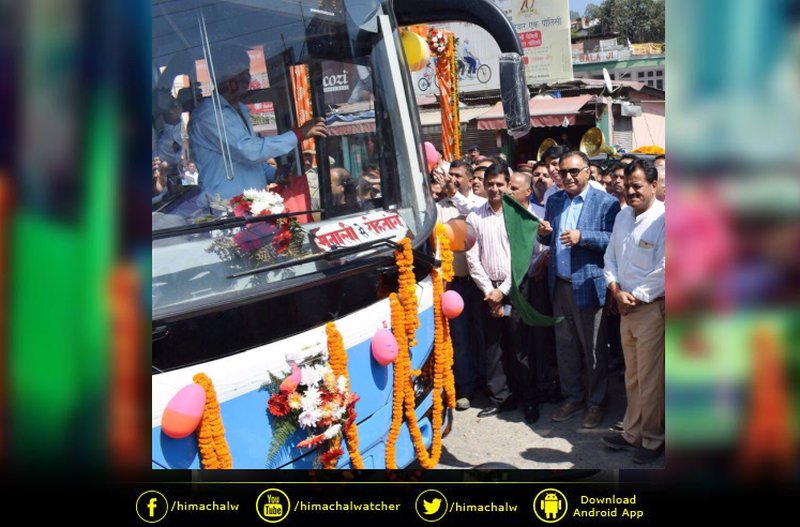
The state government had no plans or vision of its own to take such an eco-friendly initiative. Before the lash of court struck it first in 2014, the government did not report efforts to evaluate and measure the negative impacts of increasing tourists influx.
Shimla: Himachal Pradesh became the first state in India to introduce electric buses. The Transport Minister GS Bali gathered all the appreciation for this historical achievement after he flagged off the first electric bus on the 51 kms long Manali-Rohtang Pass stretch on September 21, 2017.
Initially, 25 buses will be delivered with each bus costing Rs 1.70 crore. The buses can carry about 30 passengers and cover a distance of about 200 kms before asking for recharge.
The minister informed that soon 50 more electric buses will ply on defined routes in other parts of the state. The buses will provide services in the towns of Manali, Dharamsala, Mandi etc. during the period when Rohtang Pass remains closed due to snowfall.
The fair would higher than the normal bus services, but the amount has not been decided yet.
However, it is a bitter fact that the state government had no plans or vision of its own to take such an eco-friendly initiative. Before the lash of court struck it first in 2014, the state government did not report efforts to evaluate and measure the negative impacts of increasing tourists influx.
It is important to credit the true authority which made it possible – the state High Court and the National Green Tribunal.
On February 24, 2014, the NGT had passed an order restricting the commercial activities and number of vehicles entering Rohtang pass to cut down increased emissions.
After facing pressure from the local people of the region, who lost their livelihood that was dependent on tourism activities, the government and some geologists had claimed that there are no glaciers in the vicinity to Rohtang Pass.
Over 15 petitions were filed by various unions and individual pleading the NGT to show leniency on the restriction put on commercial activities.
In March 2016, the Chief Minister Virbhadra Singh had called the NGT orders as ‘an overreaction.
The state does not agree to the NGT order entirely, therefore, it may proceed to the Supreme Court, if green bench did not give relief to the affected people,
The state government took about two years before it could decide which type of buses to be opted – electric or CNG. In fact, the NGT had rebuked the government in 2016 for its slow pace in execution of the orders.
You have taken 1.5 years, first to say yes to CNG and now you want to divert from CNG. You may make a statement before us stating as to which mode of transport you would prefer in this region,
a bench headed by NGT Chairperson Justice Swatanter Kumar had said on January 16, 2016.
The NGT had observed in its judgment that
Tourism is also the cause for adverse impacts on ecology and environment of the State. Diverse and devastating impacts are attributable to unregulated and heavy tourism, overcrowding, misuse of natural resources, construction of buildings and infrastructure, littering of waste and other activities associated with tourism.
The carrying capacity of amenities and facilities has virtually crossed the physical and ecological limits of the region. Over-construction increased vehicular traffic and associated air pollution and its impact on snow caps owing to unregulated tourism remain the notable, had observed the NGT in its order.
The tribunal had directed the state government that
BS-IV compliant fuel should be provided. Preferably, CNG or electrical vehicles should be used for tourism purposes, at 30 least at the initial stage. Only these vehicles should be plying on those roads.
The tribunal had also directed the government to be stricter in the monitoring of the vehicles going to the glacier for tourism or commercial purposes by regular pollution and over-loading checks.
The orders had also asked to restrain entry of the vehicles which are more than 10 years’ old.
While the tourists directly impact the ecology of the region, the commercial infrastructure hit it indirectly.
The tourist spots to the north of Manali township have an influx of around 11 lakh visitors annually.
During 2010, nearly 10,000 persons were visiting this tourist spot and nearly 3600 were going to the Rohtang daily in the months of May and June. Out total, 76% of these vehicles were taxis, had observed the Expert Committee constituted by the state High Court in October 2010.
Further, the NGT had observed that snow recorded at Keylong (3064 m.) in Lahaul & Spiti district was 685 cm in 1990, which reduced to 150 cm in 2000.
The tribunal had referred to a study conducted between this period and said the Parbati Glacier in the Kullu Valley is receding at the rate of 52 meters per year.
The tribunal had also referred to another study conducted by the Indian Institute of Technology, Kanpur, in which Black Carbon* was reported as the major causative factor for rapid melting of the glacier in the Himalayan region.
The study had attributed 40% of the glacial retreat to Black Carbon impact.
Thus, had it not been for the High Court and the NGT, the condition would have worsened manifold by now. In fact, there are no serious check on vehicular emission in Himachal, which Himachal Watcher have highlighted several times through videos and images showing visibly polluting buses emitting heavy pollutants.
*Black Carbon is primarily unburnt fuel that travels from warmer to colder areas through air, settles on glaciers and makes them melt and is believed to be the biggest contributor to global warming after Carbon Dioxide.






Environment
Shimla: Retaining Wall Collapses During Four-Lane Construction, Residents Flee Homes to Save Lives


SHIMLA | 3 July 2025 –A major mishap occurred in the Lindi Dhar village of Shimla district during the ongoing four-lane highway construction, raising fresh concerns over safety and construction quality. A retaining wall, constructed as part of the project, collapsed once again—posing a serious threat to nearby homes and destroying hundreds of apple trees.
According to local residents, this is not the first time the wall has caved in. Despite previous incidents, authorities failed to take adequate corrective measures. The latest collapse forced several families to abandon their homes for safety, fearing further landslides and structural damage.
Villagers have accused the National Highways Authority of India (NHAI) and its contractors of negligence. They allege that no proper safety precautions were taken in the construction process, even though the area is known to be vulnerable to landslides.
“This wall had collapsed earlier too, but no permanent solution was provided. Now, we are facing the same threat again. Our lives and properties are at constant risk,” said a local resident.
The landslide also damaged a large number of apple orchards—adding to the losses of local farmers who depend on horticulture for their livelihood.
Residents have demanded immediate intervention from the administration and strict action against those responsible for the substandard construction. They have also urged NHAI to put in place robust safety measures to prevent such incidents in the future.
Local officials have visited the site, and further assessment is awaited.
Environment
Police Complaint Alleges Criminal Negligence in Four-Lane Highway Project Between Parwanoo and Solan

Solan | 30 June 2025 – A police complaint has been filed at the Parwanoo Police Station in Solan district, alleging criminal negligence and environmental damage in the construction of the four-lane highway between Parwanoo and Solan. The complaint, submitted by former Deputy Mayor of Shimla Tikender Singh Panwar, accuses the National Highways Authority of India (NHAI) and its executing contractor, G R Infraprojects Limited, of serious lapses that have endangered lives, property, and the natural ecosystem.
According to the complaint, NHAI officials based at the Chakkar office in Shimla, along with planning teams at Rishikesh Sadan, Shanti Kutia, and the executing agency G R Infra, with its corporate office in Sector 18, Gurugram, failed in their duty to ensure minimal damage to the hilly terrain. It is alleged that the project was undertaken without proper consultation with the Geological Department, resulting in a project report that is “completely erroneous.”
Panwar contends that the design and method of slope cutting are fundamentally flawed, driven by ill-conceived ideas and profit motives.
“Instead of cutting the hills at a slope, the excavation has been done vertically,” the complaint states, warning that this approach poses a permanent threat to residents living near the construction site.
The complaint further highlights that since the beginning of the construction, there have been recurring losses of life and property, which the complainant attributes directly to unsafe and irresponsible construction practices.
Significantly, the complaint raises concerns about possible collusion between NHAI and GR Infra, and urges law enforcement to determine whether the negligence was circumstantial or the result of deliberate wrongdoing.
Panwar has demanded that both NHAI and G R Infraprojects Limited be held criminally liable and subjected to legal proceedings under relevant provisions.
As of now, neither NHAI nor G R Infra has issued an official response.
Environment
Himachal Bans Small PET Bottle, Rs 5,000 Fine on Littering of Single-Use Plastics, Compostable Bags

Shimla, May 27, 2025 – Small PET bottles (up to 500 ml) are littering Himachal Pradesh’s hills, forests, and water bodies, threatening its fragile ecosystem.
Ban on Small PET Bottles
Under the HP Non-Biodegradable Garbage (Control) Act, 1995, the state has banned these bottles in all government-organized indoor meetings, conferences, and events, effective June 1, 2025.
Impact on Hotels
The ban extends to HPTDC and private hotels, which must switch to glass bottles or steel water dispensers. A grace period allows clearing existing stocks to avoid financial losses.
Fines for Littering
A Rs 5,000 fine targets littering of single-use plastics, including compostable bags, by individuals, hotels, restaurants, and other institutions.
Mandatory Car Bins
From April 29, 2025, all taxis and public transport vehicles, including HRTC buses, must install ‘car bins’ for waste collection.
Enforcement Measures
Regional Transport Officers and Motor Vehicle Inspectors will verify bins during vehicle registration. Non-compliance incurs a Rs 10,000 fine, with Rs 1,500 for littering biodegradable waste.
Awareness Campaigns
Government bodies will conduct awareness campaigns to discourage small PET bottle use and promote sustainable practices.
Challenges
Himachal’s ban on small PET bottles and vehicle littering targets plastic pollution but faces challenges. Past bans faltered due to weak enforcement, especially in rural and tourist areas.
Small businesses may struggle with costly alternatives like glass or steel containers. Tourists, a major litter source, need better awareness. The car bin mandate requires rigorous monitoring to ensure compliance. Without robust recycling systems and public cooperation, the ban risks limited impact. Subsidizing eco-friendly options and strengthening enforcement are critical to protect Himachal’s ecosystem effectively.


Himachal’s LPG Supply Hit Amid Global Tensions, Likely to Affect Hospitality Industry

Himachal Teen Survives 12-Minute Leopard Attack, Kills Predator in Self-Defense

Weather Forecast for Himachal Pradesh For the Next Two Weeks

Monsoon 2025: Himachal Pradesh Suffers 199 Casualties, Over ₹1,905.50 Cr in Damages

 Home Decor Ideas 2020