
Environment
Satluj environmental impact report still not complete, but Himachal continues granting clearance to more hydropower projects

Shimla: As per the Scientific American – the leading and one of the oldest science and technology magazine of the United States of America, the country has decommissioned as well as removed at least 1,000 dams so far, and several others are under the process of decommissioning. The removal of dams is costing the US a gigantic amount of money, but still, it is taking the pain to do the needful.
The reason was simple – the adverse and irreversible environmental damages of these dams. The Hydropower Reform Coalition (HRC), a joint platform comprising of 150 environmental groups, had been advocating the removal of the dams due to their impacts on the environment including the aquatic life.
On the other hand, in the State of Himachal Pradesh, blessed with five perennial rivers including the longest Sutlej, in addition to already operational projects, the government is trying to sell over 700 projects by inviting private investors.
The government argues that hydropower projects have given the state economy a boost along with creating employment opportunities. After agriculture and tourism, hydropower is the biggest contributor towards the state economy. Moreover, hydropower is ecofriendly.
However, the government does not want to stop here and is targeting to harness 100 per cent of the total power generating capacity. During Congress government, it was officially stated that a hydropower potential of 27436 MW was identified in the state. The state was harnessing only 10351 MW.
During the tenure of the Congress government, Himachal had commissioned about 31 hydropower projects of 2067 MW capacity and had earned a revenue of Rs. 3345 crore from the sale of free and equity power.
The new Chief Minister Jai Ram Thakur, after coming into power, had said that the hydropower projects were facing difficulties in getting clearances. He had announced that all such hurdles would be removed under the new government. There were no words about the impact on the environment at all.
The environmental protection has never been a matter of concern for both Congress and Bhartiya Janata Party governments in the state. The leaders are completely visionless in this regard, which is why the environmental impacts of the hydroporjects remain absent from the list of major poll agendas.
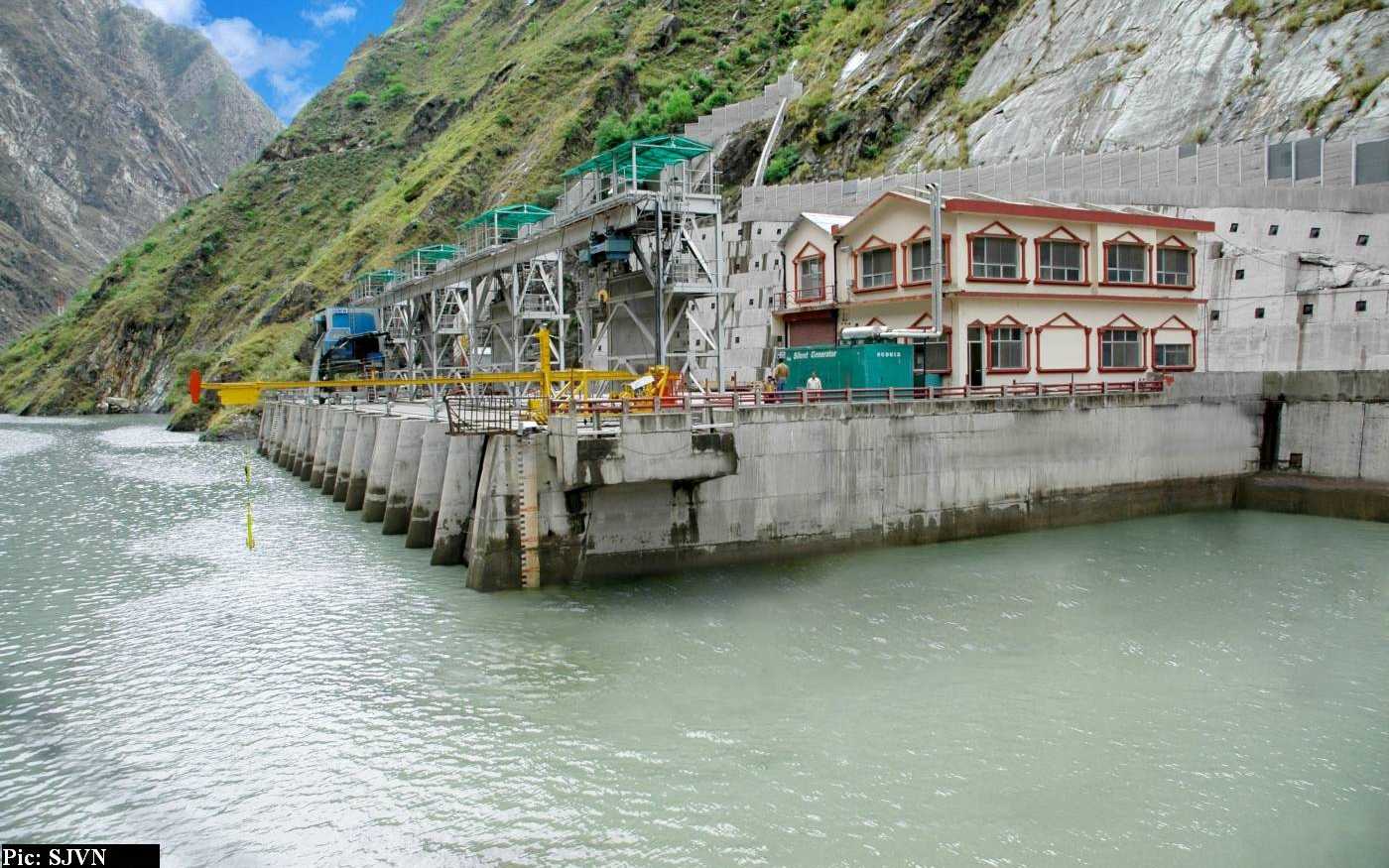
The latest project in making is the new venture of Satluj Jal Vidyut Nigam Limited (SJVNL); the Luhri Stage -I hydropower project (219 MW) on the last free-flowing stretch of the River Sutlej.
The environmental activists and groups are up in arms against the construction of more dams for the projects. The feedback from previous projects has shown that these projects did have an adverse effect. The project is proposed downstream of the 420 MW Rampur Project in Shimla and Kullu Districts.
Environmental group reaches the Expert Committee of Ministry of Environment
Raising objections to the granting of clearances to dams on the last free-flowing stretch of the Satluj River, the Himdhara Collective, an environmental group, recently sent a submission to the Expert Committee of Ministry of Environment demanding Cumulative Impact Assessment for individual projects on the Satluj river basin.
The committee, in its meeting to be held on August 28, 2018, is to consider the grant of Environment Clearance for SJVNL’s Luhri project. It’s the same project that was dropped after the SJVN faced resistance from the locals. Earlier, there was a proposal to construct a 750 MW project with a 35 km long tunnel in this stretch.
It was due to the objections of the local community that the massive tunnel will disturb the geology of the region, already prone to landslides that the project was dropped,
the submission said.
Instead, the HP government has now allocated three dams, namely, Luhri Stage I and Luhri stage II (163MW) and Sunni (355MW) in the same stretch. The key objection raised in the submission is that the committee instead of studying the overall impact of the three projects put together was looking at each project in a singular way.
70% of land granted for the project is forest area
The total land requirement for the three proposed projects is 654.02 hectares, which is twice the size of the land required for the earlier proposed 750 MW project. Considering 70% of the required land falls in the category of ‘forest’, this would lead to more deforestation in the Satluj River basin which has already faced severe forest diversion, erosion and slope de-stabilisation.
The move to build bumper to bumper dams on a single river basin is destructive and this is the reason why we have been saying that the Ministry of Environment should look at the cumulative impacts of the dams rather than for individual projects,
the environmental group stated in the submission.
The Govt denies reply to RTI seeking information on the CEIA Report
In 2013, on clear directions from the Ministry of Environment, the HP Directorate of Energy had commissioned Cumulative Environment Impact Assessment (CEIA) studies for all the major river basins of Himachal Pradesh. The process for Satluj river basin was initiated first in 2013. A series of public consultations were held in Pooh, Rekong Peo, Rampur where local communities and environmentalists had filed detailed objections.
The group said the DoE had even appointed an independent Panel of Environmental and Social Experts, which had submitted a damning report to the HP Government in 2015, raising that the state government was apathetic to the adverse impacts these projects had on the lives of local communities. However, since then, there has been complete silence on the CEIA study of Satluj river basin.
In 2017 we filed an RTI to the DoE seeking the final report, but the matter was transferred to the Union Ministry of Environment who did not respond despite appeal in the Central Information Commission. The matter is now pending in the Central Information Commission,
Himdhara members said in the submission.
For the last three years, the Expert Committee of the ministry has been according to clearances to hydro projects on the Satluj without even as much as mentioning the Cumulative Impact study that it itself had made mandatory to be conducted.
The CEIA should have a bearing on the decision to be taken in the Luhri I, II and Sunni HEP, else the exercise (CEIA of Satluj river basin) itself will be rendered meaningless given that, in the middle zone of the Satluj river basin this is the last and the only stretch of the free-flowing Satluj river.
the group said.
The group has demanded that the CEIA of Satluj river basin should be first finalized, and till then, all projects on the Satluj river basin must be put on hold. The issue of dam building in the Himalayas has also now become a major concern amongst mountain communities and environmentalists given the threat of disasters like cloudbursts floods and earthquakes to the lives and economy of the region.
However, the SJVNL terms these arguments as a non-sense saying there would be no tunnelling for the project. The company, like the centre and state governments, has as nothing to say about the CEIA report. Why is the government not finalizing the report and making it public if there is nothing wrong with the construction of the new projects?
Read Complete Submission




Environment
Shimla: Retaining Wall Collapses During Four-Lane Construction, Residents Flee Homes to Save Lives


SHIMLA | 3 July 2025 –A major mishap occurred in the Lindi Dhar village of Shimla district during the ongoing four-lane highway construction, raising fresh concerns over safety and construction quality. A retaining wall, constructed as part of the project, collapsed once again—posing a serious threat to nearby homes and destroying hundreds of apple trees.
According to local residents, this is not the first time the wall has caved in. Despite previous incidents, authorities failed to take adequate corrective measures. The latest collapse forced several families to abandon their homes for safety, fearing further landslides and structural damage.
Villagers have accused the National Highways Authority of India (NHAI) and its contractors of negligence. They allege that no proper safety precautions were taken in the construction process, even though the area is known to be vulnerable to landslides.
“This wall had collapsed earlier too, but no permanent solution was provided. Now, we are facing the same threat again. Our lives and properties are at constant risk,” said a local resident.
The landslide also damaged a large number of apple orchards—adding to the losses of local farmers who depend on horticulture for their livelihood.
Residents have demanded immediate intervention from the administration and strict action against those responsible for the substandard construction. They have also urged NHAI to put in place robust safety measures to prevent such incidents in the future.
Local officials have visited the site, and further assessment is awaited.
Environment
Police Complaint Alleges Criminal Negligence in Four-Lane Highway Project Between Parwanoo and Solan

Solan | 30 June 2025 – A police complaint has been filed at the Parwanoo Police Station in Solan district, alleging criminal negligence and environmental damage in the construction of the four-lane highway between Parwanoo and Solan. The complaint, submitted by former Deputy Mayor of Shimla Tikender Singh Panwar, accuses the National Highways Authority of India (NHAI) and its executing contractor, G R Infraprojects Limited, of serious lapses that have endangered lives, property, and the natural ecosystem.
According to the complaint, NHAI officials based at the Chakkar office in Shimla, along with planning teams at Rishikesh Sadan, Shanti Kutia, and the executing agency G R Infra, with its corporate office in Sector 18, Gurugram, failed in their duty to ensure minimal damage to the hilly terrain. It is alleged that the project was undertaken without proper consultation with the Geological Department, resulting in a project report that is “completely erroneous.”
Panwar contends that the design and method of slope cutting are fundamentally flawed, driven by ill-conceived ideas and profit motives.
“Instead of cutting the hills at a slope, the excavation has been done vertically,” the complaint states, warning that this approach poses a permanent threat to residents living near the construction site.
The complaint further highlights that since the beginning of the construction, there have been recurring losses of life and property, which the complainant attributes directly to unsafe and irresponsible construction practices.
Significantly, the complaint raises concerns about possible collusion between NHAI and GR Infra, and urges law enforcement to determine whether the negligence was circumstantial or the result of deliberate wrongdoing.
Panwar has demanded that both NHAI and G R Infraprojects Limited be held criminally liable and subjected to legal proceedings under relevant provisions.
As of now, neither NHAI nor G R Infra has issued an official response.
Environment
Himachal Bans Small PET Bottle, Rs 5,000 Fine on Littering of Single-Use Plastics, Compostable Bags

Shimla, May 27, 2025 – Small PET bottles (up to 500 ml) are littering Himachal Pradesh’s hills, forests, and water bodies, threatening its fragile ecosystem.
Ban on Small PET Bottles
Under the HP Non-Biodegradable Garbage (Control) Act, 1995, the state has banned these bottles in all government-organized indoor meetings, conferences, and events, effective June 1, 2025.
Impact on Hotels
The ban extends to HPTDC and private hotels, which must switch to glass bottles or steel water dispensers. A grace period allows clearing existing stocks to avoid financial losses.
Fines for Littering
A Rs 5,000 fine targets littering of single-use plastics, including compostable bags, by individuals, hotels, restaurants, and other institutions.
Mandatory Car Bins
From April 29, 2025, all taxis and public transport vehicles, including HRTC buses, must install ‘car bins’ for waste collection.
Enforcement Measures
Regional Transport Officers and Motor Vehicle Inspectors will verify bins during vehicle registration. Non-compliance incurs a Rs 10,000 fine, with Rs 1,500 for littering biodegradable waste.
Awareness Campaigns
Government bodies will conduct awareness campaigns to discourage small PET bottle use and promote sustainable practices.
Challenges
Himachal’s ban on small PET bottles and vehicle littering targets plastic pollution but faces challenges. Past bans faltered due to weak enforcement, especially in rural and tourist areas.
Small businesses may struggle with costly alternatives like glass or steel containers. Tourists, a major litter source, need better awareness. The car bin mandate requires rigorous monitoring to ensure compliance. Without robust recycling systems and public cooperation, the ban risks limited impact. Subsidizing eco-friendly options and strengthening enforcement are critical to protect Himachal’s ecosystem effectively.


Himachal’s LPG Supply Hit Amid Global Tensions, Likely to Affect Hospitality Industry

Himachal Teen Survives 12-Minute Leopard Attack, Kills Predator in Self-Defense

Weather Forecast for Himachal Pradesh For the Next Two Weeks

Monsoon 2025: Himachal Pradesh Suffers 199 Casualties, Over ₹1,905.50 Cr in Damages

 Home Decor Ideas 2020