
Environment
Visual pollution in Shimla City on rise as civic body and people losing sense of civility

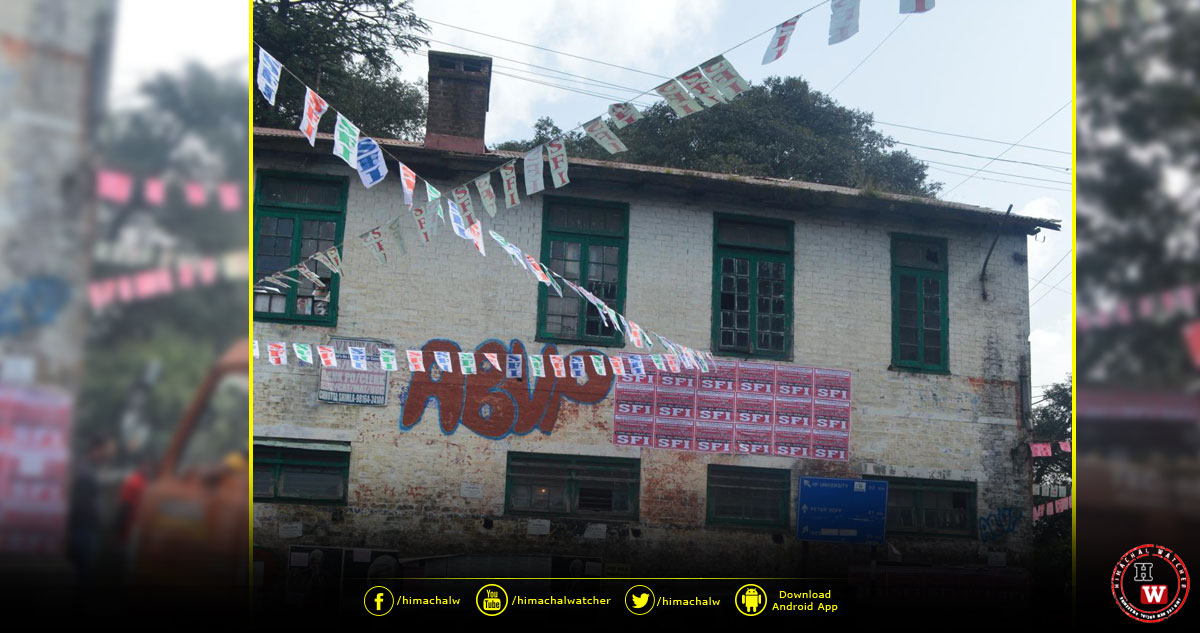
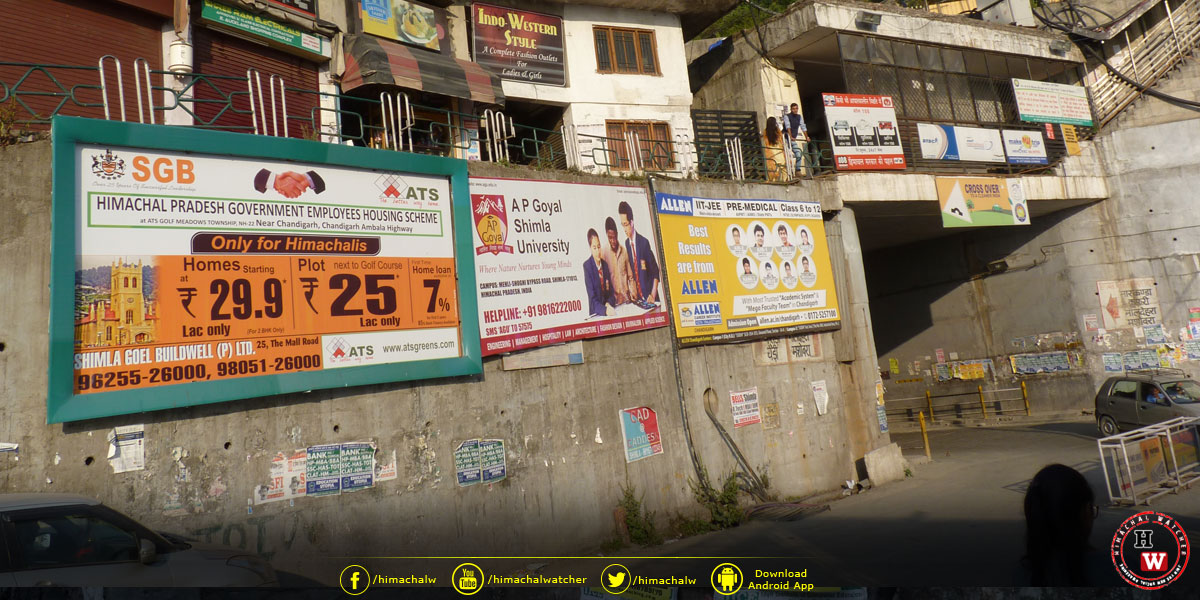
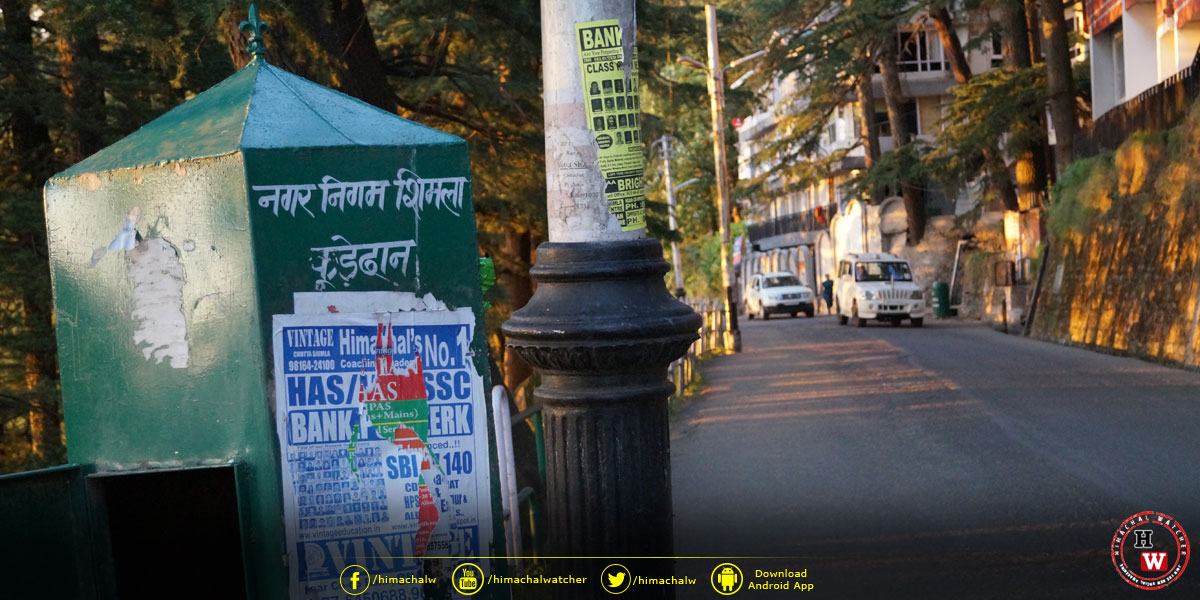
SHIMLA- Although, it is not an odd sight for majority of public, but visual pollution in Himachal Pradesh’s capital city Shimla is becoming a critical problem because it is being neglected by both public and government equally. The consumer culture is taking over the city and the scenario is worsening due to sticking of promotional bills, commercial and political posters, bunting, sign-boards etc on public places. While cities like Beijing (China) and São Paulo (Brazil) have put a complete ban on virtually all outdoor advertising to deal with visual pollution, the civic body of Shimla City isn’t even able to adhere to defined standards and directions for placement of billboards and hoardings.
Like most of the cities in India, queen of hills is also on the verge of losing its unique identity because every city share same cluttered view. Although, Municipal Corporation of Shimla does have defined rules & regulation regarding advertising on public places, in reality there is no execution in field. The civic body that always make excuses of shortage of funds can generate considerable revenue if it regulates advertising on public places.
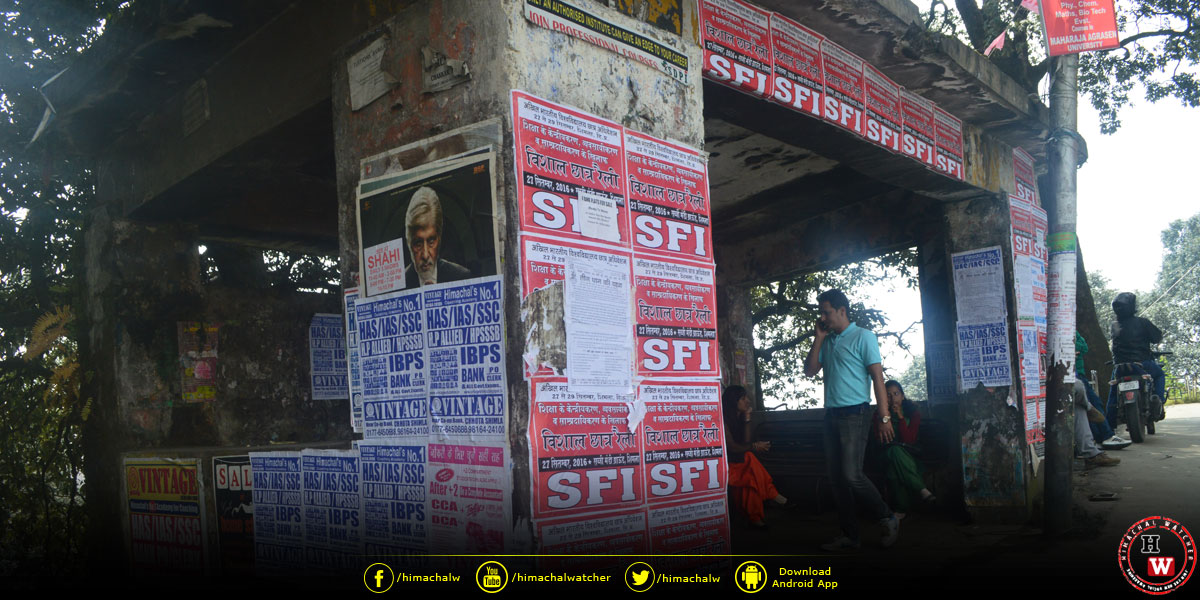
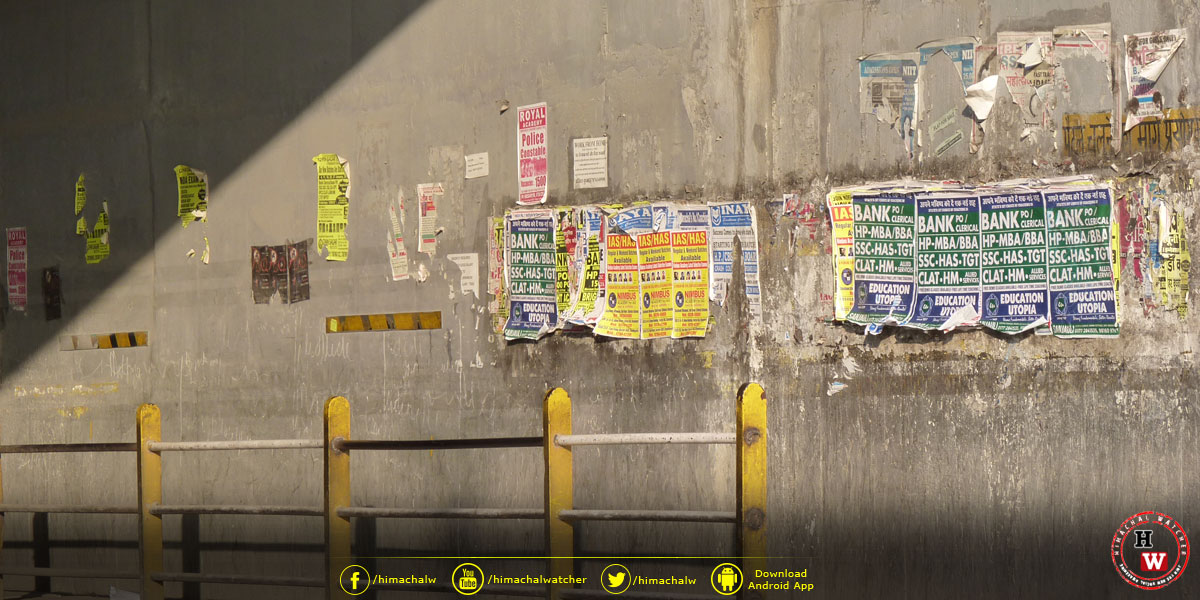
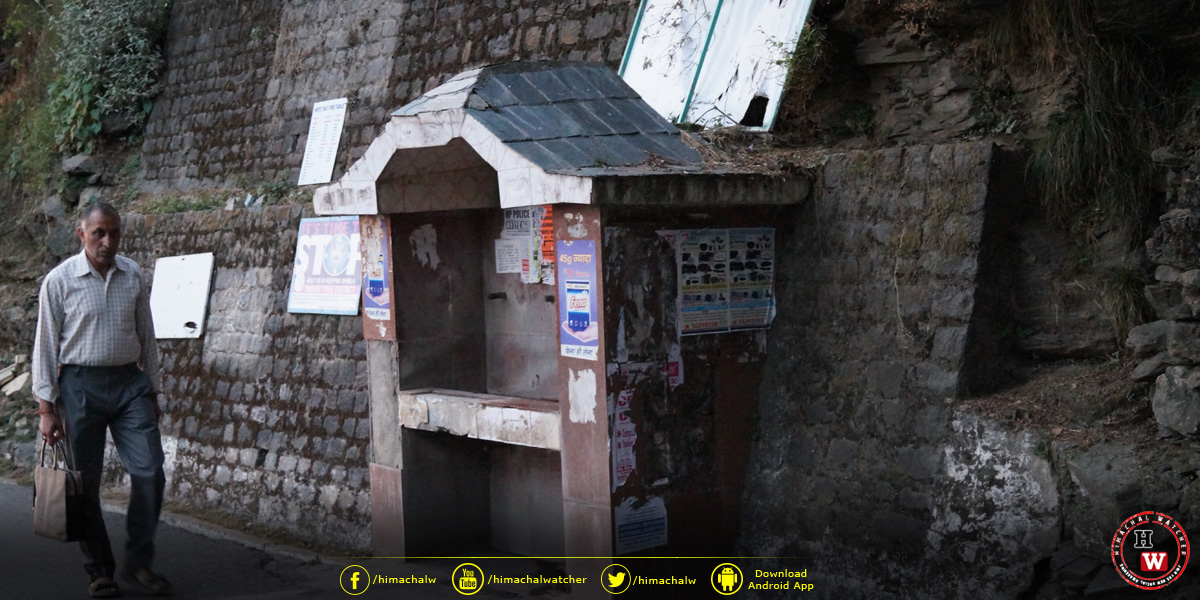
Entire Public Rain Shelter Defaced by Posters and Bills
Not only the public has lost aesthetic sense growing amid clutter, but even highly educated and well paid public servants and representatives lack required vision to foresee ugly consequences of not controlling visual pollution.
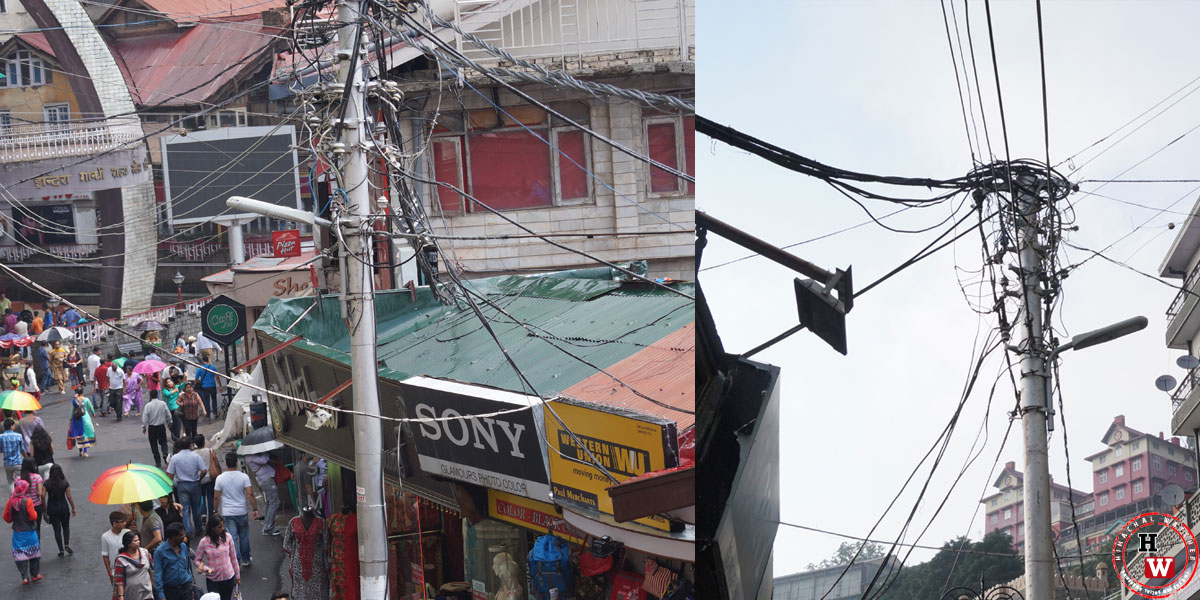
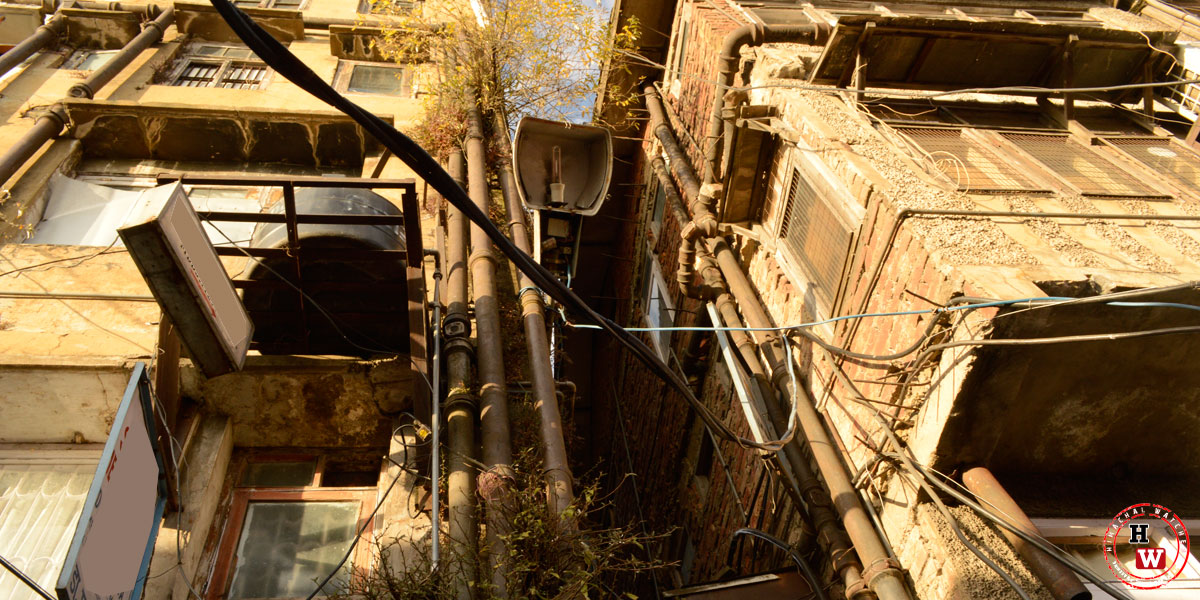
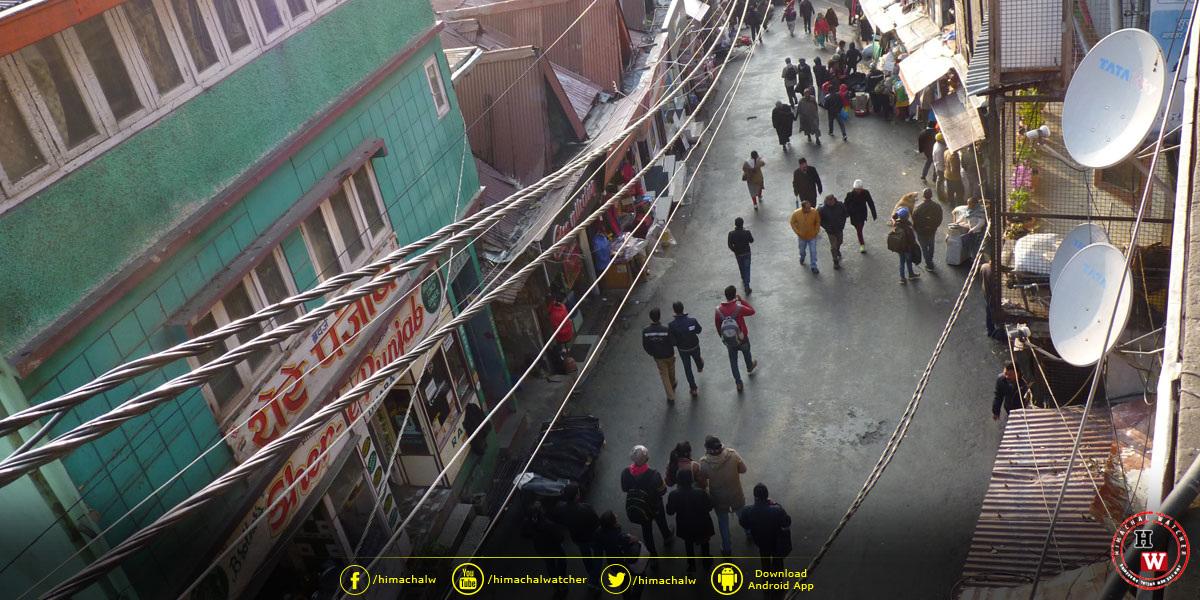
Ugly web of overhead cable clutter around Shimla Mall
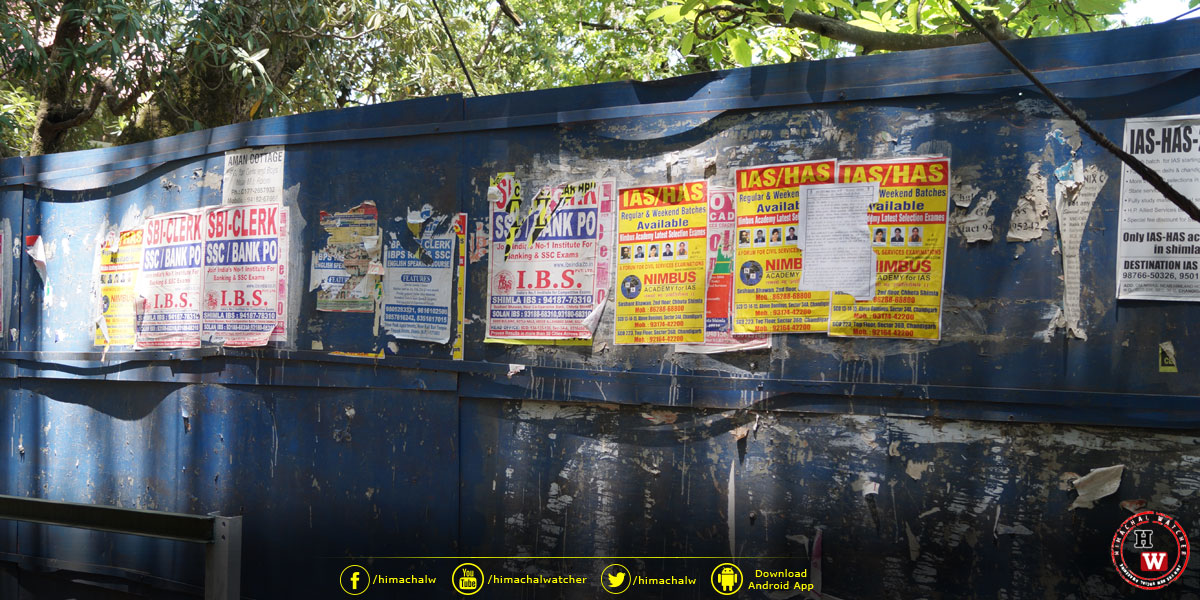
Entire city is cluttered by unlawfully stuck posters, overhead power lines, telephone and cable wires, and littered public places. Graffiti on public and private property is another mean to create visual pollution.
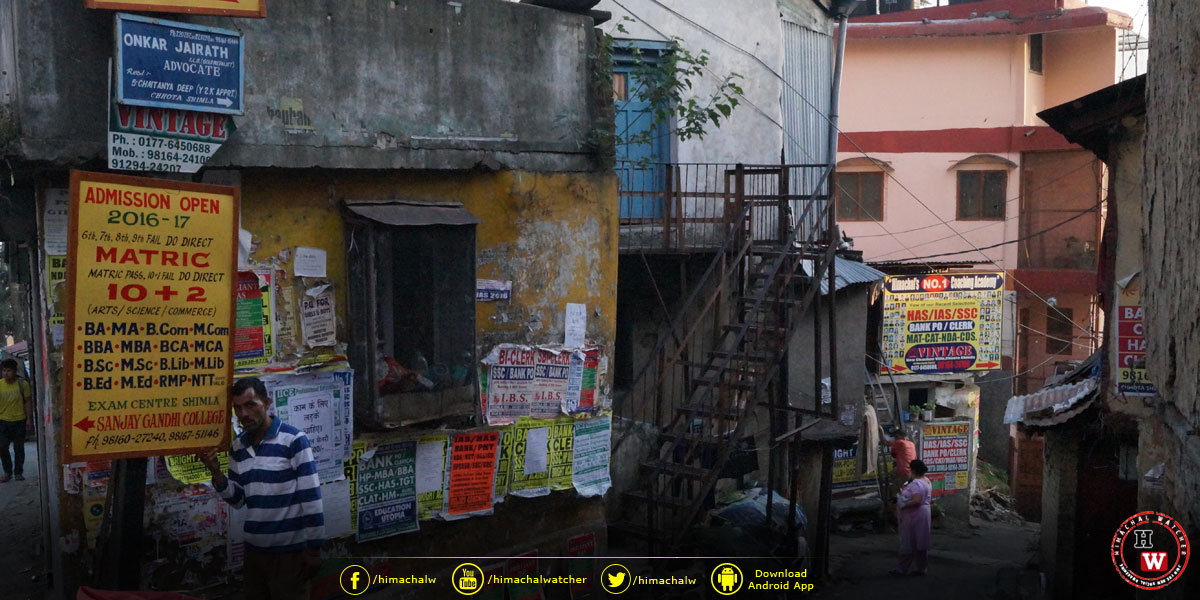
The civic body or administration of Shimla is never heard debating or preparing comprehensive strategies to deal with well any form of pollution like air and water pollution. So, it’s futile to expect them to observe other forms of pollution like visual, noise, light pollution etc.
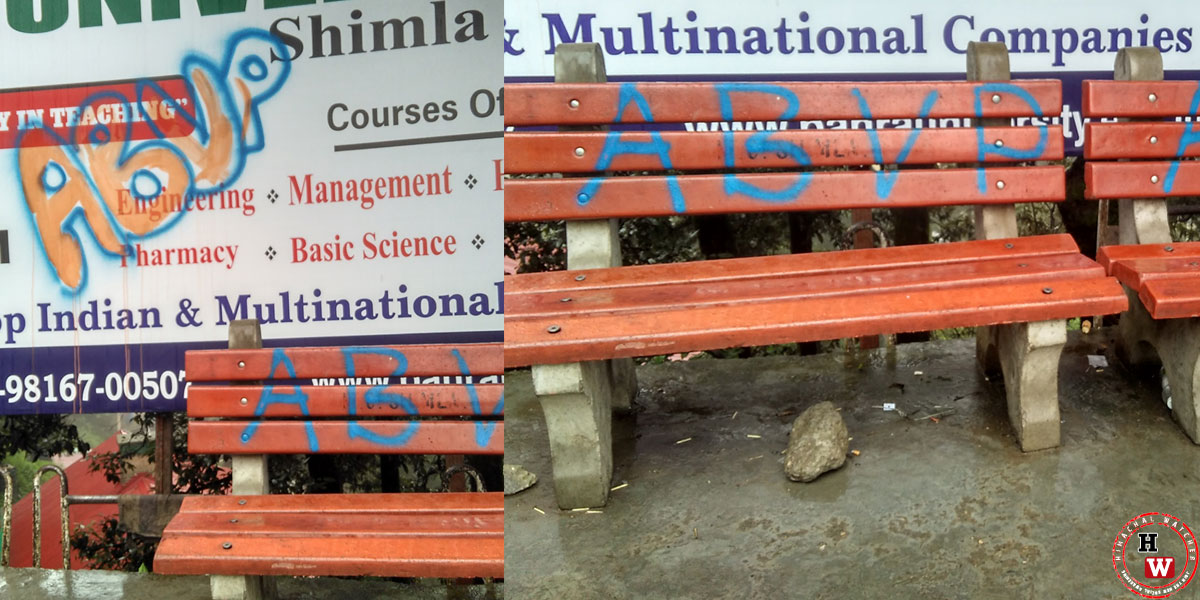
Public benches at Boileauganj Bus Stop
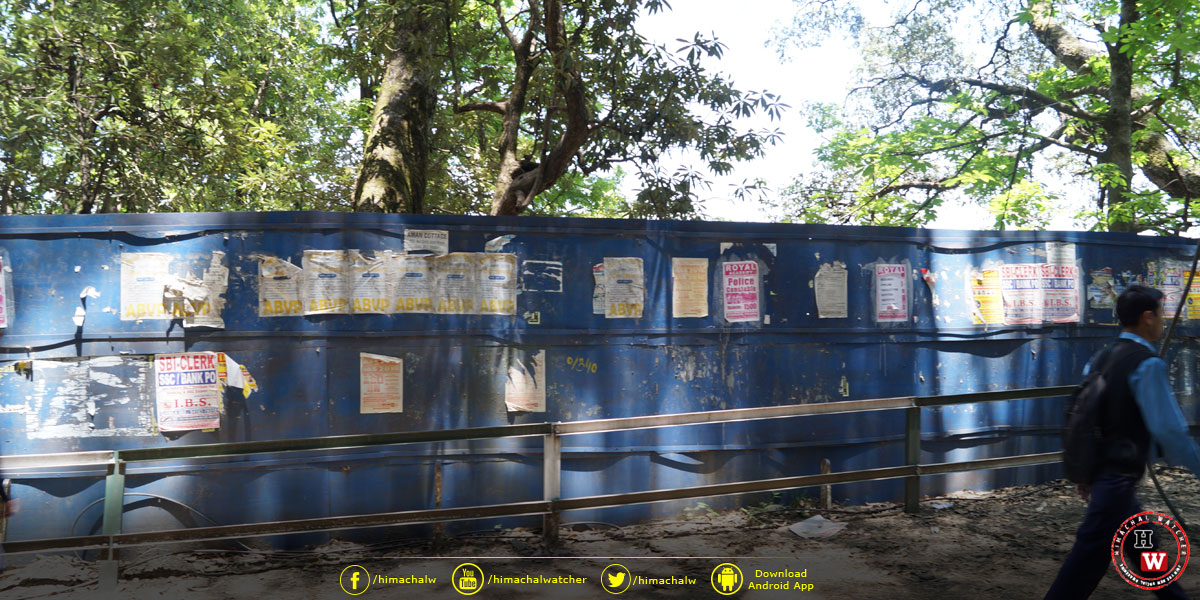
Treatment of public spaces by student outfits of higher educational institutes like Himachal Pradesh University and colleges is even more surprising. Student bodies, despite being educated, don’t show respect and care towards public property. Students even deface legally placed hoardings as shown in above image.
Researchers have conducted studies along with laboratory experiments to establish negative psychological impact on people who are unwillingly exposed continuously to unwanted visuals.
Visual environment is no less significant a part of fabric of communities as clean water or air and animal habitat. The issue isn’t been paid heed earlier because it is mostly considered less significant and merely associated with beautification. It is newer and unconventional concept. Anything altered by human-activities that are unattractive and affects people’s ability to enjoy or appreciate the view and vista.
On the other hand, visual pollution is a kind of visual sampler, without any regulation, which affects our assimilation capability and conditions the aesthetics of our public spaces.
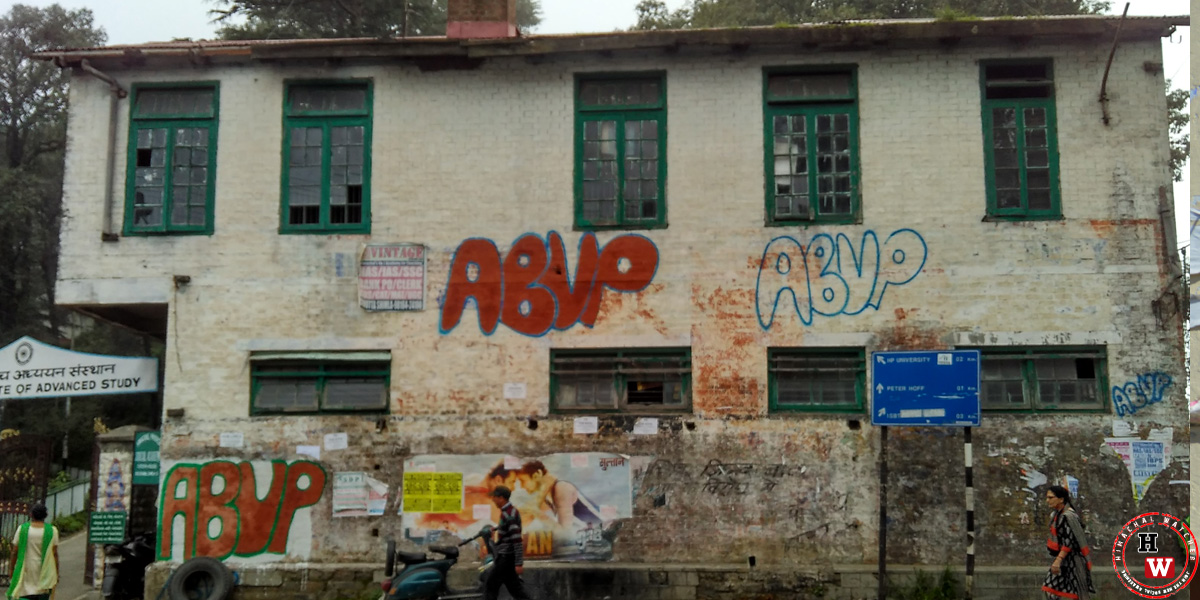
Building of Primary School Bolieauganj
Considering the aforesaid statement, Shimla cityscapes have become a mixture of of irregular formations, unorganized dumping of litters, billboards, cables, wires, worn-out buildings, and heaped and congested construction.
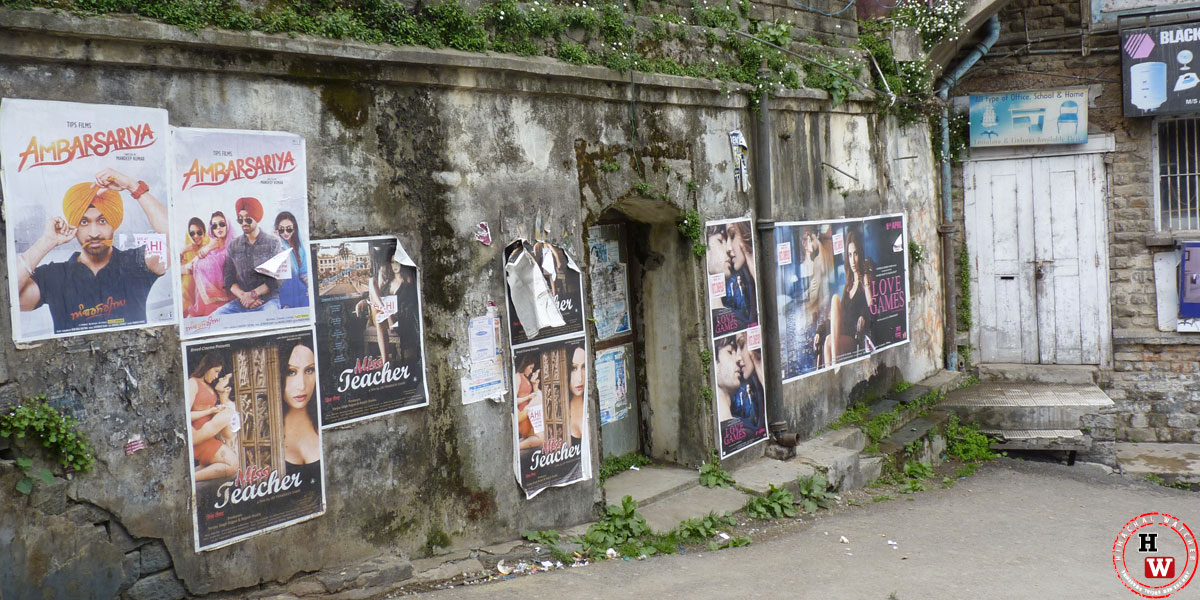
Poorly Pasted Posters on Poorly Maintained Structure
Impacts of visual Pollution
A study published in the European Scientific Journal, June 2015, “Visual Pollution Can Have Deep Degrading effects on Urban and Sub-Urban Community: A Study In Few Places of Bengal, India, With Special References to Unorganized Billboards” shed light on some of the negative impacts.
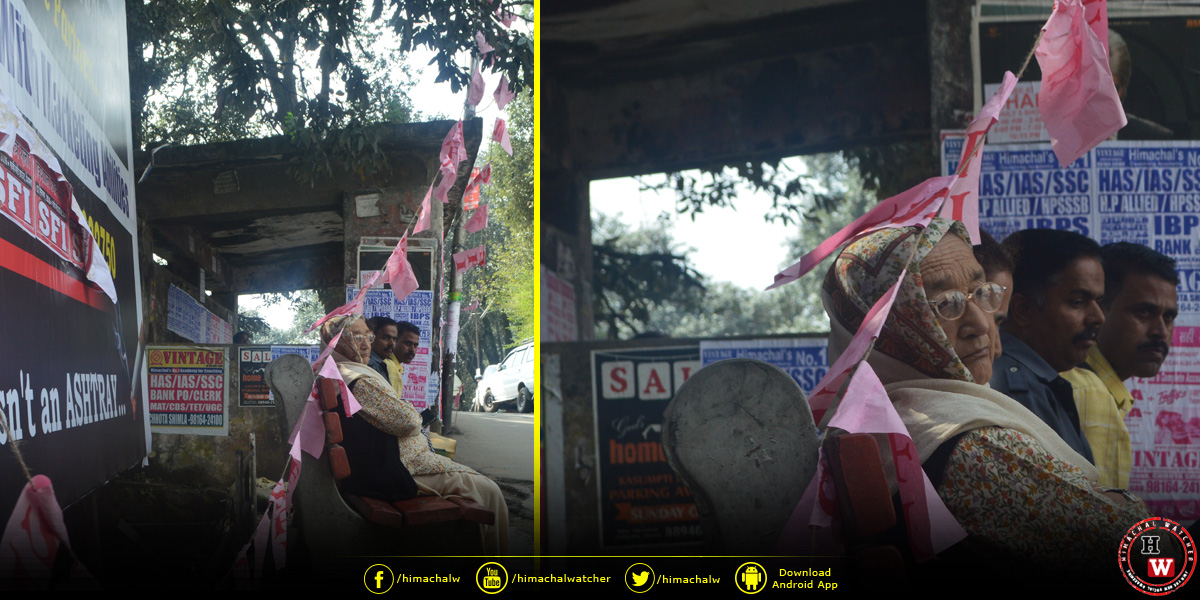
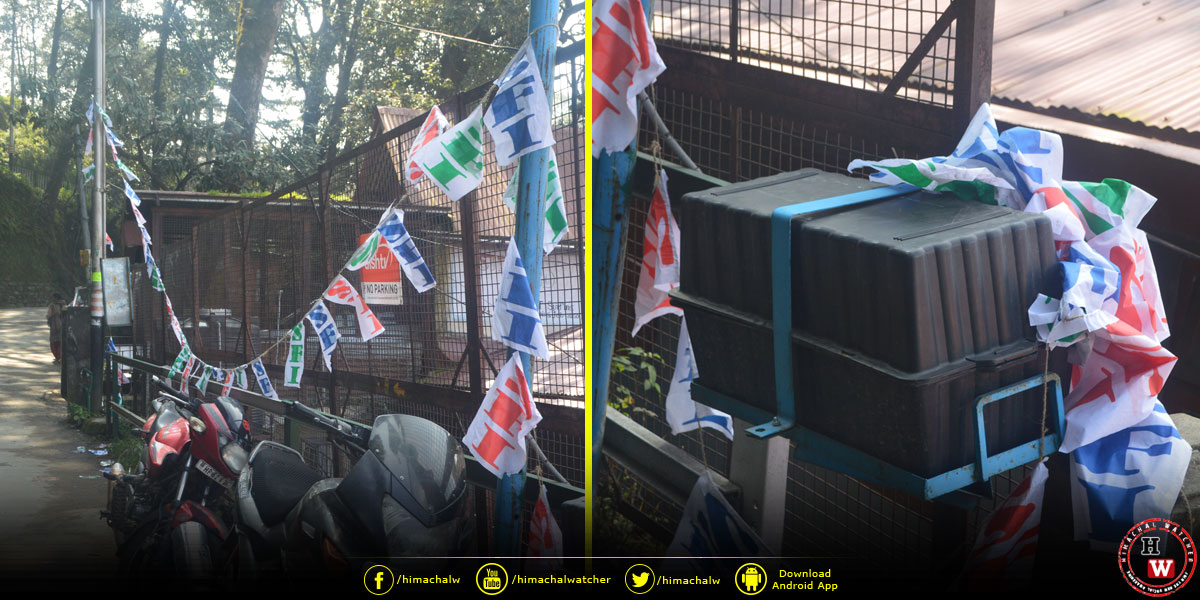
HPU Student outfit bunting hanging over heads of people
Negative visual influence increases secretion of adrenaline, which raises the acidity of the stomach and rapid the heart rate, and thus speed irritability.
On the other hand, positive scenes increases secretion of cortisone in the body and this natural cortisone reduces the feeling of pain.
Visual pollution can also create psychological aversion and thus affect mental and physical health, says researches.
Due to unpleasant and cluttered sights visual cortex of a person is stressed. This stress is directly associated with the light frequency and variety of light to which it is exposed. Citizens are exposed, without any consideration or respect to their individuality, to a constant visual saturation. Unconscious irritation of the visual cortex can interfere with performance and sleep quality.
Studies also show that effects of visual pollution include distraction, decreases in opinion diversity, and loss of identity, and health hazards of diverse kinds, irritability and psychological disturbances, eye fatigue, loss of sense of hygiene, and felling of civility.
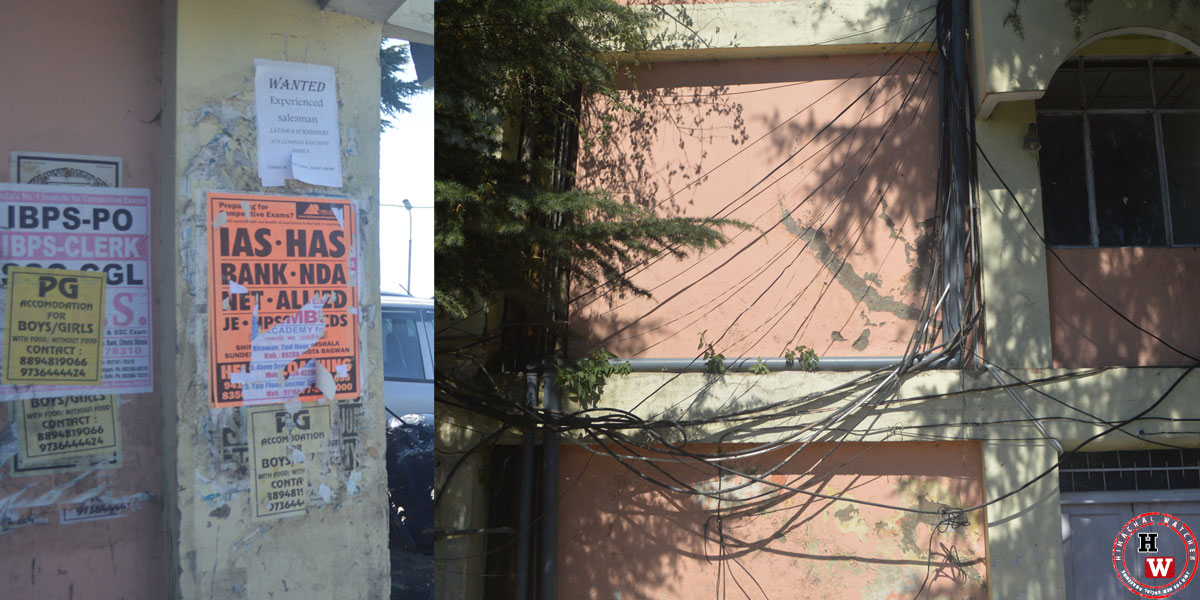
Clutter of cables crawling over Software Technology Park of India in Kasumpti, Shimla.
Loss of Aesthetic Sense in Children
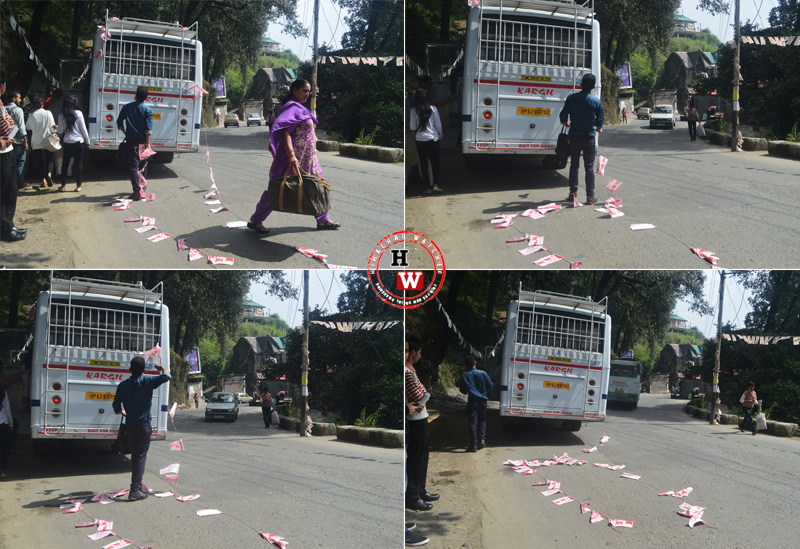
Bunting not removed after a recent student rally
Children growing up in such cluttered environment not only lose aesthetic sense, but also lose ability to react or correct it. As grownups, no matter how unpleasant their surroundings are, this clutter becomes an acceptable part of routine view. Their aesthetic sense is blunted. Civic sense and civic behavior of entire society is badly hit by it.
Psychological Longing for Natural View
Another evident proof that cluttered public spaces caste negative impact on overall wellbeing of public is our longing to witness nature in its pure form. To re-energize themselves, people mostly prefer to visit a forest, a seaside, garden, and parks which are supposedly visually and aesthetically pleasing as compared to visiting a mall or waling by roadside.
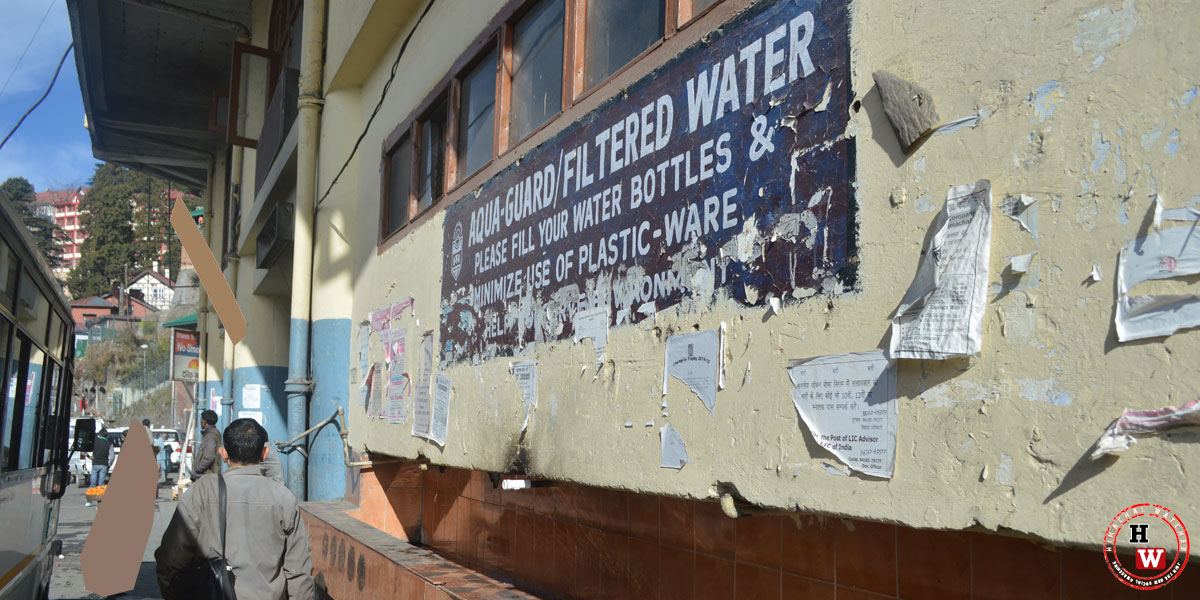
Old ISBT Shimla
The civic bodies in popular towns of Himachal Pradesh are already struggling to manage, vehicular emissions, solid waste-disposal and to create awareness among people about littering in public places. It is no surprise that administration isn’t paying any attention to this form of pollution. However, it is the need of the time to consider other forms of pollution as hazard to social environment and economic health of a city dependent on tourism.
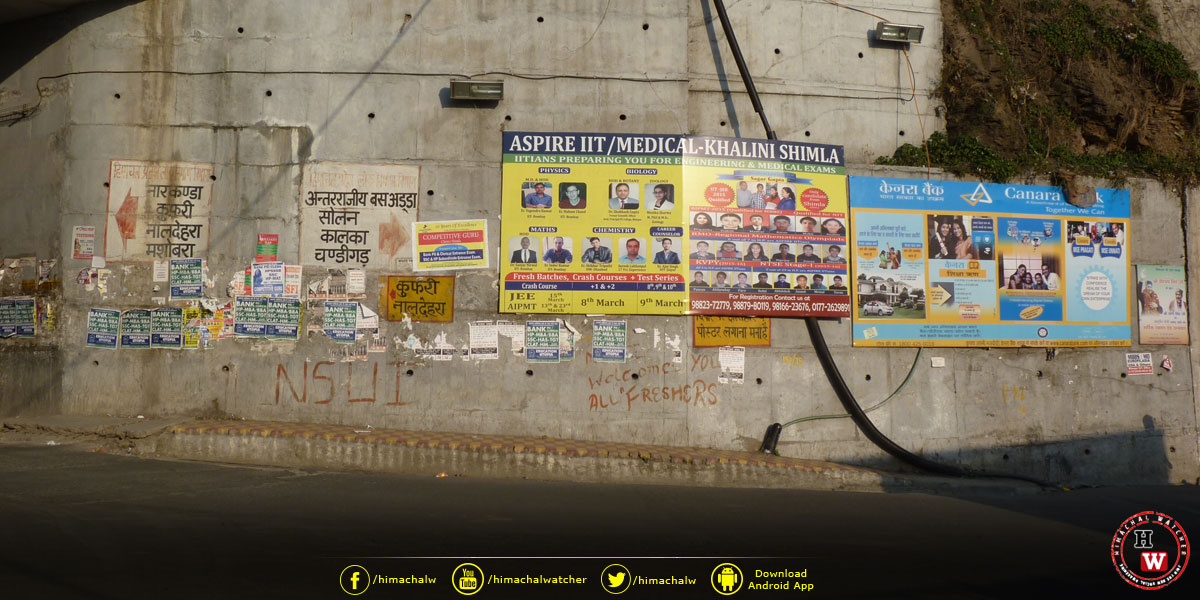

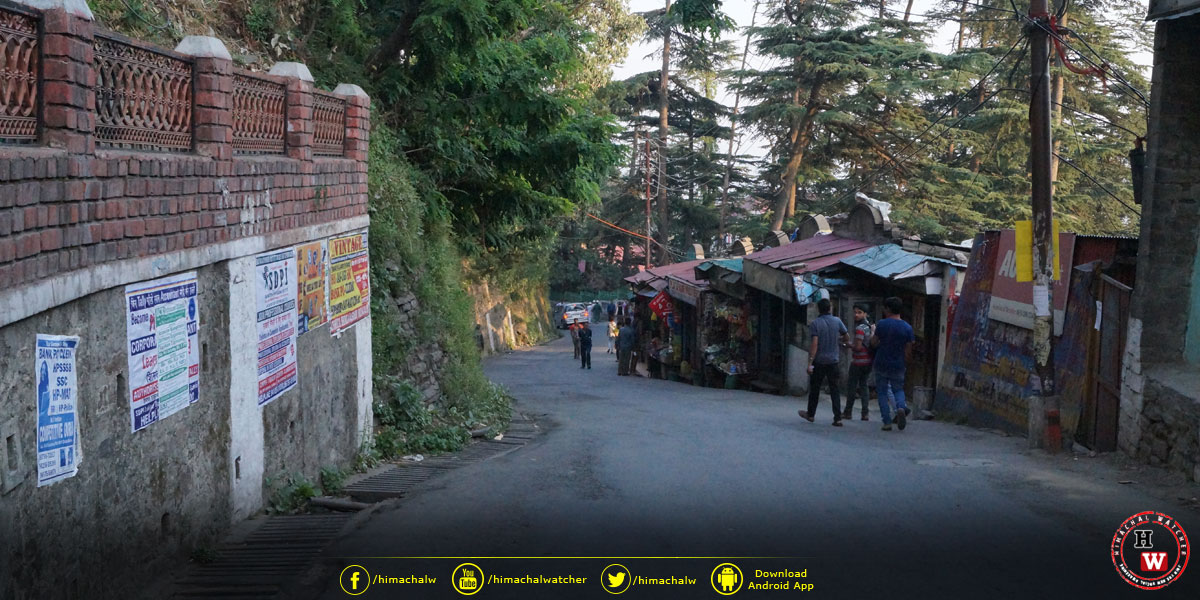
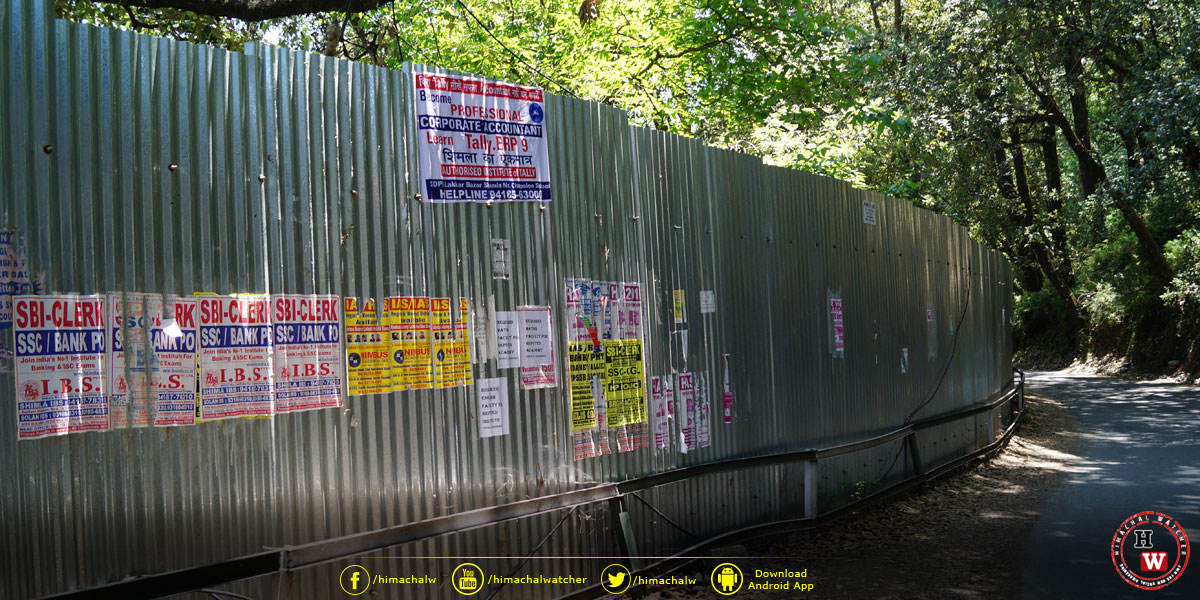
On (Otherwise Beautiful) ITI Road Shimla
Rear Side of Shimla Mall Showroom Buildings
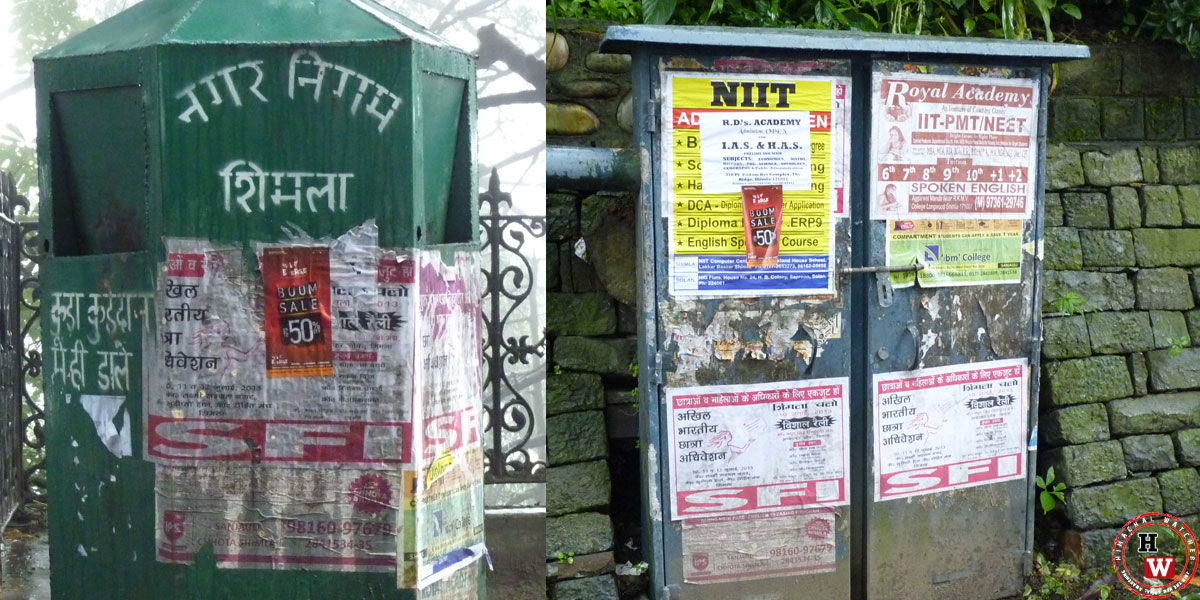
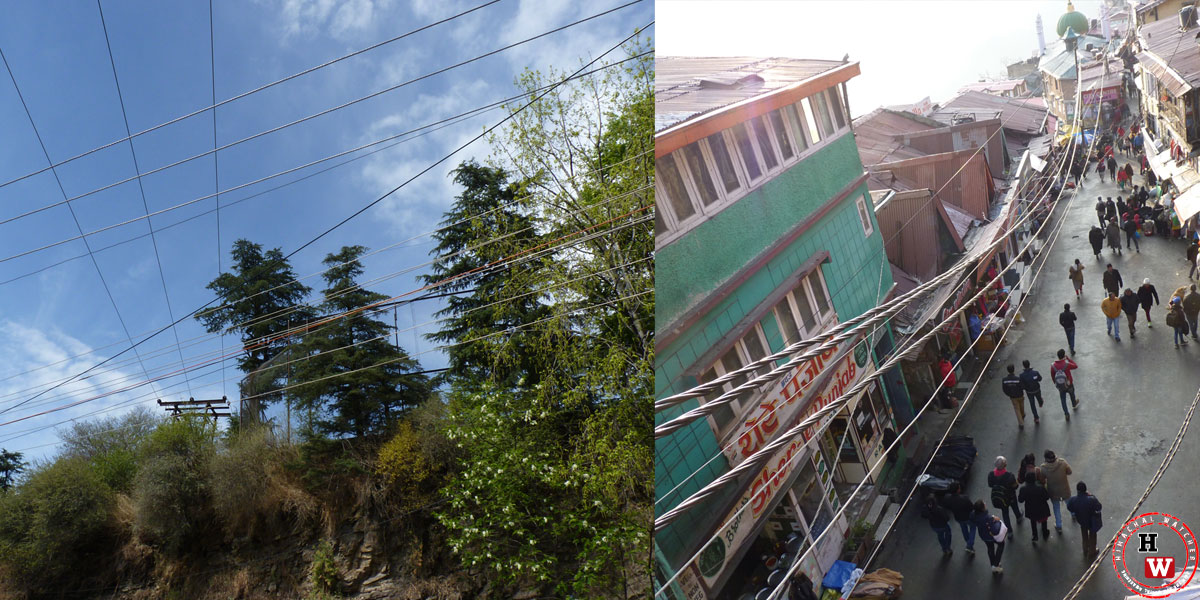
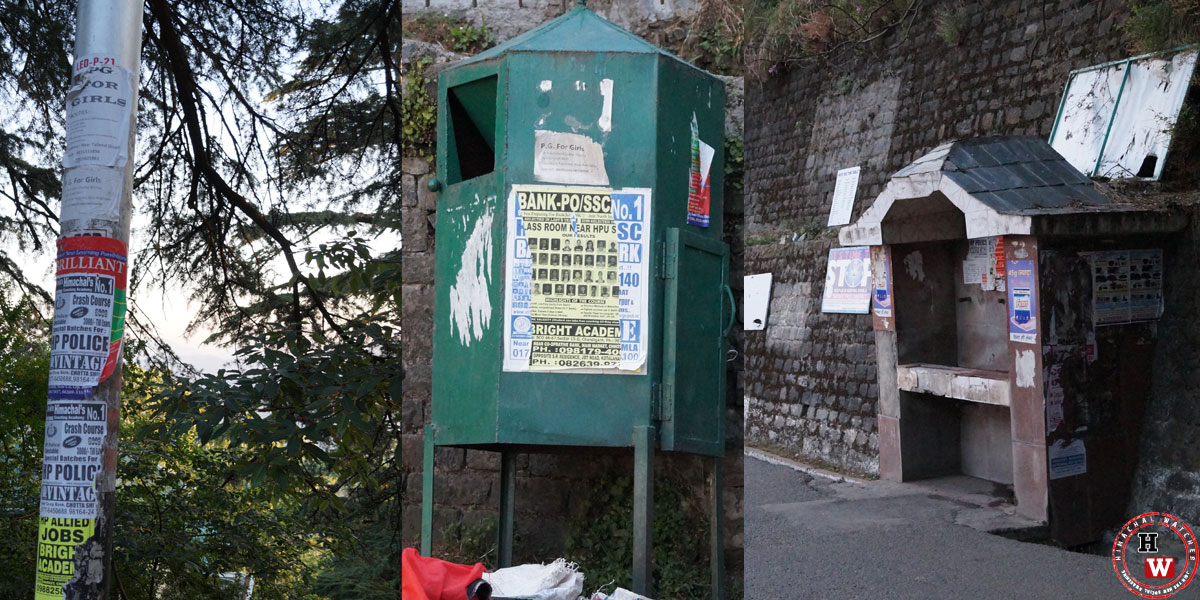
Photo Credit: Tarun Sharma






Environment
Shimla: Retaining Wall Collapses During Four-Lane Construction, Residents Flee Homes to Save Lives


SHIMLA | 3 July 2025 –A major mishap occurred in the Lindi Dhar village of Shimla district during the ongoing four-lane highway construction, raising fresh concerns over safety and construction quality. A retaining wall, constructed as part of the project, collapsed once again—posing a serious threat to nearby homes and destroying hundreds of apple trees.
According to local residents, this is not the first time the wall has caved in. Despite previous incidents, authorities failed to take adequate corrective measures. The latest collapse forced several families to abandon their homes for safety, fearing further landslides and structural damage.
Villagers have accused the National Highways Authority of India (NHAI) and its contractors of negligence. They allege that no proper safety precautions were taken in the construction process, even though the area is known to be vulnerable to landslides.
“This wall had collapsed earlier too, but no permanent solution was provided. Now, we are facing the same threat again. Our lives and properties are at constant risk,” said a local resident.
The landslide also damaged a large number of apple orchards—adding to the losses of local farmers who depend on horticulture for their livelihood.
Residents have demanded immediate intervention from the administration and strict action against those responsible for the substandard construction. They have also urged NHAI to put in place robust safety measures to prevent such incidents in the future.
Local officials have visited the site, and further assessment is awaited.
Environment
Police Complaint Alleges Criminal Negligence in Four-Lane Highway Project Between Parwanoo and Solan

Solan | 30 June 2025 – A police complaint has been filed at the Parwanoo Police Station in Solan district, alleging criminal negligence and environmental damage in the construction of the four-lane highway between Parwanoo and Solan. The complaint, submitted by former Deputy Mayor of Shimla Tikender Singh Panwar, accuses the National Highways Authority of India (NHAI) and its executing contractor, G R Infraprojects Limited, of serious lapses that have endangered lives, property, and the natural ecosystem.
According to the complaint, NHAI officials based at the Chakkar office in Shimla, along with planning teams at Rishikesh Sadan, Shanti Kutia, and the executing agency G R Infra, with its corporate office in Sector 18, Gurugram, failed in their duty to ensure minimal damage to the hilly terrain. It is alleged that the project was undertaken without proper consultation with the Geological Department, resulting in a project report that is “completely erroneous.”
Panwar contends that the design and method of slope cutting are fundamentally flawed, driven by ill-conceived ideas and profit motives.
“Instead of cutting the hills at a slope, the excavation has been done vertically,” the complaint states, warning that this approach poses a permanent threat to residents living near the construction site.
The complaint further highlights that since the beginning of the construction, there have been recurring losses of life and property, which the complainant attributes directly to unsafe and irresponsible construction practices.
Significantly, the complaint raises concerns about possible collusion between NHAI and GR Infra, and urges law enforcement to determine whether the negligence was circumstantial or the result of deliberate wrongdoing.
Panwar has demanded that both NHAI and G R Infraprojects Limited be held criminally liable and subjected to legal proceedings under relevant provisions.
As of now, neither NHAI nor G R Infra has issued an official response.
Environment
Himachal Bans Small PET Bottle, Rs 5,000 Fine on Littering of Single-Use Plastics, Compostable Bags


Shimla, May 27, 2025 – Small PET bottles (up to 500 ml) are littering Himachal Pradesh’s hills, forests, and water bodies, threatening its fragile ecosystem.
Ban on Small PET Bottles
Under the HP Non-Biodegradable Garbage (Control) Act, 1995, the state has banned these bottles in all government-organized indoor meetings, conferences, and events, effective June 1, 2025.
Impact on Hotels
The ban extends to HPTDC and private hotels, which must switch to glass bottles or steel water dispensers. A grace period allows clearing existing stocks to avoid financial losses.
Fines for Littering
A Rs 5,000 fine targets littering of single-use plastics, including compostable bags, by individuals, hotels, restaurants, and other institutions.
Mandatory Car Bins
From April 29, 2025, all taxis and public transport vehicles, including HRTC buses, must install ‘car bins’ for waste collection.
Enforcement Measures
Regional Transport Officers and Motor Vehicle Inspectors will verify bins during vehicle registration. Non-compliance incurs a Rs 10,000 fine, with Rs 1,500 for littering biodegradable waste.
Awareness Campaigns
Government bodies will conduct awareness campaigns to discourage small PET bottle use and promote sustainable practices.
Challenges
Himachal’s ban on small PET bottles and vehicle littering targets plastic pollution but faces challenges. Past bans faltered due to weak enforcement, especially in rural and tourist areas.
Small businesses may struggle with costly alternatives like glass or steel containers. Tourists, a major litter source, need better awareness. The car bin mandate requires rigorous monitoring to ensure compliance. Without robust recycling systems and public cooperation, the ban risks limited impact. Subsidizing eco-friendly options and strengthening enforcement are critical to protect Himachal’s ecosystem effectively.


Himachal’s LPG Supply Hit Amid Global Tensions, Likely to Affect Hospitality Industry

Himachal Teen Survives 12-Minute Leopard Attack, Kills Predator in Self-Defense

Weather Forecast for Himachal Pradesh For the Next Two Weeks

Monsoon 2025: Himachal Pradesh Suffers 199 Casualties, Over ₹1,905.50 Cr in Damages

 Home Decor Ideas 2020