
Environment
Open Garbage Burning and Littering in Shimla Town: A report by St. Thomas’ students

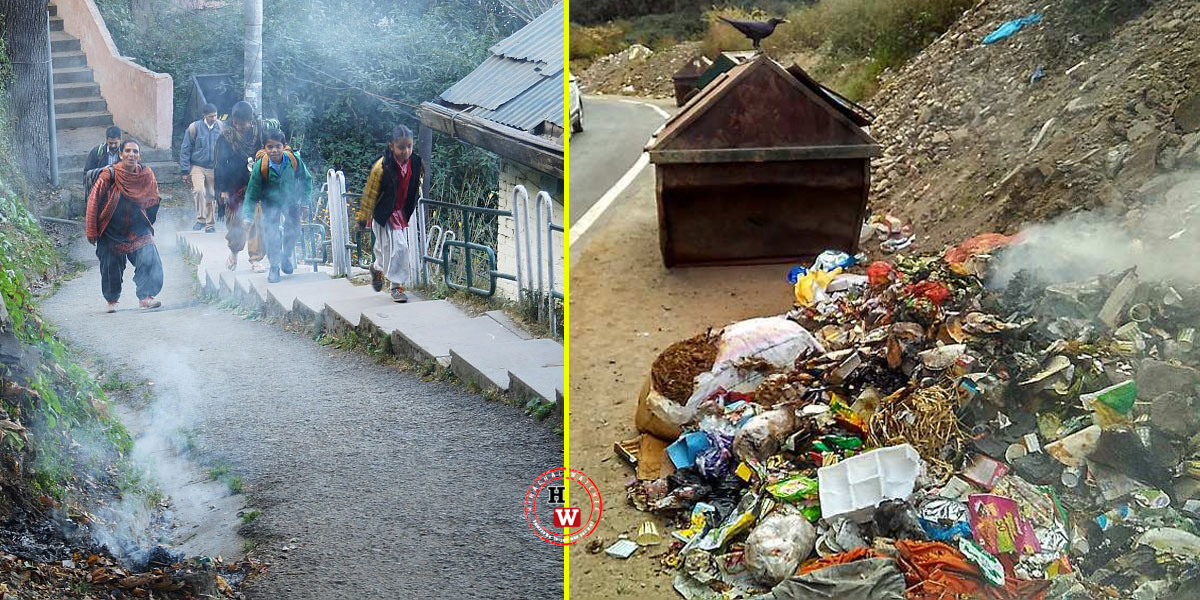
Four class XII students of St. Thomas School, Shimla, who were attending their Industrial Training Sessions on Online Media at Himachal Watcher, prepared this brief report on rampart practice of garbage burning in open by both people and civic bodies, which is leading to a rise in air pollution levels.
SHIMLA- Choked in polluted air, capital Delhi has requested neighboring states to not burn crop residues/biomass. However, the government in its neighboring state Himachal Pradesh doesn’t seem to be concerned either about Delhi or about its own ecology or health of people. Civic bodies in Himachal’s towns are regularly taking liberty to burn garbage in open. The capital Shimla, a major tourist destination, is so far leading. Disheartening is the attitude of Shimla’s civic bodies as even condition of Delhi- world’s most polluted city failed to wake them up. The condition of waste management is also self-evident from littering all over the town. The garbage that isn’t burnt is dumped by public and SMC sanitation workers in most convenient locations.
Premature Deaths Due to Ambient Air Pollution in India
In India, everyday, ambient air pollution claims 3,283 lives as premature deaths, says a report that is based on analysis of Global Burden of Disease (GBD) data by Health Metrics and Evaluation at the University of Washington in Seattle. It is on record before that burning of garbage and other materials is not only source of air pollution but forms 29.4 per cent of air pollution with reference to PM10.
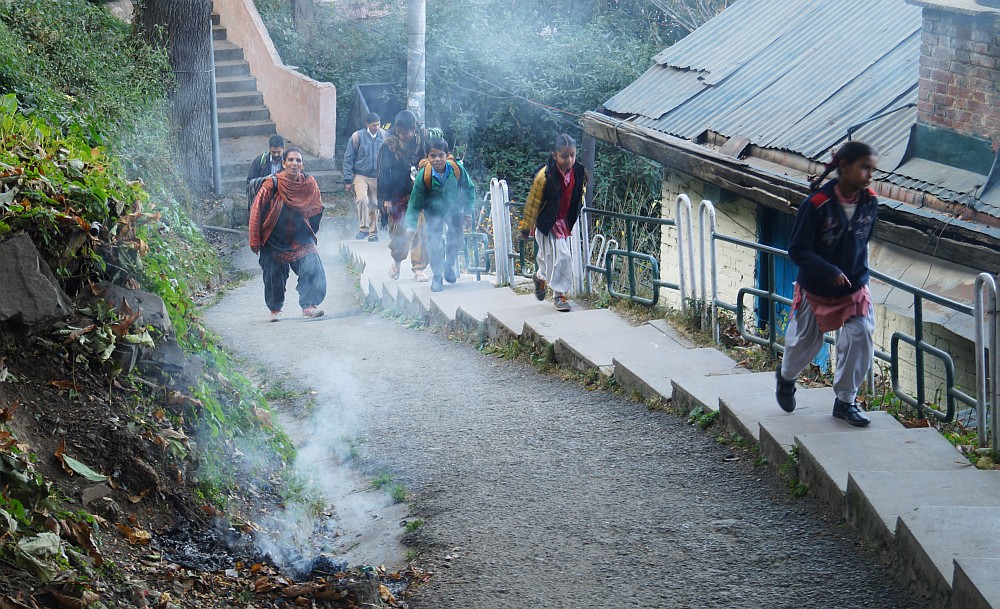
According to another report released by International Energy Agency (IEA), air pollution causes over 6.5 million premature deaths worldwide. More than half of them are reported from India and India China together. This number will increase to 7.5 million in 2040. Since 1990, China reported the highest number of premature deaths due to air pollution until India took lead in 2015 and left China behind.
Video
Burning of municipal solid waste in open has played a major role in making India number one air polluter and Delhi as the world’s most polluted city.
Shimla Following Footsteps of Delhi
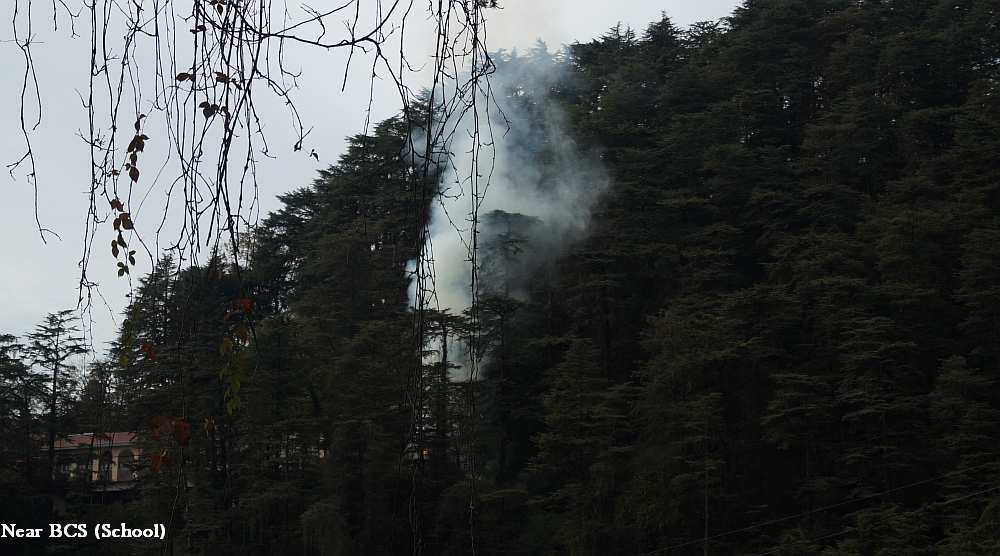
View Gallery

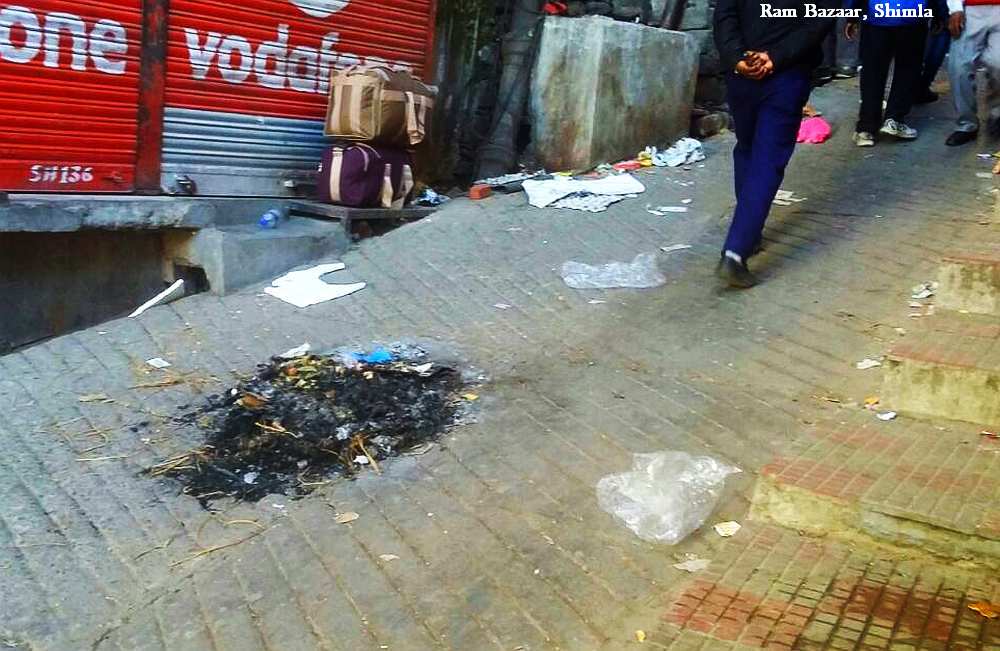
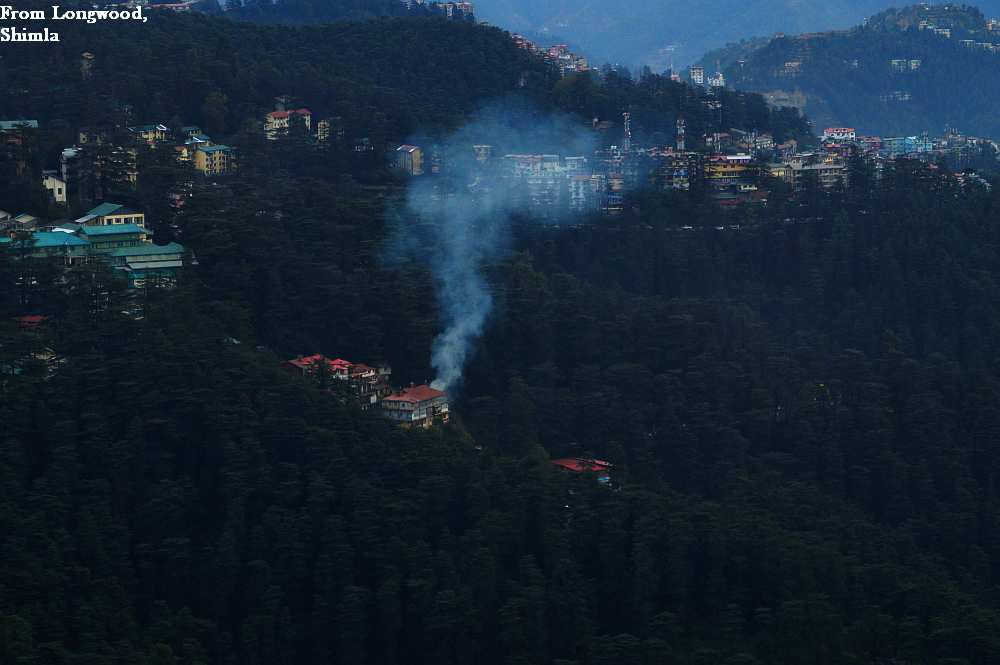
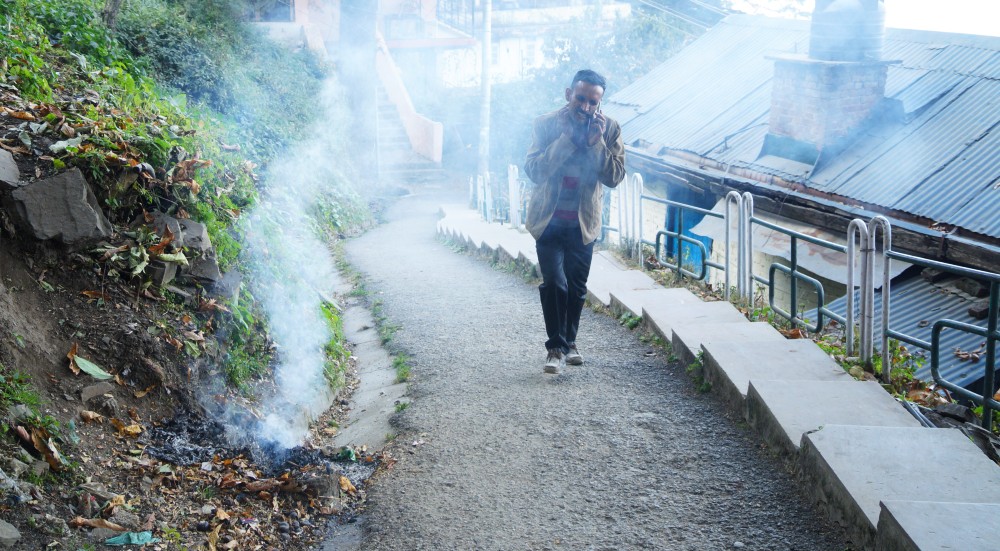
Like Delhi, the imperial capital Shimla is equally threatened by its own failure to manage waste collection, segregation and treatment. Rising number of tourists also increasing the waste production. The Municipal Corporation of Shimla and State Pollution Control Board have responded to the situation in minimal possible efforts. None of the departments are working to assess and create awareness among people regarding hazards of garbage burning in open. Himachal Pradesh boasts a high literacy rate as compared to other states, however, the majority doesn’t behave like educated citizens at all, which points out Himachal’s ineffective education system. Further, the situation can be attributed insufficient and inefficient waste management policies or poor implementation of existing norms.
Read: Did we pass on anything better to Dev Bhoomi in 2016?
A research study states that the daily waste generation in Shimla City is approximately 93.0 MT (350gm /capita/day). The Municipal Corporation of Shimla claims that collection of the waste through door to door collection and community bins is approximately 70-75 MT. The waste is taken for treatment after collection, claims civic body. However, these are official statistics, which are mostly targeted to mislead centre government and International organizations to justify expenditure of loans taken.
As per a recent report published by Times of India, the door-to-door garbage collection facility in limited to only a few areas. Chamiyana, Maliyana and suburbs of the Shimla were merged with SMC long ago. But the locality is still facing an acute problem of garbage mismanagement. Locals allege lack of facility of garbage collection and availability of sufficient dustbins. Similarly, residents of Summerhill and Sangti also allege that they neither have door-to-door garbage collection facility nor dustbins. Therefore, people have no choice but to throw domestic waste into the jungle to be burnt later.
Where Does Shimla’s Waste Go?
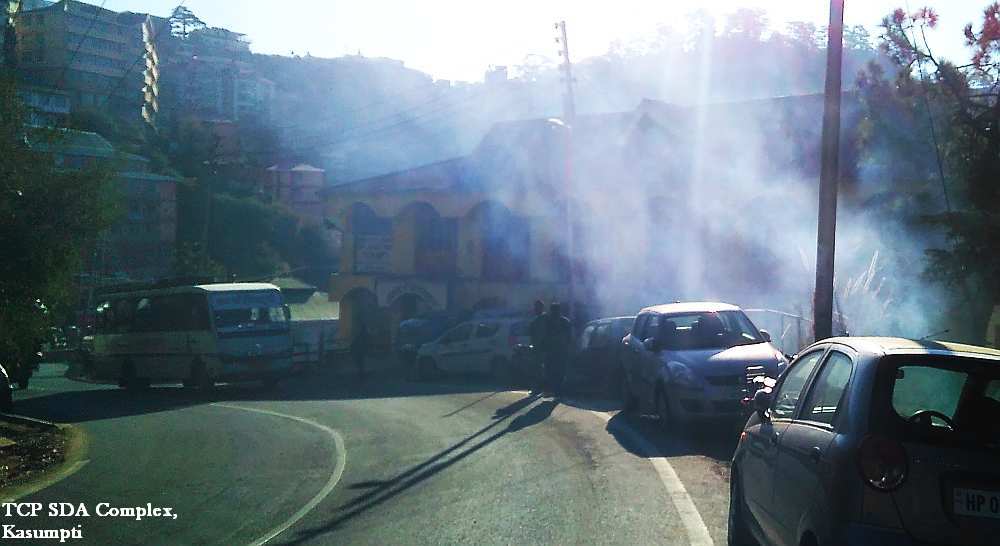
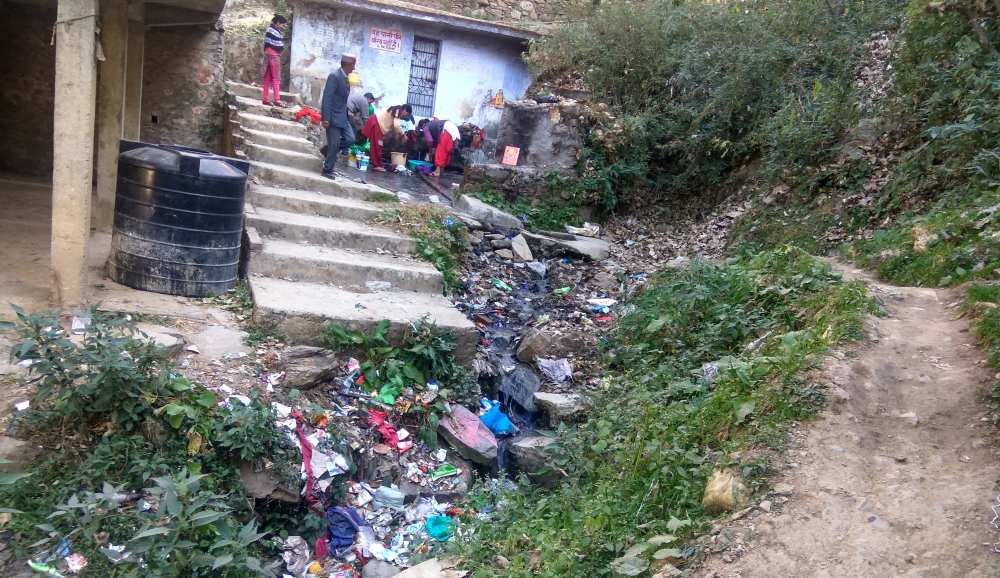
Even in 2016, the capital doesn’t have an operational waste treatment plant. The SMC has been assuring re-opening of the plant for long, but in reality nothing is accomplished. So, if the city does not have a waste treatment plant, then where does all this waste go? The Civic body has come out with its own policy to fix it: burning garbage in open or dumping it at random locations. Burning large piles of garbage would attract attention of people, so the sanitation workers are reportedly advised to collect small heaps of everyday garbage and set them on fire without absent.
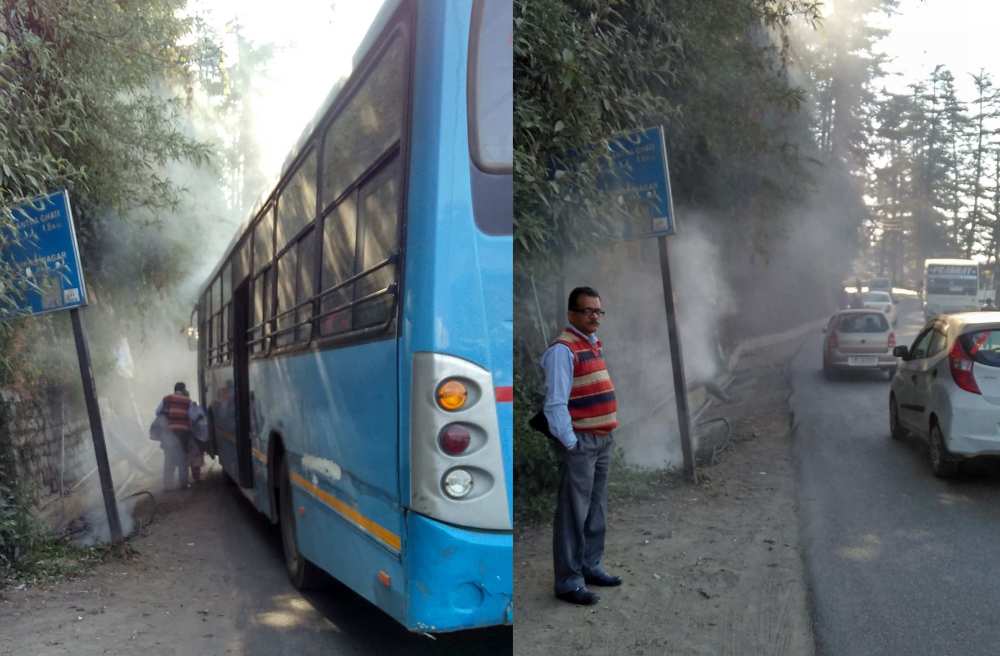
While public believed the practice is very limited, in reality, the sanitation workers have been doing the same all over the town. When viewed collectively, the amount of garbage burnt on daily basis is huge. It’s directly related to air pollution, which in turn leads to climate change.
View Gallery


In 2015, Shimla Civic body was also rebuked by the National Green Tribunal bench on waste treatment (plant). The bench had noted,
“We are informed by the committee appointed by the tribunal that it is not even possible to reach the plant because of huge quantity of MSW lying in that area. Needless to notice that there is complete failure of the functioning of public bodies, including all the relevant departments of the state government and it is an open threat to public health and more seriously to the environment of these areas”.
Similarly, SMC was summoned by the Himachal Pradesh High Court, too, over burning of garbage near city.
Recently, the Himachal Pradesh Pollution Control Board (HPPCB) instructed people not to throw and burn their garbage in the open. The board warned people of facing penalty on being caught violating this instruction. On the other hand, people complain that civic bodies and panchayats have themselves failed to provide the city and its suburbs proper facility to discard the waste.
Garbage Burning a Major Cause of Air Pollution
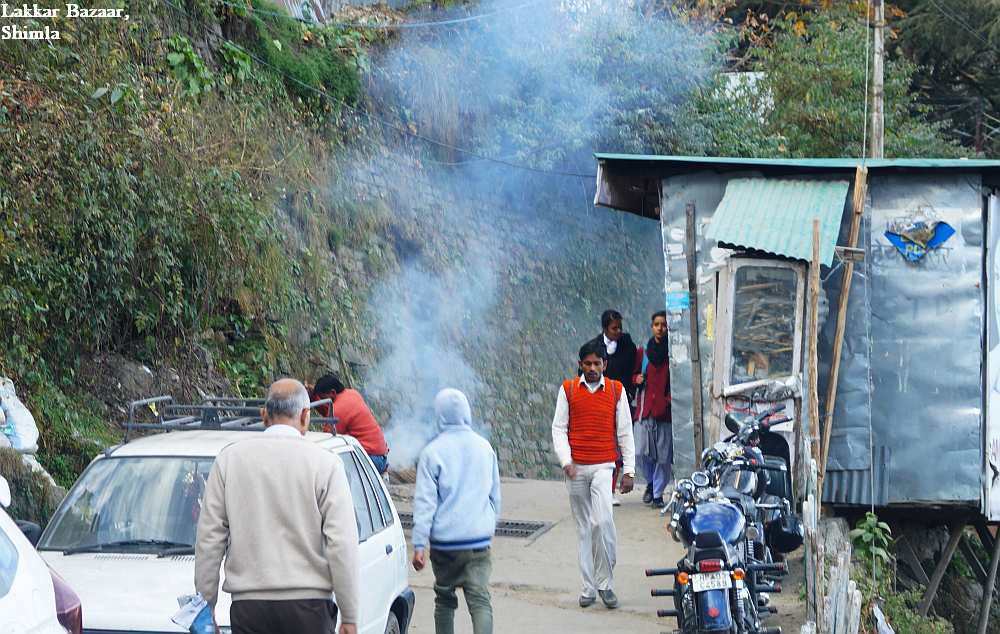
A major portion of toxic gases and elements emanate from open garbage burning or biomass burning. Biomass-burning increases during winters as people burn more of it to keep warm.
Read:Shimla city’s air quality worsens as MC allows burning garbage and biomass in open
While entire world studies Indian Capital Delhi as case study of excess air pollution, its reasons, and attitude of civil bodies towards it, other neighboring North Indian States have not realized the gravity of ecological crises they are heading towards. Himachal Pradesh is fortunate to have tougher geography and comparatively larger green cover of about 65 percent (As Per HP Govt. data). However, the population has multiplied many times in towns like Shimla. Modernization is inflicting the town, but the civil bodies or other governing bodies couldn’t develop aesthetic and civic sense. Urbanization has invaded with all modern tools available, but sense of sophistication didn’t develop to keep up with this process. The results are simply terrifying and ugly.
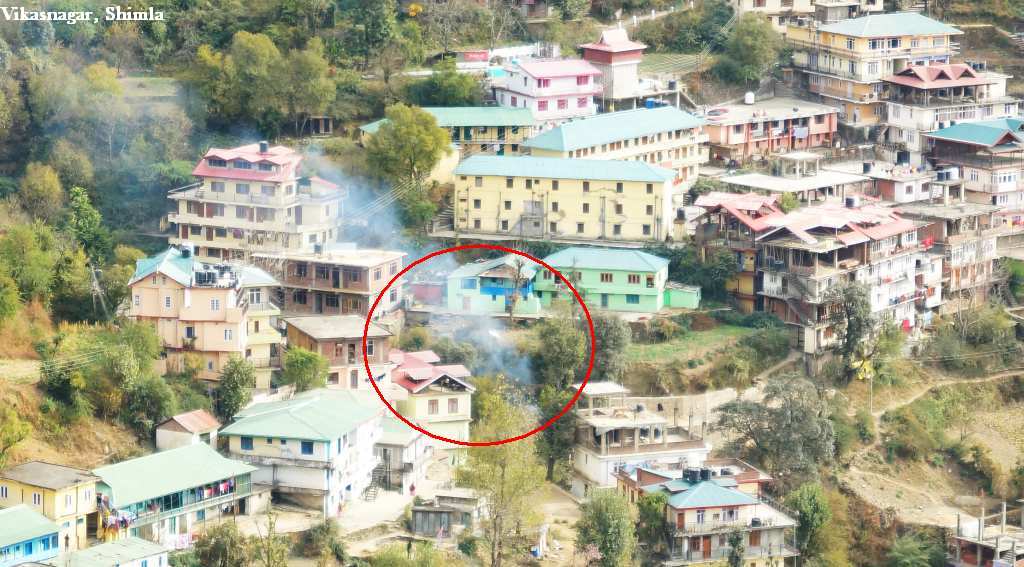
The capital city Shimla is turning out to be the ugliest hill stations with the passage of time. Civil bodies are lethargic and State is mostly out funds to invest in providing habitable, clean environment. The city is overpopulated when available infrastructure is considered. Moreover, announcements of government regarding pacts with developed nations for assistance in waste management didn’t bear any fruits so far. In 2015, the Himachal Pradesh had signed an agreement with Holland under which it was proposed that approx. 200 MW electricity will be generated from 300 metric tonne of daily waste produced by the State. Holland had even provided financial assistance of 50,000 Euros to conduct the feasibility study. However, so far, no such improvement was observed.
Report with Photos by Class XII Students, St. Thomas’ School Shimla (Eliza Negi, Dheeman Goud, Neha Verma, Deepak Thapar)
 |
 |
 |
 |
St. Thomas’ School had introduced Mass Media Studies and Media Production as a vocational subject in 2013. As part of it, the course students are acquainted with Production processes in T.V., Radio, Print and Online Media.
Four class XII students of St. Thomas School, Shimla, who were attending their Industrial Training Sessions on Online Media at Himachal Watcher, prepared this brief report on rampart practice of garbage burning in open by both people and civic bodies, which is leading to a rise in air pollution levels. The students captured images of garbage burning at various places in Shimla city using smartphones cameras. The students also scanned sources to extract (verified) data about environmental and health hazards of garbage burning. The aim was to create awareness among people regarding hazards of air pollution.






Environment
Shimla: Retaining Wall Collapses During Four-Lane Construction, Residents Flee Homes to Save Lives


SHIMLA | 3 July 2025 –A major mishap occurred in the Lindi Dhar village of Shimla district during the ongoing four-lane highway construction, raising fresh concerns over safety and construction quality. A retaining wall, constructed as part of the project, collapsed once again—posing a serious threat to nearby homes and destroying hundreds of apple trees.
According to local residents, this is not the first time the wall has caved in. Despite previous incidents, authorities failed to take adequate corrective measures. The latest collapse forced several families to abandon their homes for safety, fearing further landslides and structural damage.
Villagers have accused the National Highways Authority of India (NHAI) and its contractors of negligence. They allege that no proper safety precautions were taken in the construction process, even though the area is known to be vulnerable to landslides.
“This wall had collapsed earlier too, but no permanent solution was provided. Now, we are facing the same threat again. Our lives and properties are at constant risk,” said a local resident.
The landslide also damaged a large number of apple orchards—adding to the losses of local farmers who depend on horticulture for their livelihood.
Residents have demanded immediate intervention from the administration and strict action against those responsible for the substandard construction. They have also urged NHAI to put in place robust safety measures to prevent such incidents in the future.
Local officials have visited the site, and further assessment is awaited.
Environment
Police Complaint Alleges Criminal Negligence in Four-Lane Highway Project Between Parwanoo and Solan

Solan | 30 June 2025 – A police complaint has been filed at the Parwanoo Police Station in Solan district, alleging criminal negligence and environmental damage in the construction of the four-lane highway between Parwanoo and Solan. The complaint, submitted by former Deputy Mayor of Shimla Tikender Singh Panwar, accuses the National Highways Authority of India (NHAI) and its executing contractor, G R Infraprojects Limited, of serious lapses that have endangered lives, property, and the natural ecosystem.
According to the complaint, NHAI officials based at the Chakkar office in Shimla, along with planning teams at Rishikesh Sadan, Shanti Kutia, and the executing agency G R Infra, with its corporate office in Sector 18, Gurugram, failed in their duty to ensure minimal damage to the hilly terrain. It is alleged that the project was undertaken without proper consultation with the Geological Department, resulting in a project report that is “completely erroneous.”
Panwar contends that the design and method of slope cutting are fundamentally flawed, driven by ill-conceived ideas and profit motives.
“Instead of cutting the hills at a slope, the excavation has been done vertically,” the complaint states, warning that this approach poses a permanent threat to residents living near the construction site.
The complaint further highlights that since the beginning of the construction, there have been recurring losses of life and property, which the complainant attributes directly to unsafe and irresponsible construction practices.
Significantly, the complaint raises concerns about possible collusion between NHAI and GR Infra, and urges law enforcement to determine whether the negligence was circumstantial or the result of deliberate wrongdoing.
Panwar has demanded that both NHAI and G R Infraprojects Limited be held criminally liable and subjected to legal proceedings under relevant provisions.
As of now, neither NHAI nor G R Infra has issued an official response.
Environment
Himachal Bans Small PET Bottle, Rs 5,000 Fine on Littering of Single-Use Plastics, Compostable Bags

Shimla, May 27, 2025 – Small PET bottles (up to 500 ml) are littering Himachal Pradesh’s hills, forests, and water bodies, threatening its fragile ecosystem.
Ban on Small PET Bottles
Under the HP Non-Biodegradable Garbage (Control) Act, 1995, the state has banned these bottles in all government-organized indoor meetings, conferences, and events, effective June 1, 2025.
Impact on Hotels
The ban extends to HPTDC and private hotels, which must switch to glass bottles or steel water dispensers. A grace period allows clearing existing stocks to avoid financial losses.
Fines for Littering
A Rs 5,000 fine targets littering of single-use plastics, including compostable bags, by individuals, hotels, restaurants, and other institutions.
Mandatory Car Bins
From April 29, 2025, all taxis and public transport vehicles, including HRTC buses, must install ‘car bins’ for waste collection.
Enforcement Measures
Regional Transport Officers and Motor Vehicle Inspectors will verify bins during vehicle registration. Non-compliance incurs a Rs 10,000 fine, with Rs 1,500 for littering biodegradable waste.
Awareness Campaigns
Government bodies will conduct awareness campaigns to discourage small PET bottle use and promote sustainable practices.
Challenges
Himachal’s ban on small PET bottles and vehicle littering targets plastic pollution but faces challenges. Past bans faltered due to weak enforcement, especially in rural and tourist areas.
Small businesses may struggle with costly alternatives like glass or steel containers. Tourists, a major litter source, need better awareness. The car bin mandate requires rigorous monitoring to ensure compliance. Without robust recycling systems and public cooperation, the ban risks limited impact. Subsidizing eco-friendly options and strengthening enforcement are critical to protect Himachal’s ecosystem effectively.


Himachal’s LPG Supply Hit Amid Global Tensions, Likely to Affect Hospitality Industry

Himachal Teen Survives 12-Minute Leopard Attack, Kills Predator in Self-Defense

Weather Forecast for Himachal Pradesh For the Next Two Weeks

Monsoon 2025: Himachal Pradesh Suffers 199 Casualties, Over ₹1,905.50 Cr in Damages

 Home Decor Ideas 2020