
Environment
Over 12,000 trees already axed, thousands more marked as 2000 crore Kaithalighat-Shimla four lane approved

Himachal is cheered up after the Cabinet Committee on Economic Affairs gave a nod to the Rs 1583.18 crore two-laning project (in formation of four) for 28 kilometers Kathalighat to Shimla section (Dhalli) of NH-22 (old numbering). But environmental activists are worried about adverse impacts of proposed felling of over 33,000 trees including seedlings and saplings. An area of 919 bigah would be acquired for the project. Considering unchecked rise in vehicular emissions and pollution from other harmful practices like biomass/garbage-burning in open in Shimla and Solan.
So far, National Highway Authority of India (NHAI) has paid for only Solan to Parwanoo phase and this cost includes cost of land acquisition, resettlement and rehabilitation and other pre-construction activities. NHAI has already paid Rs. 8, 71,92,790 to the Compensatory Afforestation Fund Management and Planning Authority (CAMPA) and Rs 9,31,40,305 to the Divisional Forest Officer, Solan.
An RTI activist, Himanshu Thakur, questioned Ministry of Environment, forest and Climate Change (MeEF) about how much CAMPA funds were received and how the funds would be utilized. He sought information regarding the status of CAMPA fund utilization in last 10 years in the state of Himachal Pradesh. But Rajagopal Prashant, CPIO and AIG (FC), did not provide required information saying “No information is available with this office and that the application was being transferred to the Government of Himachal Pradesh for provision of information if any.” But even State Forest Corporation seems to be evading the matter as they haven’t provided any information to the applicant.
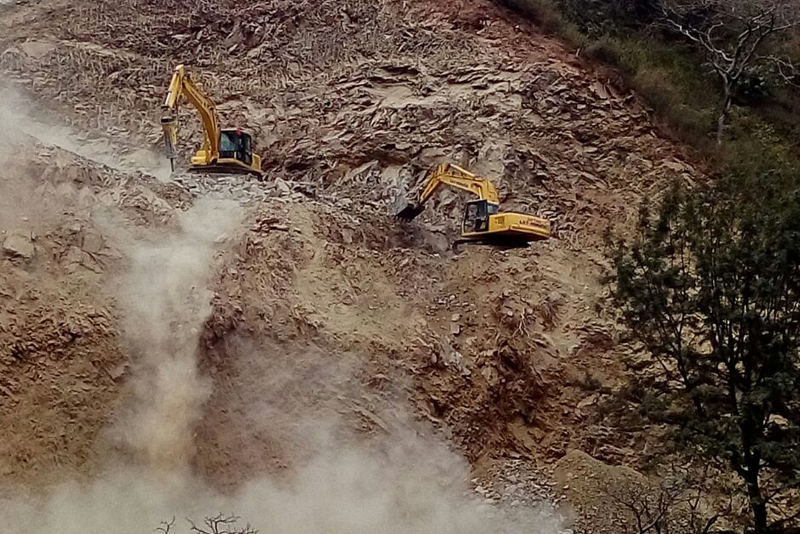
Parwanoo- Shimla NH 22 widening and four-laning work began in 2015, and is under progress. NHAI has not initiated widening work at Dharampur, Jabali, and Kummarhatti. It suggests that either the required land isn’t acquired yet or the matter pertains to ligation. In either case, the project could witness long halt, and in that case, it would be nothing more than a gimmick.
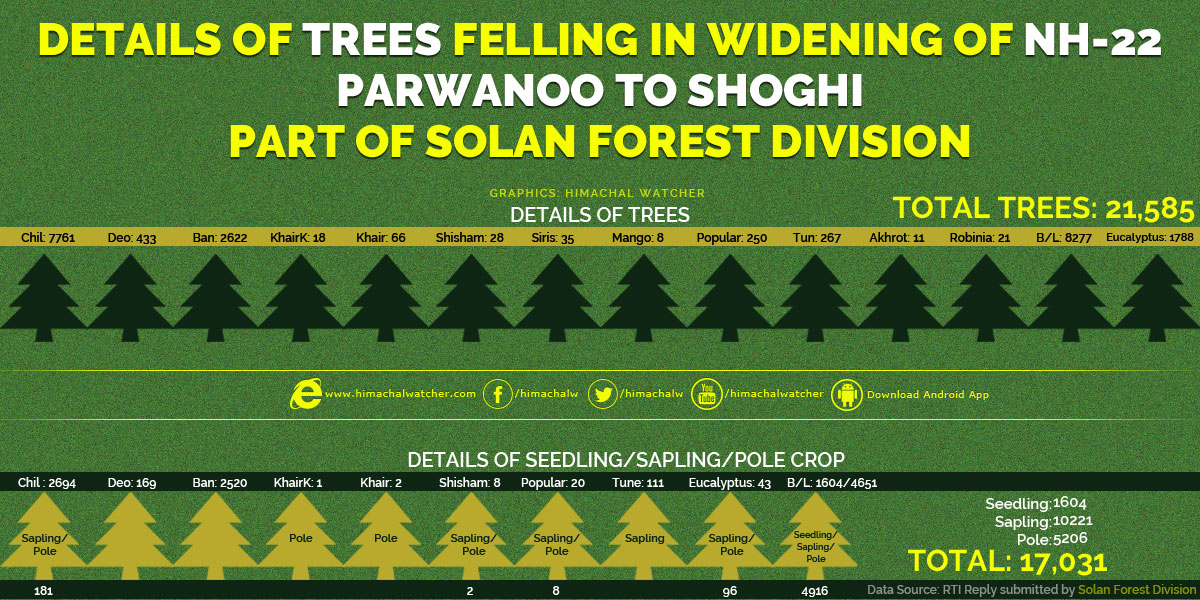
So far, 11,984 trees are felled in the first phase from Parwanoo-Solan. Now, thousands of more trees are about to be axed in next phase from Kaithalighat to Shimla. The HP State Forest Corporation has already marked 21,000 trees, 10,221 saplings, 1,604 seedlings, and 5,206 poles to be cleared. The trees marked for felling include Chil, Deodar, Ban, Kharik, Shisham, Siris, Mango, Eucalyptus, Popular, Tun Akhrot, Robinnia and others.
Apparently, between trees and so called “development”, the later is winning. After all, we all want “development”. There is no doubt that the four-lane will minimize traffic congestion, reduce journey distance by 17 kilometers and save up to 45 minutes, and boost transportation of goods, thus, leading to overall development of the state.
Shimla is excited about the four-laning project, but only very few people wonder how it would affect the ecology. The National Green Tribunal was forced to ban commercial activity and entry of fossil fuel vehicles into Rohtang region after excessive air pollution was reported in surveys. NGT needs to take notice of this issue as well to ensure compliance to guidelines provided under Conservation Act.
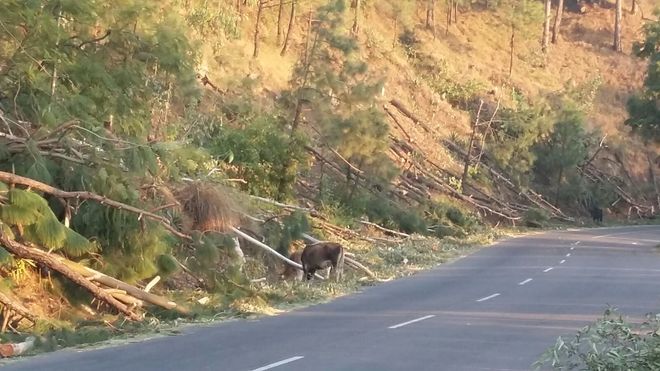
Trees absorb carbon-dioxide and provide living creatures with breathable oxygen. So, the trees are like purifiers and it does matter when thousands of them are suddenly cleared. The emission levels remain the same, owing to rise in vehicular traffic and other human activities. But clearly we have lost huge chunk of forest and would continue losing more. The other critical issues related to it are destruction of wildlife habitat, especially avian habitat/nests. That’s why, under the provision in Conservation Act 1980, guidelines have mentioned placement of synthetic nests around the affected area due to land diversion, but lack of cognisance to this seems prevalent on Parwanoo – Solan highway.
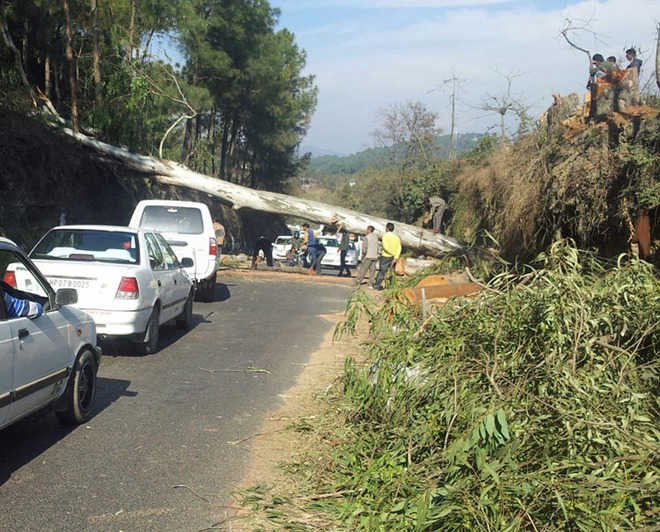
Disappearance of trees is feared to lead to soil erosion and trigger landslides on newly constructed highway. Further, monkey-human conflict in Himachal is an apt example of what deforestation leads to. Not just Shimla or Solan, “development” is asking for tree-sacrifice in other districts too, like tree felling for widening of National Highway (NH)-88 between Hamirpur and Balugloa village, near Jawalamukhi, in Kangra district. About 2,023 trees were marked in January this year for the proposed widening here.
No clue of Tree Plantation/Afforestation
According to the permissions obtained by NHAI under the Forest Conservation Act 1980, the Forest Corporation must find a barren land double the cleared area and plant trees for afforestation and undertake maintenance and care for 5-10 years. In case of Shimla-Parwanoo four-laning, Forest Department of Himachal Pradesh was given compensation for tree-felling or fund for the afforestation work, which is about 18 crore in this case. The trees will take many decades to grow into the size of trees cleared, so plantation should have been under progress.
However, an RTI filed by an activist, Himanshu Thakur, revealed that the government has no clue about afforestation work. The RTI filed sought information regarding the CAMPA funds utilization, area selected for tree-plantation and progress made so far, but the MoEF clearly replied that there is no such information available with the office and transferred it to HP Govt. offices that haven’t acknowledged receiving any funds for afforestation.
That smells like another corruption scam in making in which money meant to plant thousands, may be lakhs, of trees would just go into the pockets of few individuals. No afforestation work is being carried out when it must have begun with approval of four-laning project itself. At least that’s what the response to the mentioned RTI application indicates.
NHAI paid the amount to CAMPA and HP Forest Corporation for compensatory afforestation. The point is, none of the departments have acknowledged receiving the money, and, on top of that, they have no information about when and how compensatory afforestation will be done. CAMPA says state will answer and the state is evading the matter by not answering it,
said Himanshu
| Other information sought in RTI Act 2005 | |
|---|---|
| 1 | In the process of widening (4 lane) of National Highway-22 (old numbering) from Parwanoo till Solan in Himachal Pradesh, how many trees have been cut till now? |
| 2 | Whose permission was sought for the cutting of trees? Please provide the copy of permission letter |
| 3 | Has NHAI paid any amount of State Forest Corporation for the cutting of trees? |
| 4 | Who will be having the ownership of the wood of these trees? |
| 5 | Will NHAI be planting trees in order to compensate the loss of flora and fauna or the particular area? |
NHAI in reply said that it has already transferred funds to the CAMPA account as compensation/fund for afforestation. So, most information sought under RTI was provided except about afforestation work.
Strict guidelines were given under Forest Conservation Act 1980 to cut only as many trees as necessary. The guidelines also require planting new plants on either side of the four-lane as well as on the verge of the road. 11,504 trees had been felled by the end of March 2016 and the wood of these trees belongs to NHAI.
On ground level, the plantation work is not even in the priority list. As observed earlier, HP government is not at all serious regarding critical ecological issues. It has not moved a single muscle to monitor and keep a check on activities causing air, soil and water pollution. The condition is so poor that Shimla Municipal Corporation is directing its sanitation workers to burn garbage instead of collecting it because the capital city does not have an operational solid waste treatment plant. Furthermore, the Jaundice outbreak due to contamination of Ashwani Khud had claimed many lives and had landed about 15,000 people in hospital, which clearly exposed blatant corruption in SMC, PCB, and IPH.
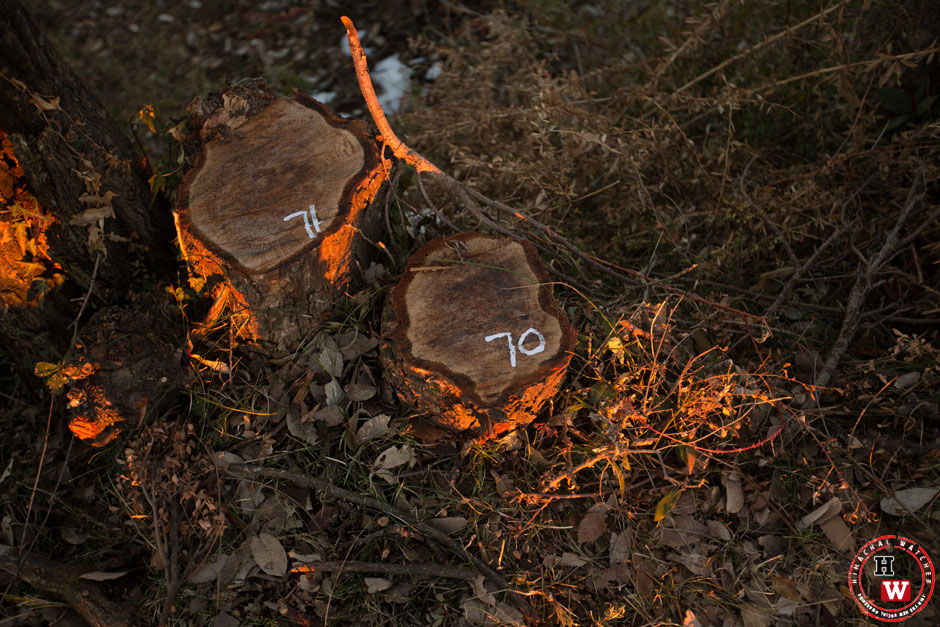
Other than legally felled trees, illegal activities are also leading to deforestation. The tree-massacre in Tara Devi forest in Shimla, in which 500 trees were felled, is an apt example of it. Surprisingly, majority of illegal tree felling was reported from the home district of the forest minister Thakur Singh Bharmauri.
Deforestation is inevitable as we all seek “development”. All we can do is to delay it or work on afforestation. So, tree plantation and rehabilitation of wildlife must be top priority for any sensible and responsible government. Sadly, the awareness among people regarding these critical issues is negligible, and that further encourages government’s lethargic attitude.





Environment
Shimla: Retaining Wall Collapses During Four-Lane Construction, Residents Flee Homes to Save Lives


SHIMLA | 3 July 2025 –A major mishap occurred in the Lindi Dhar village of Shimla district during the ongoing four-lane highway construction, raising fresh concerns over safety and construction quality. A retaining wall, constructed as part of the project, collapsed once again—posing a serious threat to nearby homes and destroying hundreds of apple trees.
According to local residents, this is not the first time the wall has caved in. Despite previous incidents, authorities failed to take adequate corrective measures. The latest collapse forced several families to abandon their homes for safety, fearing further landslides and structural damage.
Villagers have accused the National Highways Authority of India (NHAI) and its contractors of negligence. They allege that no proper safety precautions were taken in the construction process, even though the area is known to be vulnerable to landslides.
“This wall had collapsed earlier too, but no permanent solution was provided. Now, we are facing the same threat again. Our lives and properties are at constant risk,” said a local resident.
The landslide also damaged a large number of apple orchards—adding to the losses of local farmers who depend on horticulture for their livelihood.
Residents have demanded immediate intervention from the administration and strict action against those responsible for the substandard construction. They have also urged NHAI to put in place robust safety measures to prevent such incidents in the future.
Local officials have visited the site, and further assessment is awaited.
Environment
Police Complaint Alleges Criminal Negligence in Four-Lane Highway Project Between Parwanoo and Solan

Solan | 30 June 2025 – A police complaint has been filed at the Parwanoo Police Station in Solan district, alleging criminal negligence and environmental damage in the construction of the four-lane highway between Parwanoo and Solan. The complaint, submitted by former Deputy Mayor of Shimla Tikender Singh Panwar, accuses the National Highways Authority of India (NHAI) and its executing contractor, G R Infraprojects Limited, of serious lapses that have endangered lives, property, and the natural ecosystem.
According to the complaint, NHAI officials based at the Chakkar office in Shimla, along with planning teams at Rishikesh Sadan, Shanti Kutia, and the executing agency G R Infra, with its corporate office in Sector 18, Gurugram, failed in their duty to ensure minimal damage to the hilly terrain. It is alleged that the project was undertaken without proper consultation with the Geological Department, resulting in a project report that is “completely erroneous.”
Panwar contends that the design and method of slope cutting are fundamentally flawed, driven by ill-conceived ideas and profit motives.
“Instead of cutting the hills at a slope, the excavation has been done vertically,” the complaint states, warning that this approach poses a permanent threat to residents living near the construction site.
The complaint further highlights that since the beginning of the construction, there have been recurring losses of life and property, which the complainant attributes directly to unsafe and irresponsible construction practices.
Significantly, the complaint raises concerns about possible collusion between NHAI and GR Infra, and urges law enforcement to determine whether the negligence was circumstantial or the result of deliberate wrongdoing.
Panwar has demanded that both NHAI and G R Infraprojects Limited be held criminally liable and subjected to legal proceedings under relevant provisions.
As of now, neither NHAI nor G R Infra has issued an official response.
Environment
Himachal Bans Small PET Bottle, Rs 5,000 Fine on Littering of Single-Use Plastics, Compostable Bags


Shimla, May 27, 2025 – Small PET bottles (up to 500 ml) are littering Himachal Pradesh’s hills, forests, and water bodies, threatening its fragile ecosystem.
Ban on Small PET Bottles
Under the HP Non-Biodegradable Garbage (Control) Act, 1995, the state has banned these bottles in all government-organized indoor meetings, conferences, and events, effective June 1, 2025.
Impact on Hotels
The ban extends to HPTDC and private hotels, which must switch to glass bottles or steel water dispensers. A grace period allows clearing existing stocks to avoid financial losses.
Fines for Littering
A Rs 5,000 fine targets littering of single-use plastics, including compostable bags, by individuals, hotels, restaurants, and other institutions.
Mandatory Car Bins
From April 29, 2025, all taxis and public transport vehicles, including HRTC buses, must install ‘car bins’ for waste collection.
Enforcement Measures
Regional Transport Officers and Motor Vehicle Inspectors will verify bins during vehicle registration. Non-compliance incurs a Rs 10,000 fine, with Rs 1,500 for littering biodegradable waste.
Awareness Campaigns
Government bodies will conduct awareness campaigns to discourage small PET bottle use and promote sustainable practices.
Challenges
Himachal’s ban on small PET bottles and vehicle littering targets plastic pollution but faces challenges. Past bans faltered due to weak enforcement, especially in rural and tourist areas.
Small businesses may struggle with costly alternatives like glass or steel containers. Tourists, a major litter source, need better awareness. The car bin mandate requires rigorous monitoring to ensure compliance. Without robust recycling systems and public cooperation, the ban risks limited impact. Subsidizing eco-friendly options and strengthening enforcement are critical to protect Himachal’s ecosystem effectively.